peter
peter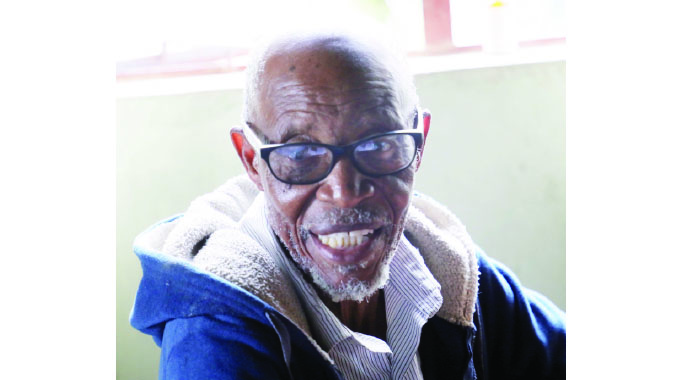
ON 22 January the nation will mark the 46th anniversary of the death of national hero and late Zapu Vice-President Cde Jason Ziyapapa Moyo who was killed in a parcel bomb attack in 1977 in Lusaka, Zambia. In tribute to Cde Moyo we republish an excerpt from a series of interviews with former Zapu intelligence officer, Cde Gibson Mayisa. Cde Mayisa, a legendary operative earned his stripes during the armed struggle when he led an operation that resulted in the capture of a Rhodesian spy who had played a crucial role in the kidnapping of then Zapu intelligence chief, Cde Ethan Dube in Botswana. In the interviews in April 2022 with now Assistant Editor of our sister paper, Chronicle, Nduduzo Tshuma (NT), Cde Mayisa, now an old timer in his rural home of Bubi District in Matabeleland North spoke about his exploits in the armed struggle and the Commission of Inquiry he chaired which was tasked with investigating the circumstances around the death of Cde Moyo. Below are the excerpts of the interview. Read on . . .
NT: Cde Mayisa, you spoke about your operations in the intelligence service, how was your secret unit structured?
Cde Mayisa: I have spoken about the Proxy Document and how that document created a political problem. At that time individuals were selected to lead the struggle in accordance with the Proxy Document and one of them was Ethan Dube.

Previously he was the representative of Zapu in Tanzania and was a trained intelligence operative. He was brought to Zambia after some people were incorporated into its new structure, Dumiso Dabengwa was included.
As a result, since Dabengwa was no longer full-time in intelligence, Ethan Dube was appointed in his place and I was his deputy. He had not worked very long when he was kidnapped; at that time we were trying to build a way of how we would work.
It was then decided to fully utilise Botswana and it became necessary for Dube to go to Botswana to pave way on how to use Botswana vis-à-vis the direction of the revolution according to the document. We were meant to travel together, he came to me and said “Mayisa, you have travelled to Botswana a number of times and know the place better so we must go together.” However, something came up and I was delayed in Lusaka and Ethan proceeded to Botswana.
NT: So that is how you remained behind.
Cde Mayisa: When he left, there were some people that I had referred him to for the execution of our plan, he also had his brother-in-law based in Lobatse, Mr Joshua Khutshwekhaya Ndlovu. We had agreed that he will go to Lobatse and ask Joshua to assist the party there. There were others in Francistown that I referred him to. When he got there, he met with the people we had directed him to and worked with them on a number of missions.
NT: Take us through the events leading to Dube’s abduction as you know or heard about them.
Cde Mayisa: When he got there, he met the people I had referred him to and they worked on a number of things. Then there was a lady in Francistown who was employed at a bank, I don’t know how they connected as that was their private issue. Then there was a man Phillip Mhlanga, his sister MaNkomo worked at the police station. It was not clear where Mhlanga worked but he had a car. The people we had referred Dube to suggested that Mhlanga lend Dube his car for use while there and he agreed.
On the particular day, Dube was using Mhlanga’s car and they arranged with the woman and her friend that they meet at a township called Area M to eat along with the woman’s friend. Dube in the evening took Mhlanga’s car and proceeded to the place where they sat and ate. As they were eating, some people knocked at the door and were let in. It was three men, two blacks and one white. As they got in, he got up sensing danger and immediately they were involved in a violent scuffle. He was a very strong man, heavily built. Those girls didn’t scream. During the scuffle, a pistol broke but his assailants ended up stabbing him and he lost power before they took him away. That’s how Dube was taken.
MS: After his abduction what happened in terms of organising yourselves? It was a big loss I suppose.
Cde Mayisa: After Dube’s abduction, I held a meeting with Dabengwa over the matter. Dabengwa said an investigation should be conducted and I was sent to Botswana. I spoke to the girls he was with, I worked with them the way I was supposed to and discovered that the girls had no connection to his abduction. Further investigations led to the car and when I spoke to colleagues, they also said they were not sure of Mhlanga’s character. I went around Francistown, then to Gaborone and Lobatse and came back to Francistown. I spoke to Batswana colleagues both in the security arms and relatives to those girls and I discovered that Mhlanga had knowledge of what happened to Dube.

They said Mhlanga used to disappear for days having visited Rhodesia but they did not know exactly where he was visiting. They said they suspected that Mhlanga had connections with the Rhodesian security agents.
I went back to Lusaka and sat down with Dabengwa. He was very intelligent, he was one of the most intelligent people I ever worked with. We used our agents back in Rhodesia and they confirmed that there is a certain person in the Rhodesian Special Branch and discovered that it was Mhlanga. We could not deal with Mhlanga in Botswana. So, we approached the Botswana government and asked them to deport Mhlanga to Lusaka which they did.
NT: You mean you managed to trace him and capture him?
Cde Mayisa: Yes, yes. We took Mhlanga for interrogation. I had three other boys, we interrogated him at a camp for girls that we got from our sister organisation, MPLA of Angola. It took us four days for Mhlanga to break, he admitted that he was involved in the abduction of Dube and he had actually tipped off the Rhodesian security forces of his presence and where he was to be found. He told us where he had been trained in Bulawayo, there was a Rhodesian special camp called koMputshana close to Khami Dam, that is where Dube was taken. After koMputshana we don’t know what happened. The information we gathered was that Dube was last seen koMputshana, it was a special secret camp used by the Rhodesians.
NT: After Mhlanga cracked, what did you do to him?
Cde Mayisa: After Mhlanga’s confession, the Zambian government got to know about it and developed an interest since Dube had left from Zambia going to Botswana. Zapu as a party would share their reports with Zambia. They requested for Mhlanga and he was handed over to them. Later on, the British claimed Mhlanga and the Zambian government handed him over to them. What happened to Mhlanga after that, Tshuma my boy, I do not know.
NT: Cde Mayisa, there is the death of JZ Moyo and I am told you led a Commission of Inquiry that was investigating his death. Take us through that period.
Cde Mayisa: JZ Moyo originally, before his death, to us in the intelligence, had many political enemies but his biggest enemy was the Rhodesians then came others. JZ was involved with a certain lady in Botswana, they had just connected, I don’t know where they met. The issue that JZ was involved with a woman in Botswana got to be known by certain people. On the day the bomb detonated, there was a small office that had been established because the office we were supposed to use was to be located in the bush according to the recommendations of the Proxy Document.

Then there was a small office where our members used to do certain things in Lusaka, the building did not belong to Zapu but to a Zambian businessman, John Makiwa. He had given us a small office within his premises. On that particular day, they went to that office. Before we talk about the office, Zapu had a post box where it received letters. There was a person charged with collecting the letters, he had the keys to the box, it was a young man with an amputated arm and damaged eye. That young man had been injured in combat. He is the one who collected mail. There was also another person who used to scan letters in the office and people who entered that building were supposed to be scanned.
On that fateful day, they went to the office, they were six or seven of them. There was Dabengwa, Jane Ngwenya, Sikhwili Khohli Moyo, Dingane, John Nkomo and Amos Jack Ngwenya. They went to the office; I don’t know what they were going to do but it was just routine. The young man who was collecting mail, brought mail. On that particular day, there was a letter addressed to JZ, nicely wrapped with a parcel inside that looked like a magazine. Other letters were scanned but when he was about to scan this particular letter, JZ took it and jokingly said hayi hayi hanti leyi ngeyami. They laughed and made a joke out of it.
NT: So JZ opened it.
Cde Mayisa: He opened that letter and it exploded and it killed him on the spot while others were injured. I remember Dabengwa was hospitalised. After the death of JZ, former Vice-President Joshua Nkomo was there as they had just arrived from the Geneva Conference. Nkomo called me and said, “Mayisa work on this issue, I want you to chair a commission of three people and investigate where this thing came from.” He gave me two boys from the military intelligence, (now Retired Brigadier-General Abel) Mazinyane and another boy called Aleck Ndlovu and we started our investigations. After some time, we failed to agree on a number of things including how we were to deal with Jack.
NT: You mean Jack Amos Ngwenya?
Cde Mayisa: Yes, he made a blunder by allowing JZ to open the letter without scanning it but with the way I knew JZ, he was that kind of person who would take a decision and stick to it. Ndlovu, that is Aleck from MID insisted that Amos be detained and interrogated but because of some reasons, we saw that it was not possible, it wasn’t Amos. Amos was not going to be there if he knew about the explosion. We then dropped Ndlovu and I remained working with Mazinyane. After some time, I decided to go to Botswana and spoke to the security and government officials and the girl’s family and the girl. I cleared that woman, she did not know anything. The letter originated from somewhere and not from Botswana. The stamp that was used (on the letter) was from Botswana but we established that it had been used before. We tried our best to find out where the letter had come from.
NT: Who else appeared before your commission?
Cde Mayisa: We interviewed military commanders and some members of the national executive and some ordinary party members in Zambia whom we thought might know something. We were left with many unanswered questions. One question was at the Zambian Post Office. They failed to say how the letter got to their office. There was also a question on the person who collected the letters with the key to the post box. Did he, at times give it to other people? That we did not establish. The young man was an office orderly but on the day the bomb detonated, he was not at the office and no one knew where he was. It was also necessary to talk to other senior members of the Zapu National Executive but we failed because we were juniors in the party, we were really nonentities. These men and women refused and said they would not talk to juniors like us about that matter.
They said what did we suspect them of when we as youngsters would want to interrogate them on the killing. After that Nkomo tried to use his powers to force the senior Zapu leaders to co-operate with us but he was stopped by Kenneth Kaunda because it seemed as if the party was going to split because of the insistence that senior National Executive members co-operate. Kaunda counselled that uMdala leaves the matter and it would be resolved on its own. That is what I know about the JZ issue. After the death of JZ, a lot of things changed. There are reasons that such things happened emanating from the Proxy Document, the commanders who took part in the document were removed almost all of them and sent to foreign missions. I was sent to Botswana as a Zapu special representative and later sent to Cuba in the same capacity until Independence in 1980.


 Online Reporter