

 Chronicle Editor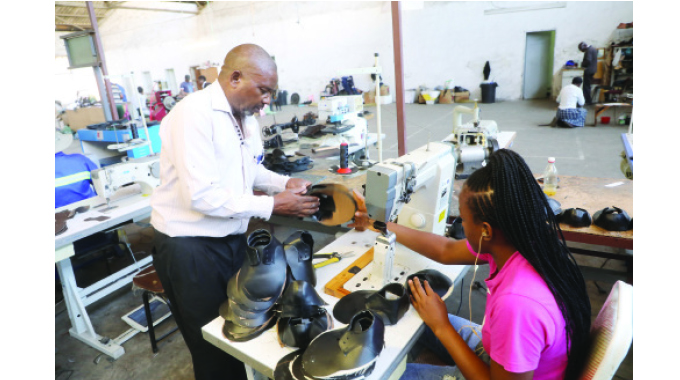
Ashley Phiri, [email protected]
IN an innovative initiative aimed at enhancing the educational experience of students who may struggle academically, Goshen Christian Academy has partnered with the Bulawayo Leather Cluster to launch a functional literacy programme focused on practical skills.
The project, which equips students with essential life skills, is redefining success for learners who may not excel in traditional academic settings.
Realising that many students enrolled at the school were either repeating their Ordinary Levels or had not achieved satisfactory results in Grade 7, the administration sought alternative pathways to empower these learners. The Director of Studies at Goshen Christian Academy, Abraham Muyambi, said their main aim as a school is to empower students with practical life skills they can use later in life.
“As a school, we realised that some students were not that gifted academically and such students may need alternatives through functional literacy interventions. Upon enrolment, most of our students did not have good results at Grade 7 or were repeating their Ordinary Levels.
“We therefore decided to equip our students with life skills. Our main aim is to provide these students with life skills that they can use later in life to create their own employment opportunities rather than waiting for a job,” he said.

The partnership with the Bulawayo Leather Cluster is a key component of this initiative. The school signed a Memorandum of Agreement (MoU) that allows students to engage in hands-on training in the design and manufacturing of leather products.
“We signed a Memorandum of Agreement. Through the partnership, our students are given hands-on skills to design and manufacture shoes. They don’t only manufacture their own school shoes, they also make belts and sandals. This practical approach not only boosts students’ confidence but also fosters a sense of accomplishment,” said Muyambi.
The project extends its benefits beyond the classroom. By reducing unemployment and providing students with marketable skills, it also has the potential to positively impact the local community.
The students, who have gained valuable skills, are encouraged to mentor their peers, reinforcing a culture of support and collaboration.
Muyambi also noted that in a society that often prioritises academic achievement, this initiative shines the light on the value of practical skills and diverse talents.
“These students can also mentor their peers in the areas in which they would have acquired skills.
Furthermore, it removes the stigma associated with not being gifted academically because society tends to esteem only those students who are academically gifted,” he said.

The results of the programme are already visible. In its first cycle, each participating student manufactured their own school shoes, which they proudly wear to class. Currently, the students are halfway through producing sandals and have completed leather belts as well. While the products are currently for personal use, there are plans to commercialise them in the future.
“In our first cycle, we manufactured school shoes for each participating student which they are now wearing to school. In the current cycle, we are done producing leather belts and halfway through the production of sandals.
“At the moment, we haven’t commercialised the products we produce, though this is in the pipeline. We are exploring avenues to sell the finished products, which will further empower our students and provide them with real-world business experience,” said Mr Muyambi.
One of the students who benefited from the programme, Marlon Tazivazvino, expressed his gratitude at having had such an opportunity at a very young age.
“I am grateful to have learned the skills that I have at such a tender age. I am in Form Two and already I can manufacture shoes and other leather products. This skill will help me to earn a living in the future, especially if it so happens that there is no money to continue with education or in the case that I do not perform well academically,” he said.
In a touching gesture of gratitude, students are also crafting sandals and other items to thank their parents for their support.
This aspect of the project not only strengthens family bonds but also instils a sense of responsibility and appreciation among the students.
In addition to the leather project, the school also offers hairdressing as well as garment construction, commonly known as cutting and designing. Muyambi said the school’s intention is to ensure that while students are waiting for their Ordinary Level results, they are not idle, particularly the girl child. He said they want them to be able to earn an income to sustain their basic needs.
By equipping students with practical skills, the school is not just preparing them for the workforce, but also nurturing a generation that values creativity and resilience.



 Blessing Chizhande
 Online Reporter