Vusumuzi Dube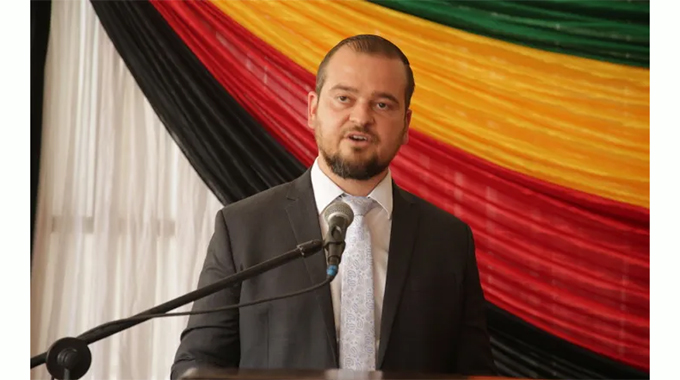
Rutendo Nyeve, [email protected]
THE Government has stepped in to contain a deadly outbreak of tick-borne diseases in Matabeleland North Province, delivering 13 000 vaccine doses with approximately 7 800 cattle already vaccinated.
Deputy Minister of Lands, Agriculture, Fisheries, Water and Rural Resettlement, Vangelis Haritatos, revealed this in an update on the ongoing efforts to protect the provincial herd from Theileriosis and related tick-borne conditions.
The vaccination blitz is currently focused on districts reporting active outbreaks, with Bubi District receiving particular attention due to the high number of susceptible cattle.
Bubi has a significant cattle population of 78 532, and several cases have been reported in the area recently.
“The Government has adequate vaccine supplies to control outbreaks in all tick-borne disease hotspots nationwide. In Bubi District, which has a cattle population of 78 532, a total of 13 000 vaccine doses have already been received by the Matabeleland North directorate,” said Deputy Minister Haritatos.
“To date, around 7 800 cattle have already been vaccinated and immunisation efforts are ongoing to cover all susceptible cattle in the districts. Several cases have been reported in the district and the
Government has made significant progress in managing them through the integrated tick and tick-borne disease control programme, which is the Presidential Input Programme.”
The integrated programme encompasses the National Dipping Scheme, Government-sponsored vaccinations, and an extensive extension and awareness campaign to educate farmers on disease prevention.
Deputy Minister Haritatos assured farmers that the Government has deployed adequate staff on the ground to assist in managing the outbreaks.
“Furthermore, the Government has provided treatment for parasites to several families in the district to help contain the cases. Adequate staff are deployed on the ground to assist farmers in managing outbreaks through free diagnosis and treatment,” he said.
Beyond the immediate outbreak response, the Government is implementing a long-term Livestock Recovery Plan aimed at fundamentally improving the national herd.
This is being done through a large-scale Artificial Insemination (AI) programme targeting 120 000 cattle.
“Out of the 120 000 cattle that are targeted for artificial insemination, we are going into the harder areas. Unfortunately, because of the system, in the sense that in different areas, the regions are a little bit tougher than others, we do have higher mortality and this is exactly where the programme is indeed directed to.
“So, it will definitely benefit those who have unfortunately lost cattle. It will also benefit those who were fortunate enough not to have lost cattle,” said the Deputy Minister.
The AI programme is designed to improve carcass weight and calving rates by addressing genetic deficiencies in the current stock.
“This is a start. One hundred and twenty thousand is not an optimistic target. It is a good target, an achievable target, but we want to expand this programme in the coming years so that we can increase the number of beneficiaries
“The biggest challenge we have with our livestock is genetics. So, our artificial insemination programme will help us to considerably improve our genetics, which will give us better cattle for the foreseeable future,” he said.
In addition to the AI programme, the Government continues to provide free dipping services, vaccinations, and extension support nationwide to help reduce livestock mortality and secure the livelihoods of communal farmers.



 derick.khumalo