Online Reporter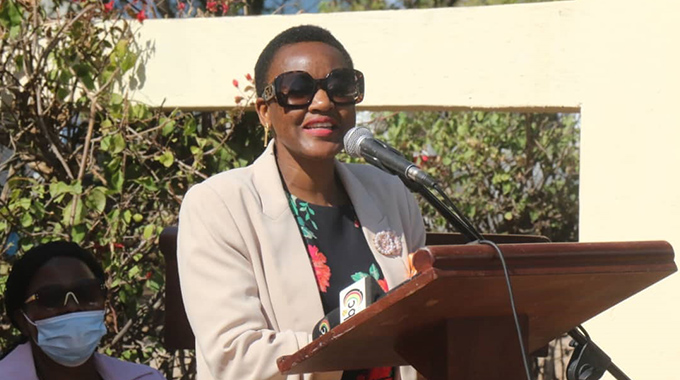
Tendai Gukutikwa
Post Reporter
PRIMARY and Secondary Education Deputy Minister, Honourable Angeline Gata, has urged school heads to focus on instilling strong values and heritage in Zimbabwe’s education system, rather than prioritising academic competition.
Speaking at a high-level consultative dialogue with school heads in Chipinge last week, Deputy Minister Gata emphasised that the country’s future relies on institutions that produce well-rounded learners, highlighting that the Heritage-Based Curriculum seeks to shape learners’ character and identity, going beyond mere workshop achievements.
“That is the concept of our education, our heritage-first curriculum and the concept of value education that we are focusing on now. A firm grounding in values and national heritage will distinguish Zimbabwean learners anywhere in the world,” she said, describing Zimbabweans as inherently rich in culture and identity, adding that the role of schools is to nurture that richness and turn it into leadership capital.
“If our values and heritage are cemented, providing a strong foundation, wherever they go, whether black or white Zimbabweans, you can identify them by their values. They are richer. You can see their values, their heritage, their ideas,” she said.
Deputy Minister Gata said transformation in the education sector begins with leadership quality at institutional level, which is the role of school heads.
“It is about your leadership quality and your leadership skills. You should know that you are not in competition with other school heads. You are there to help each other so that we can cultivate and strengthen our education system,” she said.
Deputy Minister Gata said collaboration among school leaders is, not optional, but essential for national development.
“Let us share notes as school heads and leaders of schools, rather than competing with each other. If you are not helping another school, you are doing absolutely nothing and contributing zero to the building of the quality of leadership and education needed in Zimbabwe,” she said, urging school heads to abandon rivalry, and instead share ideas and strategies that improve infrastructure, academic performance and overall learner development.
“I urge school heads to work together to improve infrastructure, pass rates and everything that has to do with the education sector,” she said, further cautioning against elitist attitudes within the sector, particularly where some private institutions allegedly look down upon government schools.
“There are private schools that look down on Government schools while they are not building holistic children. We are not in a competition. You are raising a child of Zimbabwe, a leader of tomorrow,” she said, further insisting that education must extend beyond classroom instruction to include sport, culture and practical skills, while warning that an overemphasis on academic performance alone produces incomplete graduates.
Deputy Minister Gata added that the country must harness that talent, ensuring that the education system produces learners equipped with both intellectual competence and strong moral grounding.
Chief Manicaland Provincial Education Director, Mr Richard Gabaza outlined the province’s performance and reaffirmed its commitment to inclusive and equitable education.
“We have over 1 000 schools in the province. This scale of responsibility demands strong, effective coordination and continuous policy improvement,” he said, adding that despite the magnitude of the task, Manicaland continues to outperform national averages in key examinations.
“For Grade Seven, the national average was 48 percent; Manicaland scored about 60 percent. For Ordinary Level examinations, we were at 37 percent, while the national pass rate was 36 percent. For Advanced Level, the national pass rate was at 95 percent, but in Manicaland, we were at 98 percent,” he said, attributing the performance to collective efforts at school and provincial level.
“These achievements are a reflection of committed schools, dedicated teachers, supportive parents and effective provincial oversight. We are always working so that our schools conform to Government standards,” he said, also highlighting the province’s diversity as a strength in implementing the Heritage-Based Curriculum.
“The province is also diverse, which strengthens the implementation of a heritage-based curriculum and reinforces national identity and inclusivity within the education sector,” he said.
He described the consultative dialogue as evidence of the Ministry of Primary and Secondary Education’s determination to adopt a whole-of-government approach in addressing challenges affecting the education sector.
“The high-level consultative forum that we are here for today affirms the ministry’s resolution to adopt a whole-of-government approach in addressing challenges that affect us,” he said.
Mr Gabaza said direct engagement with school heads is critical because they are the implementing arm of Government policy at institutional level.
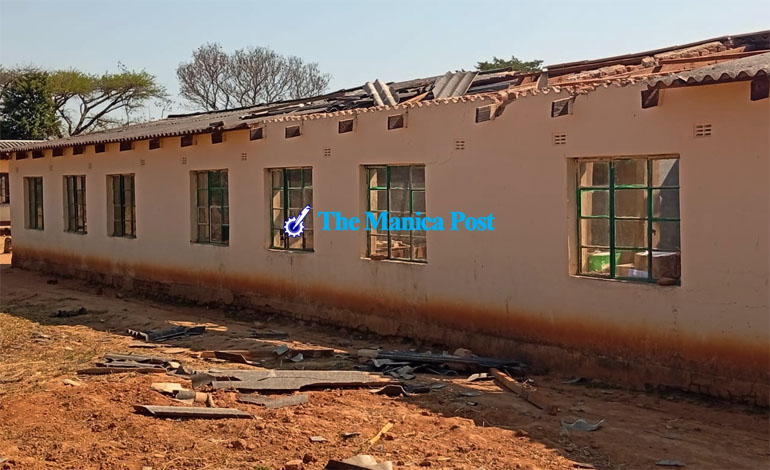
He added that the engagement also signalled Government’s awareness of provincial challenges, including infrastructure deficits, learner vulnerability and teacher accommodation.
“It reflects Government’s recognition of challenges faced by provinces like Manicaland, including infrastructure, learner vulnerability and teacher accommodation.
‘‘Through this engagement, we are strengthening communication between your office and provinces in ensuring that interventions are responsive on the ground,” he said.