Patrick Chitumba [email protected]
THE Government has partnered the Centre for Conflict Management and Transformation (CCMT) to develop a national framework for fair compensation, resettlement and livelihood restoration for communities displaced by development projects.
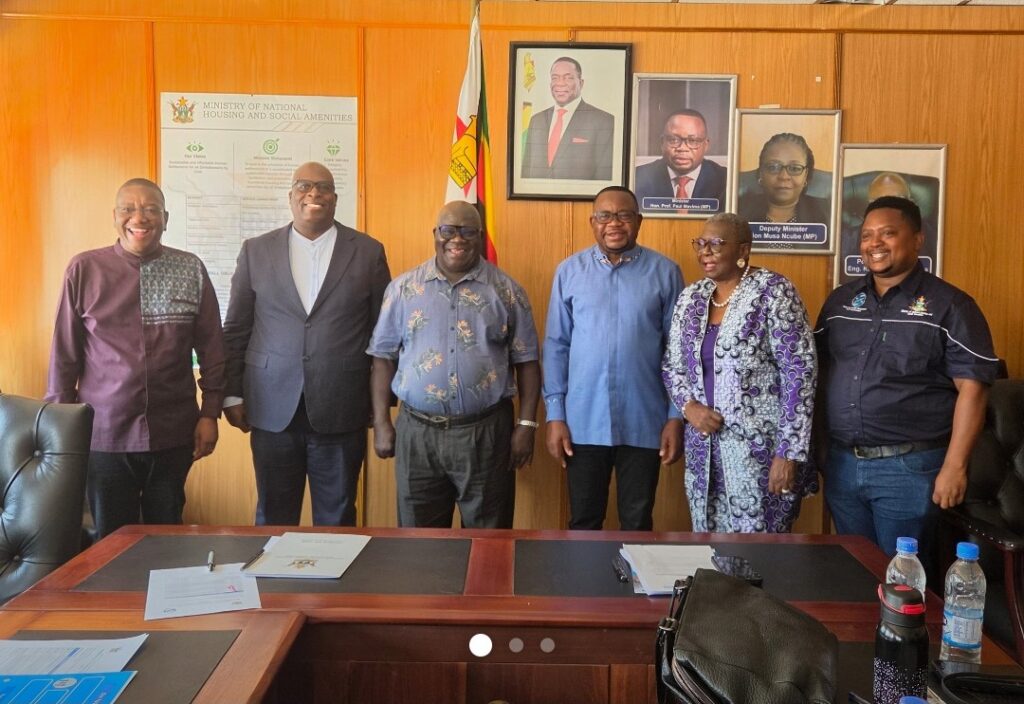
In a joint statement, the Ministry of National Housing and Social Amenities and CCMT said the framework would ensure that housing delivery, urban expansion, mining and infrastructure development did not compromise the rights, dignity and interests of affected communities.
The partnership follows the signing of a Memorandum of Understanding (MoU) establishing a Ministry-led process, with CCMT providing technical expertise in conflict management, community engagement, research and policy development.
“The Agreement establishes a structured, Ministry-led national process supported by CCMT as the technical partner. It seeks to ensure housing delivery, urban expansion, urban renewal, infrastructure development and national prosperity while safeguarding the rights, dignity and legitimate interests of affected people and communities,” reads part of the statement.
Zimbabwe’s development agenda includes investments in housing, mining, irrigation, roads, transport infrastructure and urban renewal, which are expected to stimulate economic growth, create employment and improve livelihoods.
However, the two institutions noted that land acquisition and expansion associated with such projects could disrupt communities and trigger conflict if displacement was not handled fairly and transparently.
The proposed framework will translate the Zimbabwe National Human Settlements Policy of 2020 and the Zimbabwe Urban State Land Management Policy of 2025 into practical guidelines for managing development-induced displacements (DIDs).
It will provide guidance on fair compensation, resettlement, livelihood restoration, social integration and accessible grievance-redress mechanisms, while promoting transparent land management and inclusive decision-making.
The institutions said the initiative sought to prevent and address conflicts arising from development-related displacement while promoting sustainable development and protecting affected communities.
The framework will also seek to establish comprehensive national policies and legal frameworks for managing DIDs in line with national laws and international human rights standards.
“Collaboratively develop, advocate for and institutionalise comprehensive national policies and legal frameworks on DIDs. These resources will effectively prevent, address and manage DIDs by providing clear guidelines for transparent land management, inclusive decision-making, fair and comprehensive compensation, resettlement and social integration, livelihood restoration and accessible grievance-redress mechanisms, all in alignment with national laws and international human rights standards,” reads part of the statement.
The partnership will focus on strengthening the capacity of Government officials, development actors and community representatives to manage disputes through conflict analysis, negotiation, mediation and resolution.
It will also improve coordination among Government departments, local authorities, community leaders and other stakeholders involved in development planning and relocation.
The framework will be developed through consultations with technical teams, development actors and affected communities to ensure it reflects Zimbabwe’s circumstances and addresses challenges faced by people displaced by development projects.
The institutions also emphasised the importance of obtaining free, prior and informed consent, providing fair compensation, promoting benefit-sharing and ensuring relocation and compensation take place before projects commence.
“The parties affirm national development, and human dignity must advance together. They also recognised principles including free, prior and informed consent, fair compensation, benefit-sharing, and timely relocation and compensation before projects commence,” reads part of the statement.
The framework is expected to support the implementation of the National Development Strategy 2 (NDS2), Vision 2030 and national priorities in housing and human settlements.
CCMT brings experience from working with the Ministry of Local Government and Public Works and local authorities in the Midlands Province, where it has supported efforts to address social, economic, environmental and cultural conflicts since 2009.
Since 2017, the organisation has focused on development-induced displacement linked to infrastructure projects, mining and urban development.
Working with the then Office of the Provincial Development Coordinator, CCMT helped develop guidelines and recommendations for compensating communities displaced by development projects. These were adopted at provincial level and subsequently by seven local authorities from 2018.
The organisation also worked with Midlands State University and the Infrastructure Development Bank of Zimbabwe on research and policy dialogues that culminated in the 2021 publication of Development-Induced Displacements in Zimbabwe: Learning from Colonial and Post-Colonial Experiences.
In 2022, CCMT collaborated with Government ministries to explore a framework for development-related relocations and regularisation aligned with Vision 2030. It is currently supporting Government ministries and agencies in the Midlands Province to develop a handbook of best practices for managing DIDs.
Founded in 2002, CCMT promotes collaborative approaches to conflict resolution, seeking to transform disputes into opportunities for positive development and sustainable peace in Zimbabwe.
The two institutions thanked stakeholders contributing their expertise and experience to the initiative and called on the media to raise awareness of peaceful, equitable and sustainable development practices.