Online Reporter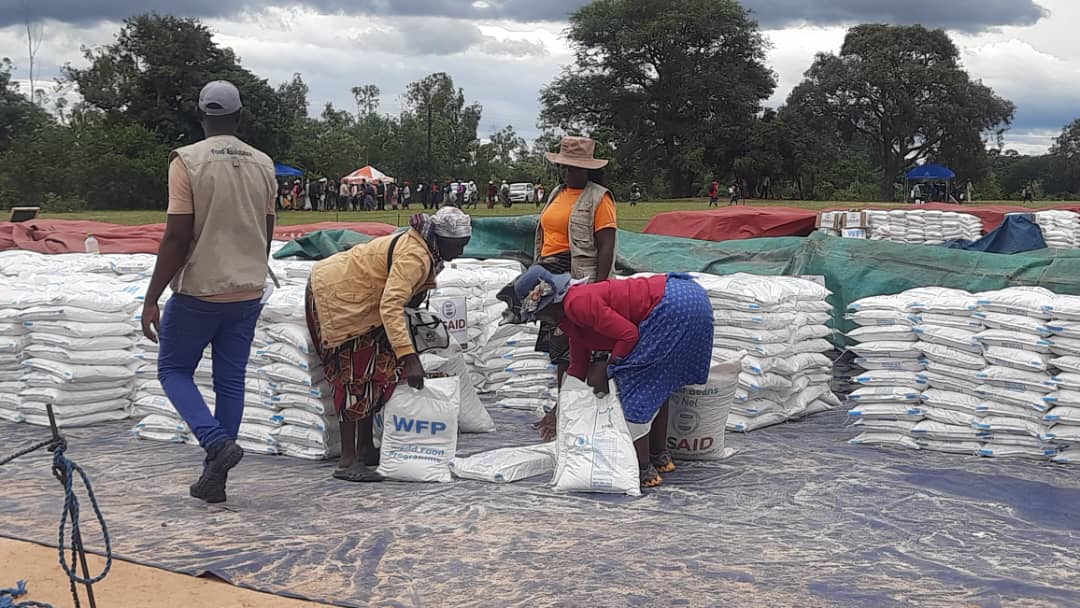
Elita Chikwati recently in Buhera
The Government has extended the lean season food assistance by a month to ensure that no one is affected by hunger, a senior official said at the Madzivire Food Distribution Point in Buhera on Tuesday.
This comes as United Nations agencies have vowed to strengthen partnerships among themselves and engage the private sector to continue with humanitarian work.
The lean season, usually the peak hunger period before the next harvest, normally stretches from January to March.

In an interview after the World Food Programme food distribution on Tuesday, Public Service, Labour and Social Welfare Permanent Secretary, Mr Simon Masanga said the Government has extended assistance up to April due to the late onset of rains in some areas.
“Cabinet decided to extend this lean season programme by another month up to the end of April when people start getting food from their fields. I need to stress that the Government programme will never come to an end.
“We are always on alert to respond to distress calls. Even after April, if there is a particular community that requires food assistance, they can always go to the nearest social welfare office. We are available throughout the year to ensure and uphold the pledge by the President that no one should die of hunger.”
UN resident coordinator, Mr Edward Kallon said he was impressed by the refining of the food distribution process, which is now more accountable.
“I want to thank the Government and UN for working together with one common cause,” he said.
WFP representative and country director, Ms Barbara Clemens said due to the good the rains, there is going to be a reduction in the number of people in need of assistance in the next lean season.
“We are in the process of working with the Government at the Food and Nutrition Council to see what the state of food security will be like going forward,” she said.
“That will inform the degree of resource mobilisation as we prepare for the next lean season. The programmes we undertake seek to minimise the need for lean season assistance by helping to make people more resilient, which is important.”
Speaking on the US’ aid reduction, Ms Clemence said this presents an opportunity for fostering partnerships with the private sector.

“This is an opportunity to see more efficiency, effectiveness and greater impact because we are partnering and not going alone. We are partnering more with other UN agencies and other NGOs; what is missing from the equation is the private sector.
“For years we have been talking about engaging the private sector, and now we must do that,” she said.
UNICEF, Zimbabwe representative, Ms Etona Ekole said she was impressed by the services being offered to beneficiaries at the food distribution points.
Beneficiaries are also getting useful information on health, water and sanitation, while children are also being screened for malnutrition by community health workers.
“I liked how organised this process is. It is very structured. It is a beautiful model that can be strengthened and replicated,” she said.
World Vision representative, Mr Assan Golowa said: “We will continue to put our heads together. Let us continue to partner not only in this intervention but in all.
Buhera District in Manicaland is prone to drought, with 15 percent in region 3; 35 percent in region 4 and 50 percent in region 5.
The lean season assistance in Buhera targeted 229 319 beneficiaries across all 33 communal wards, with food distributions taking place from January to March .
Beneficiaries were receiving 8,5 kg of cereals, 1,7kg pulses and 0,6kg vegetable oil per individual.