Online Reporter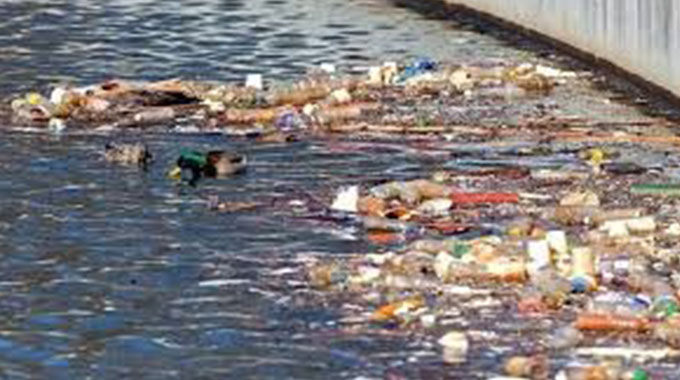
Fairness Moyana in Hwange
HWANGE Colliery Company Holdings (HCCL) has joined hands with Government in addressing concerns over the pollution of Deka River by effluent discharged from mining operations.
Over the years, the river has faced an environmental pollution onslaught mostly from Acid Mine Drainage (AMD), which has escaped from old underground mine shafts resulting in the death of fish and other aquatic species.
Effluent from water discharged from power generation at the Zimbabwe Power Company (ZPC) plant and run-off during rainy season from other coal mining processes have been flagged as top challenges.
Various interventions by Hwange Colliery Company such as plugging leaks from old exploration boreholes from underground mining dating back to 1902, have exposed the legacy problem.
AMD is a type of water pollution that occurs when rainwater or snowmelt flows over or through sulfur-bearing materials, forming solutions of net acidity. It is a major environmental concern associated with mining activities, particularly coal mining. Environmental effects include water pollution as AMD can contaminate surface and groundwater, thereby affecting aquatic ecosystems and human water supplies.
It has also been known to affect soil quality, reducing fertility and affecting plant growth, as well as contributing to loss of biodiversity.
Exposure to AMD can pose health risks, including increased risks of cancer, neurological damage and other health related problems. Significant economic impacts, including costs associated with water treatment, loss of fisheries and tourism revenue and damage to infrastructure, have been reported.
Updating stakeholders recently, who included the Minister of State for Matabeleland North Provincial Affairs and Devolution, Cde Richard Moyo, Environment Management Agency provincial manager, Mrs Chipo Mpofu-Zuze, said the AMD pollution remains a major threat to water bodies such as the Deka River.
“AMD is a big problem to be addressed by one company. It has become a national issue and as such, efforts to come up with a lasting solution have escalated to involve Government where a national committee was set-up to investigate and come up with recommendations,” she said.
“These are part of efforts to bring a permanent solution to this legacy problem that has not only affected the environment but livelihoods that depend on the Deka River.”
The national committee comprises the University of Zimbabwe (UZ), National University of Technology (Nust) and Government experts in geospatial, geophysics and physical planning, among others.
Mrs Mpofu-Zuze said a study was underway on creating a water treatment plant, which will harness the challenge with results
HCCL Holdings’ safety, health, environment and quality manager, Mr Butholezwe Dube, said the company was employing short-term intervention that covers using lime and treatment ponds to neutralise the acidity, as well as creation of three dam walls to slow the water’s downstream flow.
“While in the long-term, we plan to construct a water treatment plant and convert the water into domestic and industrial use, the exercise is expensive hence Government has come in,” he said. “In the interim, we have ponds and use lime to neutralise the acid water, which ends up in the Deka River.”
He said HCCL had drilled boreholes in several areas as part of efforts to ensure affected communities accessed clean and potable water, with a pipeline resuscitation project to benefit more people set to start next month.
“We have launched the Zambezi Water Pipeline resuscitation project, where we are going to engage with communities to help us identify water points along the pipeline as part of addressing water scarcity,” said Mr Dube.
“We are also working with traditional leaders and communities to ensure the infrastructure is protected.”
Some of the concerns that were raised during the quarterly meeting included air pollution from power stations and coking companies, road infrastructure damage by coal haulage, poor labour practices and ill-treatment of locals by some employers.
Meanwhile, Minister Moyo has urged collective efforts in tackling the environmental and Corporate Social Responsibility (CSR) issues that the district was seized with.