Online Reporter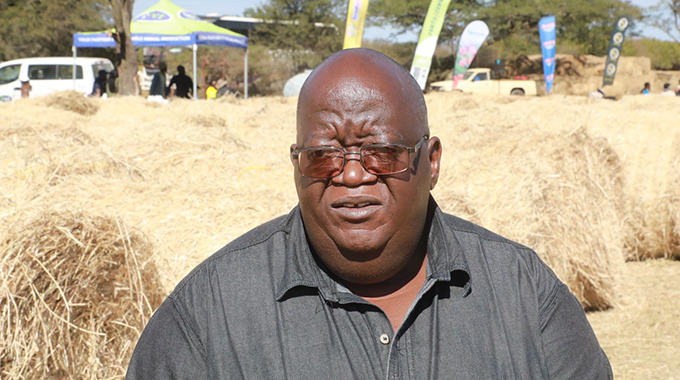
Sikhulekelani Moyo, [email protected]
THROUGH different Government initiatives, the country has managed to contain Theileriosis (known as January disease), especially in Matabeleland South, with the province recording a drop in deaths during the 2025 season.
Matabeleland South has been one of the provinces hardest hit by January disease in the past two years, at one point recording daily mortality rates as high as 89 cattle, prompting serious concerns.
This has seen the Government implement various initiatives, including the Presidential Tick Grease Programme, to capacitate farmers in protecting their livestock against diseases.
Matabeleland South Provincial Veterinary Director Dr Enat Mdlongwa revealed this yesterday at a field day held at Biano Farm, hosted by the Zimbabwe Beef Producers Society.
In an interview during the event, Dr Mdlongwa said farmers in Matabeleland had suffered significant losses due to January disease in 2023 and 2024. However, due to awareness campaigns, farmers are now better informed about dipping intervals and necessary prevention measures.
“This disease has taught us many lessons, particularly regarding proper animal dipping procedures,” said Dr Mdlongwa. *”2024 was not a good year for livestock farmers, but in 2025, cases decreased significantly because people now understand the 5-5-4 dipping regime. Farmers now bring their animals for dipping regularly, which has drastically reduced the tick’s life cycle.”*
Under the 5-5-4 dipping regime, livestock should be dipped every five days for two cycles, followed by a four-day interval before resuming the five-day schedule.
Theileriosis, commonly known as January disease, has affected Zimbabwe since 1936. Although controlled in the mid-1950s, the disease resurged in 2023, causing substantial losses. It typically peaks in January, hence its name.
Meanwhile, Dr Mdlongwa advised farmers to use the winter season to deworm, vaccinate, and begin pan feeding to maintain animal condition.
Zimbabwe Beef Producers Society chairman Mr George Chiunda said disease outbreaks remain a major challenge for beef producers.
“The biggest problem we face is tick-borne diseases, particularly January disease, which devastated cattle producers nationwide, especially in Matabeleland South. The Government has made good progress in addressing this, but we need continued improvement in the dipping regime,” said Mr Chiunda.
He also highlighted drought as a challenge for livestock producers and urged farmers to prepare by harvesting abundant grass before veld fires destroy pastures.
Prominent cattle breeder and Esigodini farmer Mr Obert Chinhamo of Biano Farm praised the Zimbabwe Beef Producers Society for hosting the field day, which provided valuable learning opportunities for farmers.
The event brought together Government livestock officials, sector experts, farmers, agriculture students, and suppliers of stock feed, chemicals, and other essentials.
Zimbabwe has about 5.7 million cattle, with 90% under smallholder farmers. About 60% of the national herd is concentrated in Matabeleland South, Matabeleland North, Midlands, and Masvingo provinces.
Mr Chiunda commended Government efforts to grow the national herd. The national strategy to expand the herd to 11 million cattle by 2030 is progressing well, with various programmes underway to meet domestic beef demand.
@SikhulekelaniM1