Online Reporter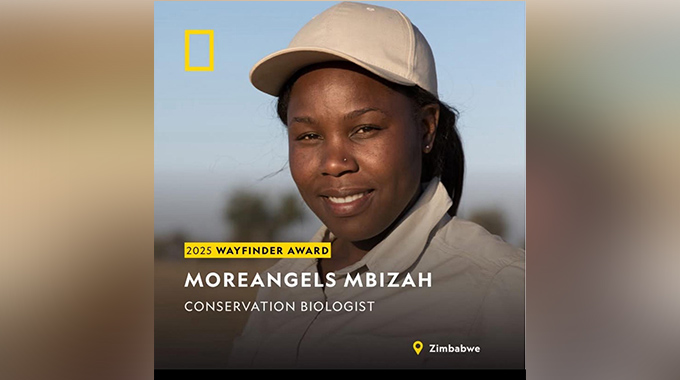
Rutendo Nyeve,Victoria Falls Reporter
ZIMBABWEAN conservationist Dr Moreangels Mbizah has been awarded the prestigious 2025 Wayfinder Award by the National Geographic Society in recognition of her cementing her global leadership in wildlife conservation and scientific exploration.
Dr Mbizah’s work in promoting human-wildlife coexistence and sustainable conservation practices has earned her international acclaim, placing Zimbabwe at the forefront of global environmental efforts. As founder of Wildlife Conservation Action, she has developed innovative strategies to reduce human-wildlife conflict while advancing socio-economic resilience in communities near protected areas.
In an interview with Zimpapers, Dr Mbizah said her achievement is not only a personal triumph but also a victory for the nation, showcasing Zimbabwe’s potential to produce world-class scientists and conservationists.
“This award is a testament to the relentless dedication of our team and the support of our communities. It is an honour to represent Zimbabwe on such a prestigious platform and to inspire the next generation of conservation leaders,” she said.
As one of the few black African women to receive this distinguished recognition, Dr Mbizah’s success sends a powerful message to young Zimbabweans, particularly girls, proving that excellence in science, technology and conservation is within reach. Her journey reflects the resilience, innovation and passion that define Zimbabwe’s spirit.
Dr Mbizah’s research has been instrumental in developing sustainable conservation models that benefit both wildlife and local communities. Collaborating with organisations such as WWF and Imire Rhino and Wildlife Conservation, she has championed innovative strategies to protect Zimbabwe’s rich biodiversity while improving livelihoods.
The Wayfinder Award celebrates visionaries who push the boundaries of exploration and environmental stewardship. She said receiving the award shows that the National Geographic Society recognises the critical role of African scientists in solving global ecological challenges.
She said her success highlights the call for the nation to continue to invest further in conservation education and youth empowerment.
“The future of our planet depends on inclusive conservation efforts. We must engage young people, harness indigenous knowledge and foster global partnerships to safeguard our natural heritage,” she said.