Online Reporter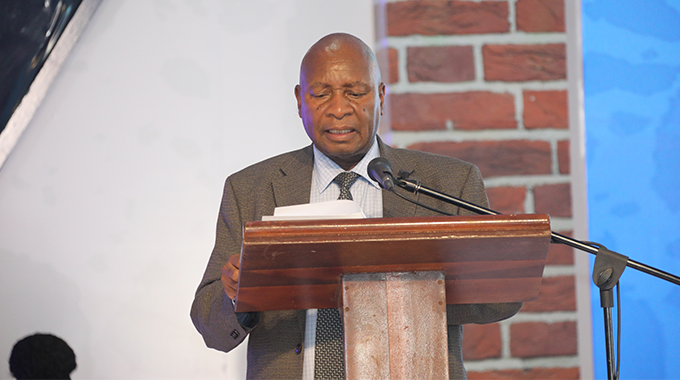
Rutendo Nyeve, Victoria Falls Reporter
THE Government is spearheading the integration of all public workers into the National Social Security Authority’s (Nssa) comprehensive Accident Prevention and Workers’ Compensation Scheme, signalling the end of a fragmented and outdated disability benefits system.
The initiative, which is set to deliver a unified system focused on prevention, compensation and rehabilitation, was revealed by the Minister of Public Service, Labour and Social Welfare, Cde Edgar Moyo during the official opening of the annual Safety and Health at Work (Shaw) Conference here yesterday.
Held under the theme: “Occupational Safety and Health: Technology and the Future of Work”, the conference is a key event on the Nssa calendar, bringing together Government, industry, labour and development partners to chart the future of occupational safety and health (OSH) in Zimbabwe.
Minister Moyo laid out a comprehensive vision for a safer, more equitable future for every Zimbabwean worker, anchored in constitutional rights and international best practices.
“We stand at the threshold of the Fourth Industrial Revolution, which also introduces new workplace risks such as cyber stress, ergonomic strain, exposure to invisible agents, and the social dislocation of rapid change,” he said.
Minister Moyo said as part of Government’s renewed vigour, Cabinet recently approved the “Occupational Safety and Health (OSH) Bill”, a piece of legislation he described as “historic.”
“On 3 June 2025, the Government of Zimbabwe took a historic step forward when Cabinet approved the Occupational Safety and Health (OSH) Bill.
“This landmark legislation seeks to harmonise Zimbabwe’s fragmented OSH statutes into one modern, preventive, and rights-based framework,” he said.
Cognisant of this, Minister Moyo said Nssa is developing approximately 20 statutory instruments to operationalise the Bill.
Minister Moyo said the proposed changes will directly benefit the public service, a sector long operating under the antiquated State Service (Disability Benefits) Act.
“Occupational Safety and Health is a multi-disciplinary field, which touches not only the private sector but the public sector as well.
“Our intention as Government is walk together with all sectors,” he said.
“The Public Service Commission is also advancing the integration of public servants into NSSA’s Accident Prevention and Workers’ Compensation Scheme. This will replace the outdated State Service (Disability Benefits) Act and establish a unified system for prevention, compensation, and rehabilitation.
“It’s a practical step toward efficiency, equity and improved service delivery,” said Minister Moyo.
This integration means that for the first time, civil servants will be covered under the same modern, robust safety and compensation framework as their private-sector counterparts, eliminating a long-standing disparity and fostering a culture of prevention across the entire economy. Minister Moyo shared statistics that underscore the urgency of these reforms.
“Over the past three years, we have been losing an average of 70 workers a year and recording about 4 500 disabling injuries annually. These are not mere numbers, they represent human lives, families, and futures cut short. One life lost is one too many,” he said.
Minister Moyo called for a collective effort to achieve “zero harm” at the workplace saying safety is not a cost but a vital investment in the nation’s human capital.
Turning to the Safety and Health at Work (SHAW) Conference, Minister Moyo said the annual gathering is a strategic platform for Government, business, labour, academia and development partners to reflect, share insights, and chart collective solutions for advancing occupational safety and health in Zimbabwe.
He said Zimbabwe has made significant progress in ratifying the ILO Convention No. 187 on occupational safety and health as well as adopting a new global convention on protection against biological hazards.
The integration of public servants into the NSSA scheme marks a definitive stride towards a safer, more unified, and equitable future for Zimbabwe’s workforce.