malvernmugadzikwa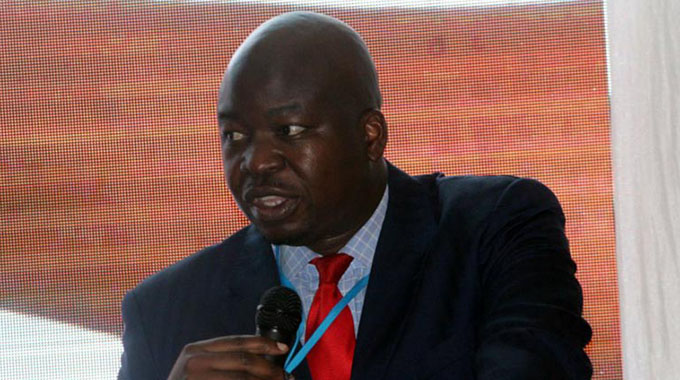
Business Writer
Government is investigating fraudulent activities that saw some suppliers failing to deliver what they would have been paid for, a senior official revealed.
Speaking at the launch the Zimbabwe Financial Reporting Manual (ZRFM) and Public Sector Professional Accountancy of Zimbabwe (PSPAZ) Training Office in Harare on Monday, Finance Secretary George Guvamatanga said several cases are under investigation for fraud.
“Through the value for money exercise, we also realised another very disturbing trend in the public procurement system which is really what is called in the streets ‘air supply’ where orders and invoices are generated and payments are made but nothing is delivered.
“So, we are currently further strengthening our procurement systems but we have been looking very closely at this.
“We have got several cases currently under investigation of ‘air supply’ and the culprits will be dealt with across the whole of the system whether it is from Government or suppliers, they will be dealt with, with the sternest measures that they deserve.”
Through the value for money exercise, Guvamatanga said there has been significant improvement in savings to the fiscus.
Last year, the Treasury implemented the value for money initiative to foil distortions in the domestic market and weaknesses in the public procurement processes that were compromising optimal use of public resources while harbouring corruption.
Guvamatanga said the Treasury has further engaged the Procurement Regulatory Authority of Zimbabwe (PRAZ) to ensure processes and systems in the public procurement domain are enhanced as a strong PFM function is significant to the achievement of the National Development Strategy 1(NDS 1) towards Vision 2030.
Under Vision 2030, the Second Republic aims to transform Zimbabwe into an upper-middle-income economy.
“This is actually a very strong warning to all of those who have been engaged in this air supply that your time has come to an end, and the systems that we are putting in place will make sure that you are all plugged out wherever you are hiding.
“I guess for those who are smart enough, maybe in the next seven days, I would like to advise you to find the goods that you were supposed to deliver, to deliver them because we are coming after you,” he said.
Since the launch of the value for money principle, he said, there is now a fully developed system of standardised pricing in Government called commonly-purchased goods through which authorities have been able to set maximum prices across the public procurement domain.
In an interview after the event, Guvamatanga said: “In the process of managing this value for money, we actually discovered further challenges within our procurement system.
“I called it by its street name (air supply) but actually its fraudulent procurement whereby invoices are sent, payments are made but no goods are delivered.
“We are currently investigating several issues of such instances where the Government paid but no goods were actually delivered.
“This exercise is ongoing, the centralised internal audit unit has been working very closely where we have identified those anomalies.”
So far, he said, indications are that fraud within the public procurement system is rampant not only in Government ministries, departments and agencies but in local government (rural and urban councils).
“We are now putting in place very strong systems working in conjunction with PRAZ to ensure that we plug this delinquency which again is costing the Government a lot of money.”
Guvamatanga said the fraud cases will soon be reported to the police for the law to take its course adding that on the other hand, Treasury has its own internal disciplinary measures in terms of financial sanctions where those accounting officers found wanting would be asked for restitution.
“If we actually realise that you are negligent, the PFM Act does have provisions for individuals to be personally sanctioned and we are actually looking where individuals are proven to have been negligent, then they will have to pay personally from their own pockets.
“That might even mean that you might have to sell your house or car depending on the extent of the fraud or the negligence that would have been committed,” he said.


 Online Reporter