Online Reporter
Government, in partnership with UNICEF country office and with financial support from the Korea International Cooperation Agency (KOICA), is launching the “Climate Action for the Last Mile: Reaching the Most Vulnerable Children in Zimbabwe” project to strengthen climate resilience for children and vulnerable communities.
Our reporter Ivan Zhakata is at Kuwadzana 3 High School in Harare where the launch is taking place, to give us live updates of the event.
Excitement and hope fill the air
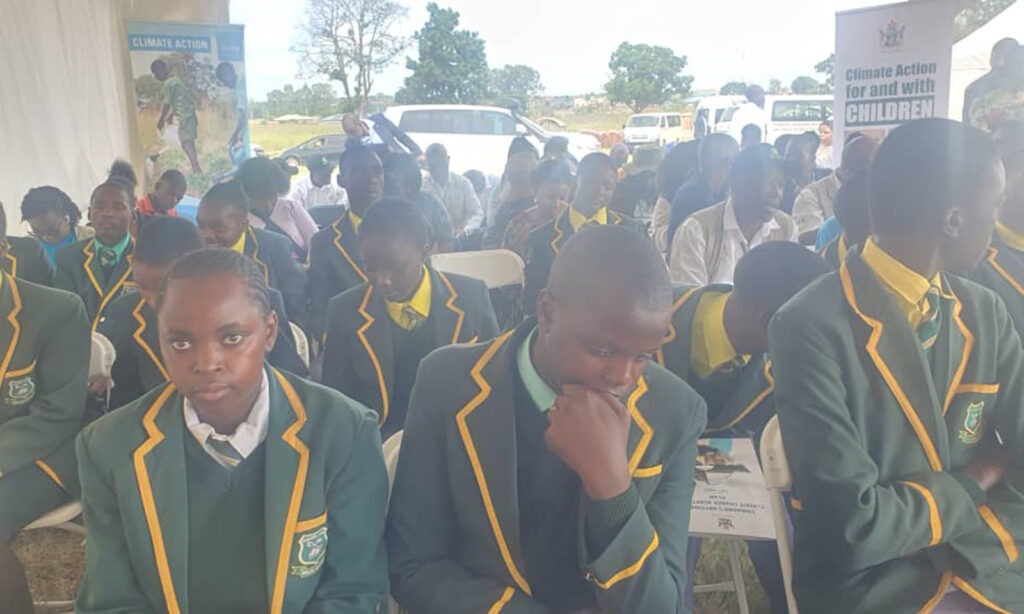
A sense of anticipation is buzzing through the air as learners and teachers gathered at Kuwadzana 3 High School in Harare are awaiting the official launch of the “Climate Action for the Last Mile: Reaching the Most Vulnerable Children in Zimbabwe” initiative.
The project aims to strengthen climate resilience for children and vulnerable communities.
Students dressed in neatly pressed uniforms are seated under the tent, eagerly waiting for the launch to commence.
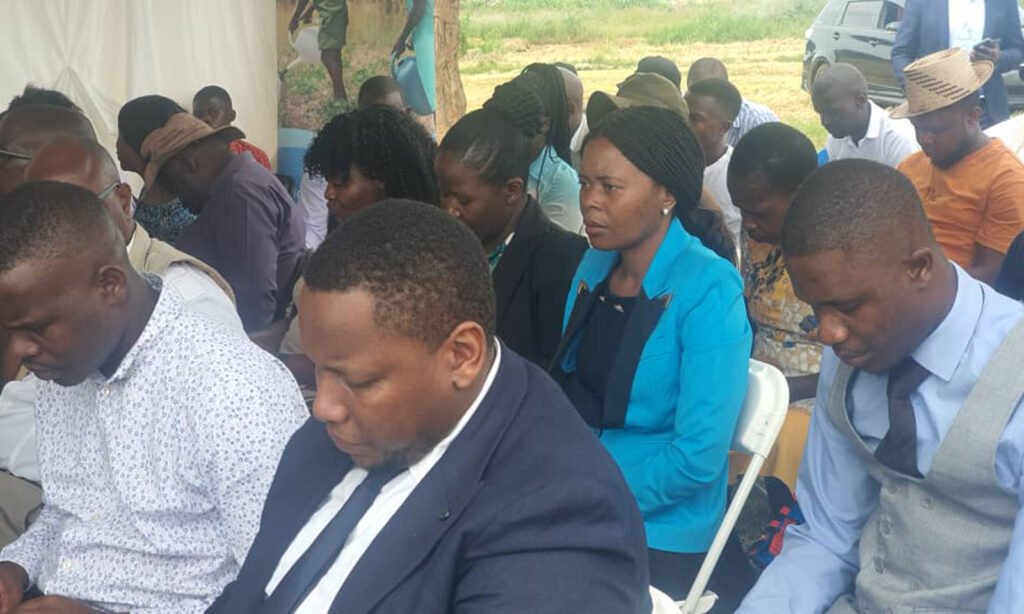
Teachers are huddled in groups, excitedly chatting about how the project could transform education, health and sanitation services at their schools.
The initiative is expected to focus on improving water resource management, integrating climate change education into schools, enhancing nutrition services, and strengthening early warning systems for climate-related disasters.
For many communities, this marks a significant step towards a more sustainable and resilient future.
As the dignitaries approach, the crowd erupts into cheers, eager to hear how the initiative will unfold.
The excitement in the air is clearly not just for the event but for the promise of a better tomorrow—one where children can learn, grow and thrive in a climate-smart environment.
For many learners and teachers, it is the start of something truly transformative.
Climate Action for the Last Mile: Reaching the most vulnerable children in Zimbabwe
Climate change disproportionately affects the most vulnerable children, exacerbating existing inequalities and exposing them to risks such as food insecurity, waterborne diseases and limited access to education.
In response, Government and UNICEF Zimbabwe with financial support of US$5 million from the Korean International Cooperation Agency (KOICA), are implementing the Climate Action for the Last Mile project.
This two-year initiative (November 2024-April 2027) aims to increase climate resilience for children and communities by enhancing access to climate-smart social services and infrastructure while also strengthening policy frameworks for climate action in Zimbabwe.
The project has two key objectives:
Increased climate resilience for children and their communities through the provision of climate-smart social services and infrastructure via gender-responsive and inclusive low-carbon development pathways that reduce climate vulnerabilities.
Improved climate policies, finance, and institutional capacity to ensure children benefit directly or indirectly from stronger legal frameworks, enhanced climate finance, access to climate justice, and improved regulations to address climate-related risks effectively.
It will be implemented in the following areas:
Chipinge, Manicaland Province
Harare Province
Mangwe and Beitbridge in Matebelelend South Province
Climate change impacting Zim’s schools
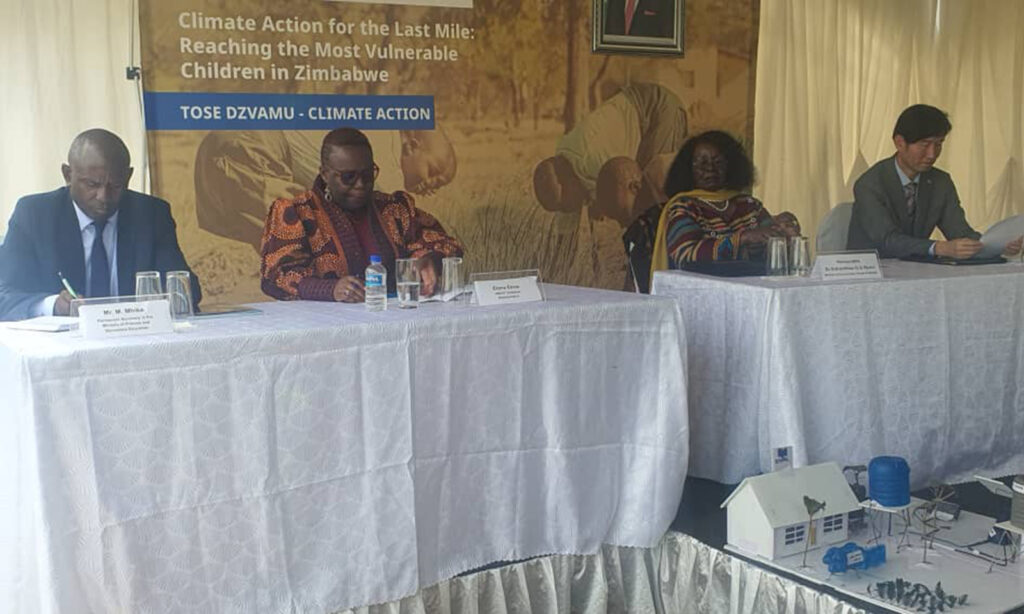
The Ministry of Primary and Secondary Education has raised concerns over the growing impact of climate change on schools, highlighting that extreme weather conditions are endangering students and disrupting learning.
Speaking at the launch of the programme this morning, Permanent Secretary in the Ministry of Primary and Secondary Education, Mr Moses Mhike said climate change needs urgent attention.
“Of the targeted number that this programme aims to support, 40 percent will be children,” Mr Mhike said.
“Schools are strategically positioned to influence communities, and the climate education that children receive will spread to their families and beyond.
“Just today, the Honourable Minister of Education was on radio appealing to parents and students to ensure that they do not cross flooded rivers when going to or from school.”
Mr Mhike said droughts and floods are major challenges leading to food insecurity and increased school drop-outs.
“When there is drought, families struggle. Some children may leave school to work and support their families,” he said.
The ministry also called for urgent funding to strengthen school infrastructure and address climate-related challenges.
With Zimbabwe not spared from the effects of climate change, the Government and its development partners are under pressure to act swiftly to protect education and ensure that schools remain safe places for students.
UNICEF calls for urgent climate action
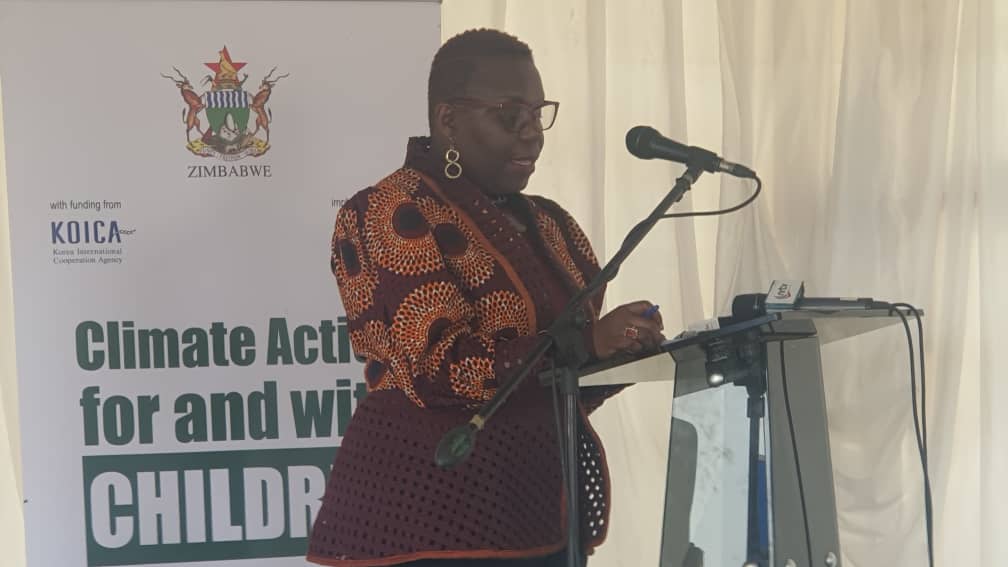
UNICEF has raised the alarm on the devastating impact of climate change on Zimbabwe’s children.
Speaking at the launch of the programme this morning, UNICEF Representative to Zimbabwe Mrs Etona Ekole said the crisis is severe.
“While children are the least responsible for climate change, they bear its greatest burden,” Mrs Ekole said.
She said UNICEF’s Children’s Climate Risk Index revealed that every child globally faces at least one climate or environmental hazard annually, with detrimental effects on their health, education and overall well-being.
“Children in climate-affected areas face dehydration, heat stress, and respiratory illnesses. These challenges are real-life struggles for our children,” Mrs Ekole said.
The Climate Action for the Last Mile project will provide critical support to children, improving access to education, clean water, nutrition and healthcare in climate-sensitive regions.
Mrs Ekole commended the Government for prioritising children’s voices in national climate policies, ensuring that their needs are included in disaster response and prevention strategies.
“We cannot afford to wait. Urgent action is needed now to protect our children and secure their future.”
Zimbabwe is taking a crucial step towards safeguarding its children against the impact of climate change.
Korea pumps in US$5 million
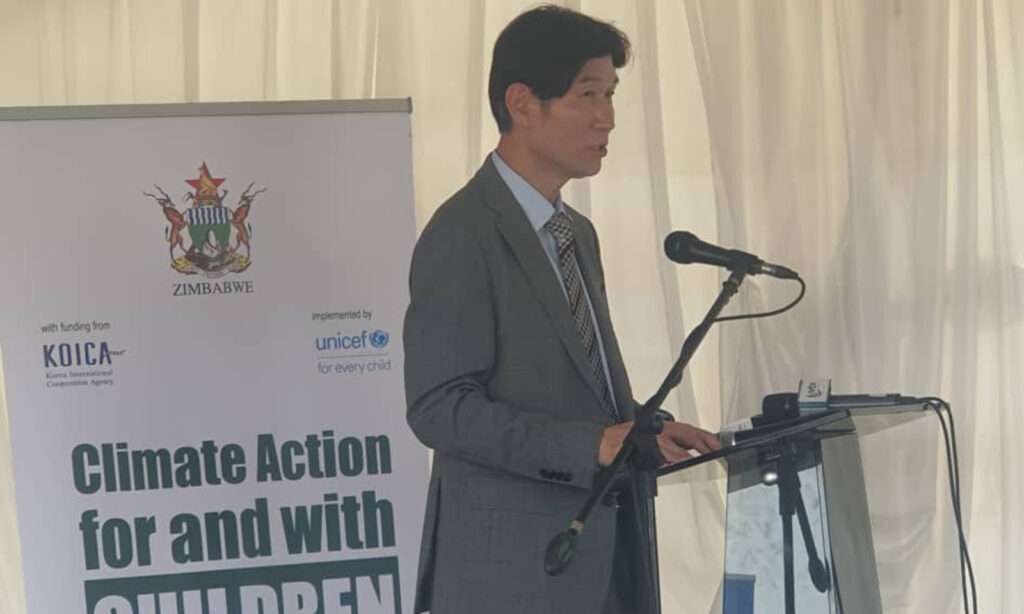
The Korean government has committed US$5 million to aid Zimbabwe in its battle against climate change, with the focus being on vulnerable children who are disproportionately impacted by environmental disasters.
The project is set to benefit 30 000 individuals, including 12 000 children.
At the launch ceremony, the Ambassador of Korea to Zimbabwe, Park Jae Kyung said it is important to have international cooperation in combating the global climate crisis.
“As a good friend of Zimbabwe, Korea provides not only emergency aid during natural disasters, but also works to enhance resilience through long-term climate adaptation programmes,” said Ambassador Park.
The fund will support education, health and food security initiatives, although the project’s impact will extend beyond material assistance.
“This initiative will empower Zimbabwe’s young generation, raising their awareness of climate change and encouraging active participation in climate governance,” Ambassador Park said.
The project aims to give children a platform to voice their concerns and influence climate policy decisions, ensuring their future is protected from the devastating effects of climate change.
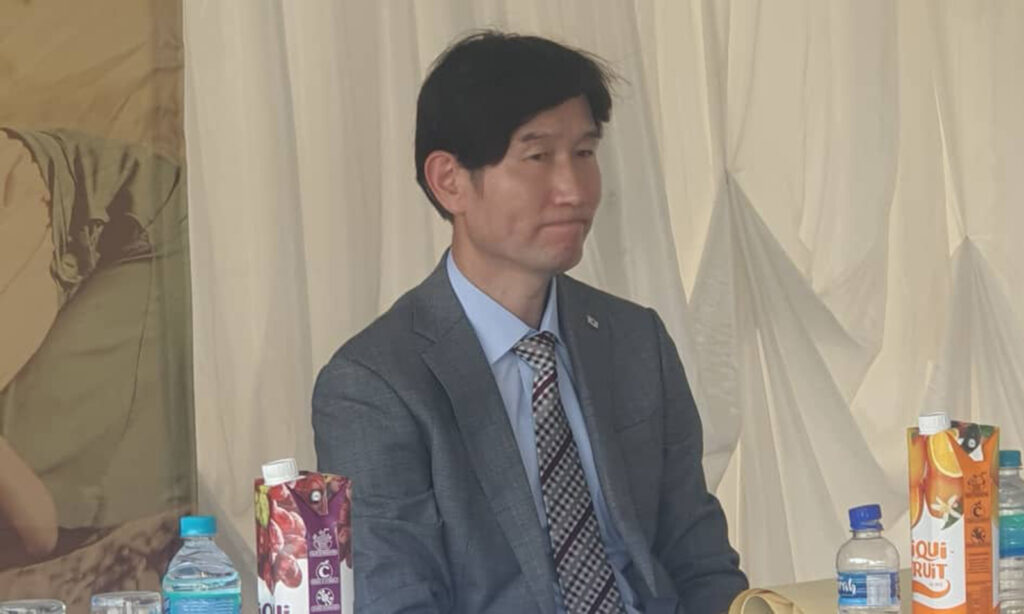
Korea’s long-standing relationship with Zimbabwe has seen collaborative efforts in areas like drought-tolerant farming and environment-friendly livestock practices.
“We believe that by investing in the future of Zimbabwe’s children, we are helping to build a more sustainable future for the country,” Ambassador Park said.
The Korean donation underscores the growing importance of global partnerships in addressing climate challenges.
Minister Nyoni leads Zim’s commitment to climate resilience
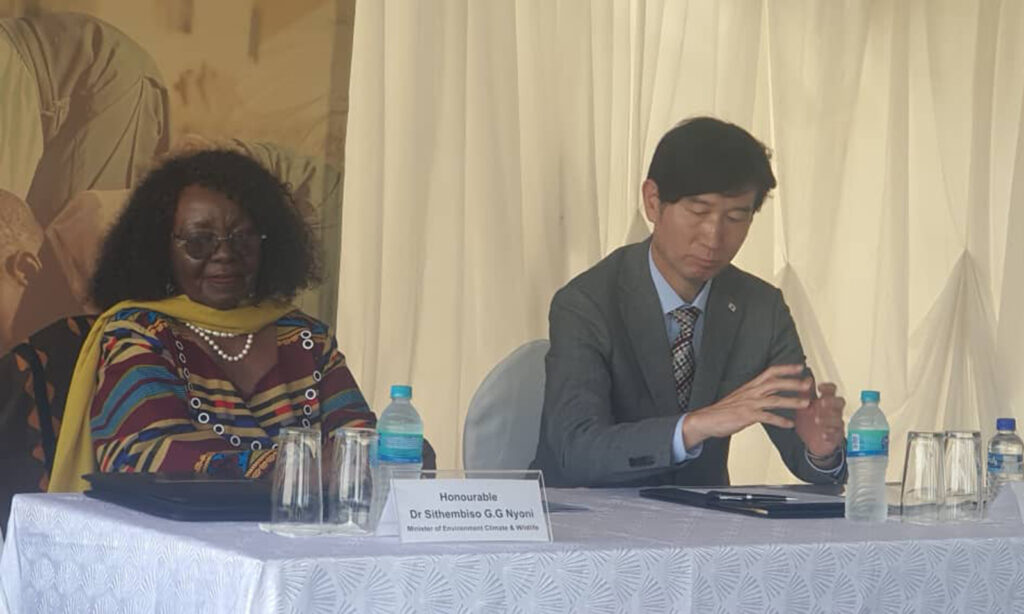
The Minister of Environment, Climate, and Wildlife, Dr Sithembiso Nyoni has said Zimbabwe is committed to tackling climate change.
Speaking at the launch of the project, Minister Nyoni said it is important to protect vulnerable populations, including women, children and persons with disabilities.
“Climate change is a harsh reality, and its impact on marginalised communities is devastating,” Minister Nyoni said.
“This project is a crucial step in building resilience through climate-smart services and infrastructure that directly benefits those at risk.”
The project launch comes at a time when Zimbabwe is reaffirming its climate action efforts.
The country has set an ambitious target to reduce per capita greenhouse gas emissions by 40 percent in the next decade as part of its Nationally Determined Contribution.
Minister Nyoni said the commitment aligns with Zimbabwe’s Vision 2030, which strives for a sustainable, inclusive future for all.
“The voices of children and vulnerable groups are essential in shaping effective climate solutions,” she said.
“This project embodies our determination to ensure that no one is left behind in the fight against climate change.”
Minister Nyoni also said the National Climate Adaptation Plan and the Climate Change Management Bill are integral steps in integrating climate resilience into national development frameworks.
She called for greater collaboration across sectors to ensure that climate policies are inclusive, equitable and effective.