admin
admin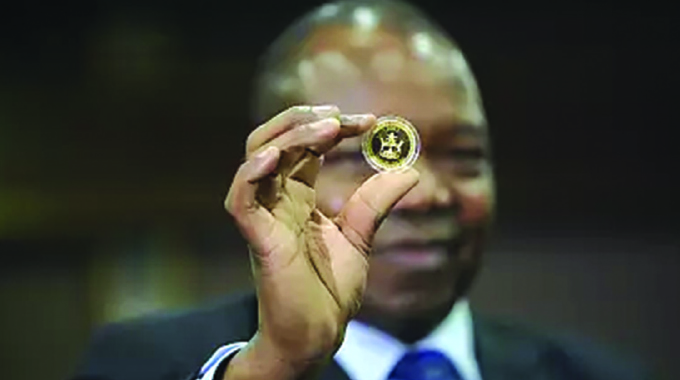
Prosperity Mzila
Herald Correspondent
Nations and governments have been destroyed by the scourge of underground economy.
Zimbabwe has not been spared as its economy has been under attack since the land reform was implemented back in the year 2000.
This economic onslaught continues to be sustained by the United States (US) and its allies in an effort to embarrass the Government and ultimately to effect regime change.
While giving evidence in the Senate House, former US Senator Chester Crocker said they were going to make the Zimbabwean economy scream to separate the people from the ruling Zanu PF.
In the years 2008 and 2009, the Zimbabwean economy hit rock bottom as it spiralled in free-fall mode.
Since then, many policies were put in place to curb the runaway inflation and bring stability to the Zimbabwean dollar.
However, none of them has been as effective and successful as the ones implemented by the Second Republic.
When President Emmerson Mnangagwa was sworn into office, he swore to turn Zimbabwe into an Upper Middle Income Economy by the year 2030.
The Second Republic is being led by a visionary and a result oriented leader.
There has been great improvement in economic and infrastructural development, mining industry, manufacturing, agriculture and socio-economic development as a whole.
The Second Republic ‘s policies are holistic in an effort to leave no one and no place behind as the country works towards the attainment of Vision 2030.
For detractors, the economy has always been their channel of effecting regime change on their target nations.
Zimbabwe has always been one country they were never happy to give up on as it has always been the apple of their eye.
So they set off devising strategies such as imposing economic blueprints such as the Economic Structural Adjustment Programme (ESAP) in the early to mid-80s which caused uproar from citizens as they lost jobs due to major retrenchments in parastatals such as the National Railways of Zimbabwe, Dairibord Zimbabwe and Willowvale Mazda Motor Industries among others.
When President Mnangagwa said he intended to hit the ground running, he knew the mammoth task that he was inheriting from the previous government. He also knew the steepness of the stairs the country needed to climb in order to defeat the detractors from further sabotaging the nation. In 2018, the Transitional Stabilisation Programme (TSP) was introduced and it covered the period from October 2018 to December 2020.
This is the time when the country was introduced to two important mantras in rebuilding the economy, ‘Zimbabwe is Open for Business’ and ‘Austerity for Prosperity’. Its major purpose was to bring sanity to the economy by stabilising the micro-economy, and the financial sector, introducing necessary policy and institutional reforms to transform the private sector led economy and to launch quick-wins to stimulate growth.
The austerity measures though painful, were able to significantly reduce Government expenditure while increasing revenue for future benefit.
In June of 2019, Government was able to record a budget surplus of $804 million for the first time since the onslaught on the economy.
Investors continue to flock into the country, bringing the much needed foreign currency, all this because Zimbabwe has been opened for business through engagement and re-engagement policy.
In 2021, the Government introduced the National Development Strategy 1 (NDS1) which is expected to run for a period of five years from 2021 to 2025 while the NDS2 will run from 2026 to 2030, where the Government hopes to have attained an Upper Middle Income Economy/Society.
This NDS 1 is being used by the Government to ensure development is achieved in every sector, economy, infrastructural, mining, energy, agriculture, socio-economic issues, such that none of the sectors is found lacking.
The detractors are well aware of the country’s upcoming 2023 harmonised general elections and are on the offensive attacking Government policies and initiatives that will see the country and its people progressing.
All this effort is meant to ensure they turn people against Zanu PF and Government.
Recently, Government has been engaged with investigations meant to flush out arbitrage within the Dutch Foreign Currency Auction, runaway inflation and the sudden rise of basic commodities.
The introduction of the Mosi-oa-Tunya (Gold coins) by the Reserve Bank of Zimbabwe (RBZ) has been received overwhelmingly by the public as an alternative store of value. Since the launch of the Mosi-oa-Tunya Gold coins, Government has managed to rake in $3,7 billion in local currency.
Before this, the United States Dollar (US$) had been the only alternative for people to save their money without fear of erosion by inflation. Unfortunately, it flooded the black market more than the official market, making it prone to abuse by the detractors who took advantage of this to fuel inflation.
The resultant ripple effects contributed to a price rise of basic commodities, fuel and the erosion of people’s salaries.
To bring sanity to basic commodity pricing, Government introduced Statutory Instrument 98 of 2022 (SI 98), which suspended customs duty on cross border trade on selected basic commodities in the country.
This move provided competition to local manufacturing companies who began to feel the heat as their product deliveries began to shrink.
People preferred importing products from outside the country as they were affordable as compared to local products.
The reason for hiking basic commodities by local manufacturing companies was not justified since they had access to foreign currency through the forex exchange system.
Meanwhile, the Ministry of Finance and Economic Development and all financial stakeholders held the Zimbabwe Economic Development Conference (ZEDCON) in Victoria Falls where they confirmed that their economic strategies were meant to close all leaks that had been fuelling the black market activity and resultant inflationary pressures.
According to Zimbabwe National Statistics Agency (ZIMSTAT), the month on month inflation dropped by 25.6 percent in July, shedding 5.1 percent on June’s 30.7 percent. There has been a retreat in inflation spiral, as evidenced by the increase in purchase power. In the week ending August 5, the cost of living for a family of six decreased significantly, indicating a cooling effect of policy measures and a drop in fuel prices which are also a major cost driver.
Furthermore, the Government has gone all out to contain speculative market forces.
This has been achieved by adopting tough in macro-economic measures, such as checking and double checking every single invoice issued by departments and agencies to ensure their pricing is not calculated at black market rates.
Moreover, Government has stopped individuals and corporates from borrowing for speculation and none productive uses as it caused arbitrage over a long time.
The past month, people have been enjoying the fruits of a listening Government that made sure that the fuel prices go down, the exchange rate and prices stabilise including the tightening of money supply in order to control inflation.


 Online Reporter