

 Online Reporter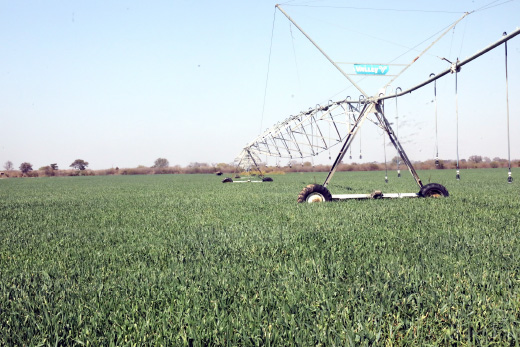
Judith Phiri
WHEAT farmers across the country have been urged to expedite planting as the winter cropping window nears its end, with just over 60 000 hectares planted so far, which is half of the national target.
Permanent Secretary in the Ministry of Lands, Agriculture, Fisheries, Water and Rural Development, Professor Obert Jiri, has commended the progress made to date but stressed that swift action is critical to avoid missing the optimal planting period.
“Timely planting translates to higher yields and shields crops from frost and unseasonal rains. Time is of essence if Zimbabwe is to secure food self-sufficiency and consolidate past agricultural gains,” said Prof Jiri.
He noted that cold weather has delayed maize harvesting in some areas thereby affecting land availability for wheat but assured farmers that Government and its partners have availed inputs, particularly seed and fertiliser.
“Farmers can plant immediately after harvesting. The key is to fully utilise the remaining days of the window period,” he said.
Zimbabwe’s optimal winter wheat planting period traditionally runs from the last week of April to the end of May, with the first two weeks of May yielding the best results. This week marks the final stretch of that critical window.
Prof Jiri reaffirmed the Government’s support through the provision of inputs, irrigation infrastructure and technical assistance.
“We are looking into the issue of water for irrigation so that we meet our target. We also want to assure our farmers that the issue of electricity will be addressed. This is all possible through effective planning, enhanced Government support and favourable weather conditions,” he said.
According to the 2025 Winter Crops Plan, Zimbabwe is aiming for a record-breaking harvest, with 600 000 tonnes of wheat expected from 120 000 hectares, along with 39 000 tonnes of barley and 236 000 tonnes of potatoes.
The plan also targets 6 500 hectares for barley and 8 700 hectares for potatoes.
Winter wheat production in the country has grown significantly over the past three years, buoyed by targeted Government interventions such as the Presidential Input Scheme, private sector contract farming arrangements and the expansion of irrigated land.
In 2023, the country produced around 468 000 tonnes of wheat, the highest output in decades, which met national consumption needs and eliminated imports for the first time in over two decades.
The country’s annual wheat consumption stands at about 360 000 tonnes, and sustained self-sufficiency is seen as critical to achieving food security, stabilising bread prices and saving foreign currency.
Despite persistent challenges such as power outages, high input costs and climate variability, the Government continues to ramp up support for strategic crops like wheat to anchor the country’s broader agricultural transformation in line with Vision 2030.
Meanwhile, the Government recently assured the nation that grain reserves remain adequate, and reiterated its commitment to financially capacitate the Grain Marketing Board (GMB) to ensure prompt payments to farmers upon delivery of their grain.




 Bongani Ndlovu