Online Reporter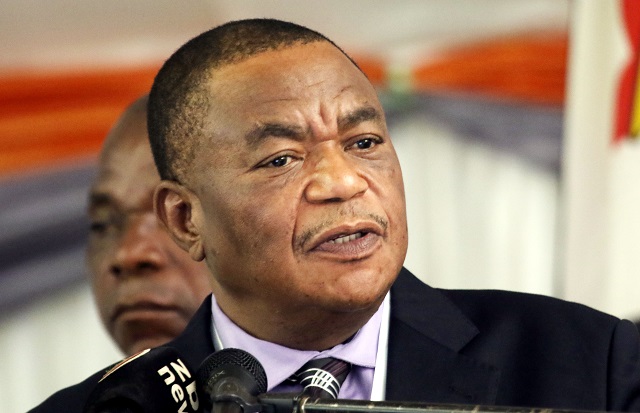
Nqobile Bhebhe in Victoria Falls
THE Government is taking key steps to address challenges in the energy sector, including cost-competitiveness, policy uncertainty, and infrastructure development, all of which are crucial to achieving a just and equitable energy transition.
Vice-President Constantino Chiwenga said this while officiating at the 6th International Renewable Energy Conference in Victoria Falls on Wednesday, where he stated that the country was determined to remove barriers to business, foster partnerships and accelerate the development of sustainable, clean and affordable energy solutions for all Zimbabweans.
Under the theme “Sustainable Energy Investments for a Better Future,” the conference highlighted growing dedication to positioning renewable energy at the core of Zimbabwe’s economic transformation and climate resilience.
The event attracted a diverse group of global stakeholders, signalling rising international interest in Zimbabwe’s renewable energy potential and its increasing influential role in shaping the clean energy narrative across the continent.
Zimbabwe has intensified efforts to reduce dependence on hydro-electric power, which is increasingly vulnerable to climate-induced shocks, such as the El Niño phenomenon. Solar energy has emerged as a resilient and dependable alternative with both the public and private sectors accelerating its adoption.
With a wealth of renewable resources including solar, wind, geothermal and hydro, Zimbabwe is uniquely positioned to become a clean energy powerhouse in the Southern African region.
VP Chiwenga emphasised the ambitious, yet essential, commitments made at the 2024 United Nations Climate Change Conference (COP29), which aims to triple renewable energy capacity and double energy efficiency rates by 2030.
“Zimbabwe is fully committed to these targets, which align with our national strategy for transitioning to sustainable energy systems,” he said.
VP Chiwenga stated that key sectors such as mining, agriculture, and manufacturing — which require a constant, reliable energy supply to maintain operational stability — must embrace solar energy.
“Therefore, investing in renewable energy — such as solar, wind, and hydropower — will not only ensure a stable energy supply but also foster economic productivity and competitiveness, while reducing reliance on conventional energy sources,” he added.
VP Chiwenga said the Government would play its part and highlighted the implementation of key policy frameworks, such as the National Energy Efficiency Policy and the Renewable Energy Policy, which aim to create a cleaner, more resilient energy sector.
“We are working to address challenges related to cost-competitiveness, policy uncertainty, and infrastructure development, which are critical to achieving a just and equitable energy transition,” he said.
VP Chiwenga acknowledged the shared energy challenges faced by Southern Africa but emphasised the potential for collaborative action to address them.
“By pooling resources and enhancing cross-border energy trading, we can improve regional energy security, reduce costs and leverage our collective strengths,” he said.
The Southern African Power Pool (SAPP), a platform facilitating electricity trading among member states is a prime example of such regional cooperation.
“Furthermore, efforts are underway to interconnect the SAPP with the East African Power Pool, opening new avenues for regional collaboration in energy supply and distribution,” said VP Chiwenga.
He stated that while the national electricity access rate stands at 62 percent, rural areas experience significantly lower access levels, with some regions as low as 20 percent. The disparity is not only a challenge but presents an opportunity for rapid and transformative improvement.
“Government has already embarked on several transformative renewable energy projects, including large-scale solar farms and wind energy initiatives,” said VP Chiwenga.
“Our target is to achieve 2 100 megawatts of installed renewable energy capacity by 2030. This goal aligns with Sustainable Development Goal 7, which seeks to ensure universal access to affordable, reliable and sustainable energy.”
The Vice-President said Zimbabwe is determined to be among the champions in the renewable energy revolution and called for more private sector-driven projects, such as Captive Power Plants, which are already making strides in reducing load shedding and improving energy reliability.
VP Chiwenga said Independent Power Producers (IPPs) continue to play a critical role in expanding the national grid, currently contributing approximately 104 megawatts of electricity.
“We actively encourage the private sector, financial institutions, and international partners to invest in our energy sector.
“Through collaboration and innovation, we can unlock the financial capital needed to develop power plants and infrastructure that will benefit both the private sector and our communities,” he said.
The conference, which ended on Friday attracted a diversity of participants, including local and international energy stakeholders, developmental partners, financiers and other strategic players in the energy sector.
Key topics discussed include local financing of renewable energy projects and the role of developmental partners and local banks in advancing renewables, a focus on accelerating green jobs, investment in green energy infrastructure, battery value chains, financing the climate stack, youth and innovation and the role of artificial intelligence in the energy transition.