Lovemore Kadzura
Post Reporter
GOVERNMENT has set a target to electrify all rural schools by the end of 2027, with three institutions in Makoni District among those already connected to electricity under a programme aimed at expanding access to technology and practical education.
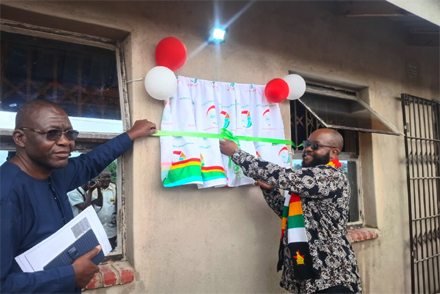
Minister of State for Manicaland Provincial Affairs and Devolution Advocate Misheck Mugadza pronounced Government’s position while commissioning electricity at St Stephen’s Secondary, Mahere Secondary and Zambuko Primary schools in Makoni District on Wednesday.
The three projects directly benefit a combined 706 learners and 35 teachers, providing the schools with an opportunity to strengthen practical learning, introduce technology-based teaching methods and improve access to science and technical subjects.
Minister Mugadza said electricity would support implementation of the Education 5.0 model, which emphasises practical skills, innovation and entrepreneurship.
He said rural learners deserved access to the same educational infrastructure and opportunities as their urban counterparts.
“The electrification of these three institutions demonstrates that development is not merely a promise but a practical commitment. We are witnessing the realisation of President Mnangagwa’s philosophy of leaving no one and no place behind in the development drive. Our rural communities deserve the same opportunities, infrastructure and quality of services enjoyed by their urban counterparts,” said Minister Mugadza.
He said availability of electricity will enable schools to embrace digital learning through computers, projectors, internet-enabled learning resources and other educational technologies.
Minister Mugadza added that access to electricity should translate into improved educational outcomes, particularly as schools increasingly incorporate practical and technology-oriented subjects into their curricula.
He said Government’s investment in the three institutions demonstrated commitment to narrowing the rural-urban development gap and equipping learners with skills needed in an increasingly digital world.
Makoni Rural District Council Ward 33 representative, Councillor Maxwell Japani said St Stephens Secondary School had struggled to provide learners with a modern learning environment because it lacked electricity.
He said the new connection will help address longstanding challenges, including limited access to science and technical subjects.
“We are grateful for the electricity intervention at this school. We have witnessed the mantra of leaving no place behind in practical. Our school is now at the same level as others. The electrification of this school will have multiplier effects such as increased enrolment,” said Cllr Japani.
Cllr Japani said the absence of electricity had also restricted the teaching of practical subjects, including biology, chemistry, metalwork, woodwork as well as fashion and design technology.
He said the school had received a Starlink system from Government but could not fully utilise it because of the absence of electricity. The new connection can now allow the institution to make better use of the equipment and expose learners to digital technologies.
He said electricity had also been connected to teachers’ houses at the institution, raising hopes that improved living conditions will help address staff retention challenges. Teachers had previously been reluctant to remain at the school, contributing to transfers that disrupted continuity in teaching.
Acting Rural Electrification Agency (REA) provincial manager, Mr Fabian Chipanga said the agency was implementing a nationwide programme to connect rural schools to electricity.
“REA has an ongoing programme of electrifying all rural schools. We want all learners to have access to new technologies regardless of geographical location. It is Government policy that every person gets access to modern and sustainable energy, either from solar or the electricity grid,” said Mr Chipanga.
He said Government’s target was to complete electrification of all rural schools by the end of 2027.
Mr Chipanga said REA will then embark on a programme to connect rural homesteads, extending access to electricity beyond educational institutions.
The agency is also promoting alternative energy sources to reduce reliance on firewood.
He said REA was encouraging households to adopt biogas technology as part of efforts to provide alternative energy for cooking, citing Nzvimbe Village where the agency has constructed biogas facilities at 50 homesteads.
Ends
Government targets full rural school electrification by 2027