Liberty Dube
Post Correspondent
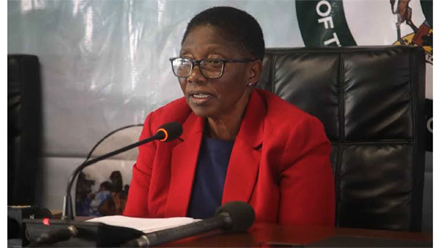
VETERANS of the liberation struggle must get tangible improvements in their welfare, economic opportunities and social protection under the ministry’s 2027 strategic roadmap, Veterans of the Liberation Struggle Affairs Minitser, Senator Monica Mavhunga has said.
Addressing the ministry’s strategic planning workshop in Mutare early this week, Minister Mavhunga challenged officials to translate Government policy commitments into measurable programmes that improve the lives of veterans and their families.
She said the ministry must move beyond distributing resources and focus on building economic independence, strengthening social protection and preserving the country’s liberation heritage.
“Our responsibility is to ensure that the welfare, dignity and socio-economic security of this community is protected while preserving the history and legacy of the Liberation Struggle for posterity,” she said.
Minister Mavhunga said the ministry will mainstream gender equality, disability inclusion and youth empowerment across its programmes. She also called for better monitoring through disaggregated reporting and stronger collaboration with other Government departments.
She said ministries and institutions must avoid working in isolation because veterans’ welfare requires coordinated interventions across different sectors.
She said the ministry’s 2027 policy agenda will follow Cabinet Circular No. 14 of 2026, which directs ministries to align their plans with resolutions adopted at the 2026 ZANU-PF National People’s Conference.
She outlined five resolutions with direct implications for the ministry’s mandate.
“Resolution 14.4 calls for policies that improve the welfare of liberation war veterans and their families. Resolution 14.5 calls for the identification and rehabilitation of mass graves and battle sites, both inside and outside Zimbabwe, into shrines and monuments. Resolution 14.6 proposes initiating the legal process to introduce a parliamentary quota for war veterans.
Resolution 14.7 calls for an upward review of funeral assistance and payments to ensur cpose. Resolution 14.8 calls for a review of monthly pensions paid to war veterans,” she said, adding that the ministry must convert them into practical programmes, measurable targets and clearly assigned institutional responsibilities.
She added that the ministry’s contribution to Vision 2030 also aligned with the United Nations Sustainable Development Goals, particularly through social protection and economic empowerment.
“Our intervention must go beyond the allocation of resources. We must provide appropriate practical training, equipment, financial support and technical guidance to ensure that the resources allocated are commercialised,” she said.
Minister Mavhunga also called for greater participation by war veterans’ dependants in ministry enterprises and projects, arguing that intergenerational economic participation will help families build sustainable livelihoods.
She said the approach should transform veterans and their dependants from beneficiaries of Government assistance into active contributors to economic development.
The Veterans Investment Holding Company (VIHC), she added, should strengthen its capacity to accumulate assets and generate sustainable revenue.
She cited the 20 percent Constitutional Quota, agricultural and mining mechanisation, strategic partnerships and other viable investments as potential avenues for generating revenue.
Speaking at the same event, Minister of State for Manicaland Provincial Affairs and Devolution, Advocate Misheck Mugadza, said the province holds an important place in Zimbabwe’s liberation history. He was represented by the Director of Economic Affairs and Investment in the Office of the President and Cabinet in Manicaland, Mr Munyaradzi Rubaya.
Minister Mugadza said Manicaland served as a corridor through which thousands of young men and women crossed into Mozambique to join the armed struggle.
He said the province’s geographical and historical significance made it an appropriate setting for discussions about veterans’ welfare and the preservation of liberation heritage.
“Our hills, valleys and communities remain enduring symbols of the courage and sacrifices of our liberation heroes and heroines. They carry the sacred legacy of sacrifice, resilience and the ultimate triumph of our heroes and heroines,” he said, adding that war veterans laid the foundation for independence, sovereignty and economic emancipation.
Minister Mugadza urged the ministry to align its strategic priorities with national development objectives, particularly inclusive development and the principle of leaving no one and no place behind.
He called for the decentralisation of programmes and services to provincial and district levels in line with Government’s devolution agenda.
He said veterans should access healthcare, housing, social welfare and economic empowerment opportunities regardless of their geographical location.
Minister Mugadza cited three priorities for the ministry – economic empowerment, preservation of liberation heritage and improved service delivery.
On economic empowerment, he urged the ministry to promote veterans’ participation in agriculture, mining, tourism, entrepreneurship and other productive sectors to create sustainable livelihoods.
He said the ministry should also strengthen the documentation, preservation and promotion of liberation history to ensure future generations understand the country’s struggle for independence.
On service delivery, Minister Mugadza called for stronger institutional coordination, administrative efficiency and accountability to ensure veterans receive accessible and dignified services.
ENDS
Ministry sets 2027 welfare agenda for war veterans