Samuel Kadungure
News Editor
ZANU PF Manicaland has deployed 156 data capturers to correct 254 486 rejected membership records after system verification flagged errors and duplicate entries during the party’s digital membership registration exercise.
The party recruited 500 000 members during its cell mobilisation programme in Manicaland, but verification rejected 254 486 records, leaving the province with until November 30 to correct the anomalies.
ZANU PF provincial chairman, Cde Tawanda Mukodza, said the clean-up exercise began on Tuesday, with six data capturers deployed per constituency, meaning teams are working across six centres at a time.
Cde Mukodza said the exercise will include physical verification of national identity cards to address errors identified during the initial data capture process.
“The exercise started across the province on Tuesday, and we have received the 156 tablets and the other resources required for the exercise. The process is progressing well. There is physical verification of national identity cards to avoid a repeat of mistakes that have been red flagged during the system verification,” he said, urging the leadership to supervise the process and ensure thorough verification of information before entering it into the system.
“I urge the party leadership in the district to take the exercise seriously as it seeks to align the party database with the national voters’ roll. There should be no guesswork. We had serious challenges in the first phase, and we cannot afford to repeat them during the cleaning exercise,” said Cde Mukodza.
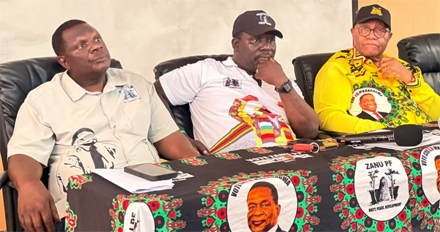
The rejected records and the reasons for verification failures came under scrutiny at an extraordinary Provincial Coordinating Committee (PCC) meeting held at Mutare Teachers’ College last Sunday.
ZANU PF Politburo member, Advocate Mike Madiro, who addressed the meeting after deployment by the National Commissariat, outlined the problems affecting the digitalisation programme and directed provincial structures to complete corrections by November 30.
Cde Madiro said incorrect national identity numbers and duplicate membership entries accounted for some of the system verification failures. He explained that duplicate records occurred when the same members appeared in more than one cell, triggering system rejection.
“You are aware that the party has recently been conducting the membership data digitalisation programme across all provinces. While the programme has made significant strides, it has also faced its fair share of challenges. Chief among them are records that fail system verification. This is the main reason we are all gathered here today, to conduct the data-cleaning exercise,” said Cde Madiro.
He said the exercise requires technical attention.
“The task at hand is technical, and therefore will mainly focus on outlining the steps towards the implementation of the data-cleaning exercise. One of the main reasons for verification failure is the issue of incorrect national ID numbers during data capture and duplicate records, where the same members appear in more than one cell, resulting in system rejection.
As Manicaland Province, the total number of errors that need correction stands at 254 486,” he said.
Cde Madiro called on provincial and district leaders to take an active role in supervising the exercise rather than leaving the responsibility to the Commissariat Department and ICT personnel.
He urged members of the PCC members to visit data-cleaning centres and inspect attendance registers to monitor participation and ensure relevant structures support the process.
Cde Madiro described the database exercise as part of the party’s efforts to improve membership management, organisational planning and administration across its structures.
He said the exercise required collective responsibility, with every deployed officer expected to understand and perform assigned duties.
“The membership data cleaning programme is an important milestone in our ongoing efforts to build a modern, efficient, and well-organised party. We are laying the foundation for a membership management system that will enhance our institutional capacity, improve organisational planning, and strengthen the administration of party structures throughout the country.
“The exercise requires collective ownership. It cannot be left to the Commissariat Department or the ICT team alone. Every level of leadership has a responsibility, and every deployed officer must understand the role they are expected to play. Let us therefore approach this assignment with the seriousness it deserves. Working together to ensure that we deliver a clean, accurate, complete, and credible membership database,” he said.
He assigned District Coordinating Committee chairpersons responsibility for mobilising party structures and ensuring their availability during the exercise.
Cde Madiro said their participation is essential because officials will conduct the actual verification and correction exercise at cell level.
“The DCC leadership must therefore ensure that cell chairpersons are available with the relevant membership records and supporting information,” he said.
The district leadership must therefore coordinate the availability of membership records and supporting information required to resolve rejected entries.
Earlier, Minister of State for Manicaland Provincial Affairs and Devolution, Advocate Misheck Mugadza, delivered President Emmerson Mnangagwa’s speech presented at the party’s 23rd National People’s Conference in Chinhoyi.
The address outlined the party’s direction and sought to guide provincial leaders in implementing resolutions adopted at the conference.
Minister Mugadza said ZANU PF is supreme to Government, and urged party members to take the resolutions adopted at the Chinhoyi conference seriously.
Zanu PF moves to clean 254 486 rejected records