Online Reporter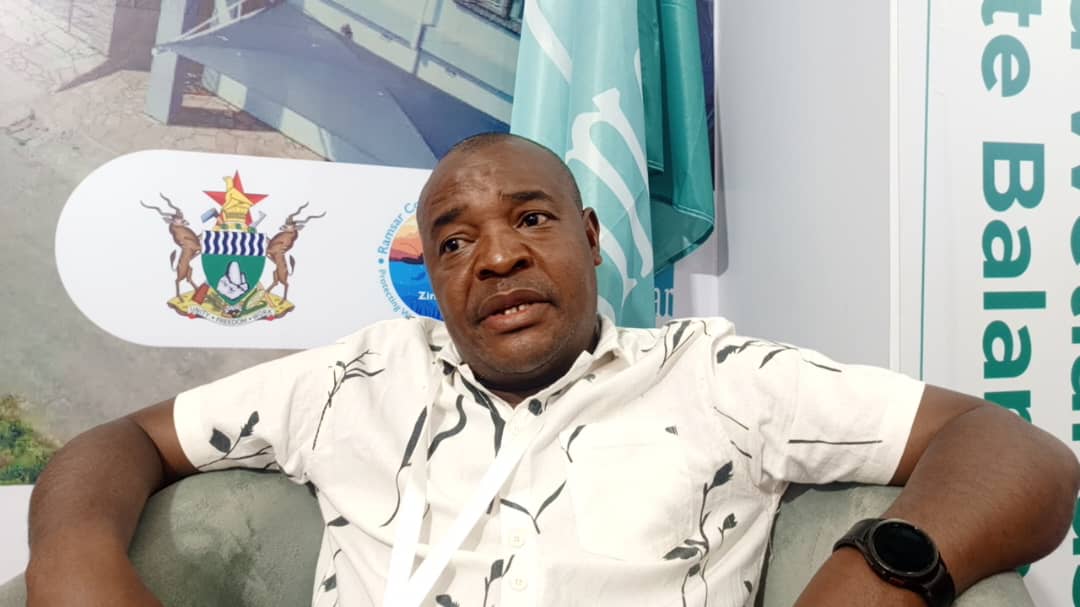
Rutendo Nyeve, Victoria Falls Reporter
The Government is intensifying efforts to curb illegal settlements and developments on wetlands through a robust policy framework and practical interventions, including relocating flood victims to properly planned areas such as Dzivarasekwa and Binga.
Authorities are also in the process of amending outdated bylaws to enforce wetland protection, ensuring sustainable urban development and environmental conservation.
The move comes as the nation is witnessing rapid urbanisation, which has increased pressure on land and led to the proliferation of illegal settlements in ecologically sensitive areas.
Speaking on the sidelines of the ongoing 15th Conference of the Parties (COP15) to Ramsar Convention on Wetlands,the Director of Planning and Design in the Ministry of National Housing and Social Amenities, Engineer Clive Marimo, outlined the Government’s commitment to wetland preservation.
“We are here at COP15 to showcase what the Ministry is doing towards the protection of our wetlands. Wetlands, historically, they have been protected by our forefathers. If you remember well, there are no households that you find built in wetlands.
We use wetlands as grazing lands. So it is part of the protection of our wetlands, which dates back to our ancestral period,” he said.
He acknowledged that Harare, like many other urban centres, has not been spared from the effects of rapid urbanisation, leading to increased demand for housing and subsequent encroachment into wetlands.
“This is now where you are seeing that there is a proliferation of settlements in unplanned areas. As the Ministry of National Housing, we have since launched our Human Settlements Policy, which articulates the issues of our wetlands protection.
“It is very clear that there shall be no construction in wetlands. If it so happens, it must be done in a friendly way that protects the wetlands. For example, we can have floating architecture in terms of housing designs—something that also protects the wetlands,” he said.
Eng Marimo emphasised that the Government has designated buffer zones to prevent construction too close to wetlands.
“For example, we are supposed to maintain minimum buffer zones of about 60 meters to a river. It also adds to wetland protection,” he said.
The Human Settlements Policy provides clear guidelines on housing development, explicitly prohibiting construction on wetlands.
However, Eng Marimo noted that existing bylaws need updating to align with the new policy.
“Currently, we are using outdated bylaws which are kind of a bit silent on wetland protection, so we are actually in the process of having these bylaws reviewed so that what we have in the policy becomes enforceable,” he said.
The Government has already taken action to relocate families affected by flooding due to illegal settlements in wetlands.
“Three years back, there was flooding in Budiriro. The reason being people were settled in some of these wetlands, and they were flooded. As a ministry, we have since moved the victims, the flood victims, who now have settled in a properly designed settlement in Dzivarasekwa. So these are some of the success stories that we have brought up in Budiriro,” he said.
A similar intervention was carried out in Binga, where rural communities affected by flooding were relocated to safer, planned settlements away from wetlands and rivers.
Eng Marimo stressed the ecological importance of wetlands, describing them as the “veins of all the river systems.”
“This is where we get wetlands naturally; they do natural purification of water. Some of these issues that we are facing in our households, where we are saying we are receiving water that is contaminated from the councils, it is a direct result of the destruction of wetlands. Wetlands do natural purification of water,” he said.
He called on citizens to play their part in protecting wetlands, emphasizing their role in sustaining water sources.
“To the citizens, we are saying let’s protect our wetlands. These are the veins of all the river systems that we draw our water from,” he said.