Online Reporter
Michael Tome, Zimpapers Business Hub
THE Ministry of Finance, Economic Development and Investment Promotion says it is making frantic efforts to settle substantial debt owed to state-owned enterprises, as it angles to restore their working capital position and viability.
This comes on the back of Government developing a comprehensive strategy to clear outstanding arrears in collaboration with the World Bank that provided a consultant to support the initiative.
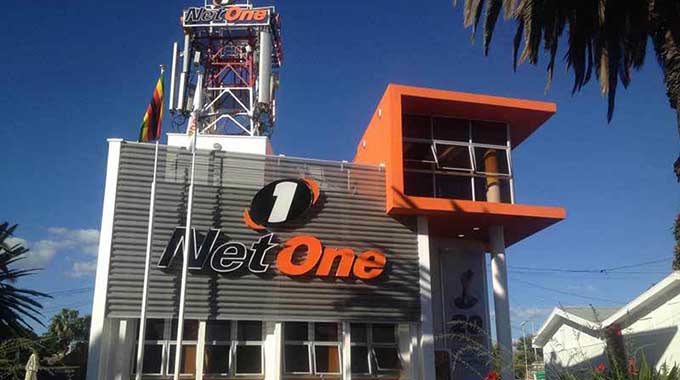
To implement this strategy, the Ministry of Finance has already established a mechanism where all ministries and state-owned enterprises (SOEs), including companies like NetOne and Zesa are required to submit their arrears stock.
This will enable the Ministry to assess the debts holistically, rather than on a case-by-case basis, allowing for a more co-ordinated approach to debt management.
According to the Ministry of Finance, they recently held a workshop where all SOEs and their line ministries presented their huge arrears stock.
Despite the magnitude of the debt, the Ministry of Finance indicated that it is committed to providing funds to maintain liquidity position of these SOEs, ensuring they operate effectively.
Zimbabwe’s Government owes a substantial amount of debt to its SOEs contributing significantly to the country’s overall debt.
However, this proactive approach by Government aims to alleviate the financial strain on these entities and promote economic stability.
While addressing stakeholders at the TelOne annual general meeting held on Monday, Ministry of Finance and Economic Development and Investment Promotion Principal Accountant, Ms Portia Hamadziripi, said her portfolio had come up with a debt management strategy to curtail the ballooning debt owed to ministries and SOEs.
“In terms of the debts that we owe to TelOne and other SOEs, we came up with arrears stock clearance strategy that we are working together with the World Bank, which has already given us a consultant to work with.
“According to the framework, all the ministries and SOEs will submit their stock of arrears, so that we are able to see the debts that we have in a holistic approach, case by case.
“We had a workshop where all the SOEs and the ministries presented their stock of arrears. The numbers are quite huge. We have also incorporated the use of auditors so that line ministries and SOEs give us a clear report on the exact amount of money that we owe instead of just paying,” said Ms Hamadziripi.

She indicated that Government would ensure SOEs and line ministries debt clearance despite the prevailing tight revenue inflows.
“As you are aware that currently the revenue inflows are a bit low, we are trying as much as possible to make sure that SOEs and line ministries operate effectively. So, we are not able to give you the expected amounts to operate in terms of capex.
“But we are trying to give some money to line ministries so that whatever we give to them they will be able to pay their utilities that includes TelOne, Zesa and other key services that were delivered to them. So, the situation currently is a bit tight, but we are trying as much as possible to have what we can and be able to share with you,” she said.
At the 2024 annual general meeting held on Monday, TelOne highlighted significant financial challenges, stemming primarily from persistent liquidity shortages that have increased counter-party risks.
These liquidity constraints have severely impacted the company’s working capital and its ability to fund essential capital expenditures.
Major contributor to this financial strain is the substantial amount owed to TelOne by the Government of Zimbabwe.
As of December 31, 2024, this debt stood at ZiG325,3 million, representing a significant increase from ZiG128,8 billion (restated to ZiG51.6 million) at the end of 2023.
By June 30, the Government’s debt had ballooned to ZiG517,2 million, equivalent to approximately US$19,2 million.
“Liquidity shortages persisted throughout the year, resulting in increased counter-party risks, which negatively constrained the company’s working capital and its ability to fund its capital expenditure.
“However, TelOne is actively engaging with the Government of Zimbabwe to find timely solutions for settling these outstanding dues. The company is exploring various settlement options to mitigate the financial strain and ensure a more stable financial footing moving forward,” said TelOne chief executive, Mr Lawrence Nkala.
This comes as TelOne is contending with legacy loans worth ZiG10,05 billion (US$389 million), which the company inherited from Posts Telecommunication Corporation (PTC).
The legacy loan book has remained a burden to TelOne’s balance sheet, resulting in the company operating in a net liability position of ZiG32,2 million as of 31 December 2024.
This has hindered TelOne’s efforts to attract fresh capital required for network modernisation and digitalisation projects.
TelOne, through its shareholder, Mutapa Investment Fund, continues to pursue the debt warehousing arrangement to free up its balance sheet, making it more attractive to investors.
However, TelOne indicated that it remains focused on enhancing its collections through various debt recovery strategies in order to improve liquidity and ensure adequate funding for its network expansion projects.
In 2025, the company aims to capitalise on growing demand for telecommunications services by expanding its network infrastructure through intensified LTE and FTTH rollout.
This strategic move is expected to drive revenue growth and improve customer satisfaction, by providing better service coverage and reliability.