
Debra Matabvu
Senior Reporter
THE Government will shell out US$500 million over the next four years towards the construction of 14 modern artificial intelligence-powered grain silos, a move expected to drastically reduce post-harvest losses, strengthen national food security and position Zimbabwe as a regional grain distribution hub.
According to the National Development Strategy 2 (NDS2), Zimbabwe loses up to 40 percent of its grain owing to weaknesses in storage, in-field handling and transit systems.
These losses are undermining national food security and reducing returns for farmers despite increased production in recent seasons.
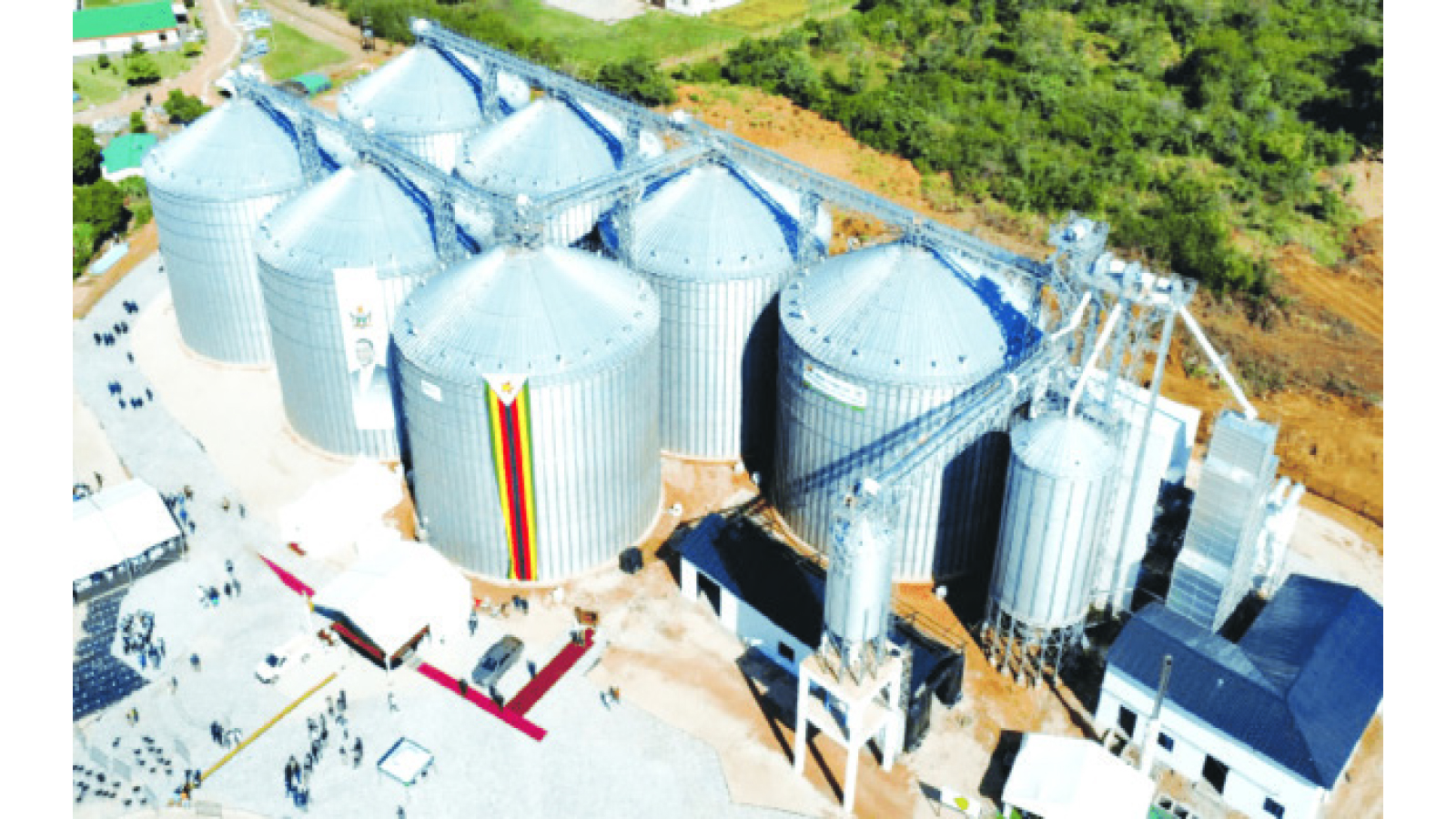
In response, the Government has since commissioned high-tech silos in Kwekwe and Mutare, marking a shift towards technology-driven grain management.
“Over the period 2026-2030, interventions to buttress food security by eliminating such high levels of grain loss will benefit from investment in the construction of 14 additional GMB (Grain Marketing Board) modernised silos integrating AI at a cost of US$500 million,” reads the NDS2.
“Construction of new modernised silos will increase national storage capacity by one million tonnes, pushing the total capacity to 1,75 million tonnes.
“This additional storage capacity will position Zimbabwe as a regional distribution hub.” The new silos will be equipped with advanced AI systems that allow real-time monitoring of stored grain.
These systems regulate temperature, moisture levels and pest control with precision, significantly reducing spoilage and quality deterioration.
The authorities say the technology will ensure optimal storage conditions throughout the year, even during prolonged storage periods. The silo expansion programme dovetails with Zimbabwe’s ongoing cooperation with the World Food Programme (WFP), under which the country is positioning itself as a logistics and distribution centre for grain and food assistance in Southern Africa.
Through this arrangement, Zimbabwe will leverage its central geographic location, improved storage infrastructure and transport corridors to support regional food relief operations during droughts and climate-related shocks.
Apart from enhancing storage capacity, NDS2 also outlines the GMB’s transition into a national grain warehousing and secure storage provider.
Under the new model, GMB will establish decentralised collection points across the country to address long-standing challenges related to grain logistics, access and transportation costs.
The decentralised warehousing system will allow millers, processors and stockfeed manufacturers to access grain closer to their operations, significantly reducing transport expenses and improving efficiency along the entire value chain.
“NDS 2 will see the GMB transitioning to provide national warehouse and secure storage facilities.
“The new GMB grain warehousing arrangements will be underpinned by the establishment of collection points nationwide, also embracing decentralisation to overcome challenges in grain logistics, access and cost,” adds the five-year economic blueprint.
“Millers, processers and stockfeed manufacturers will be able to access grain closer to their localities, dramatically cutting transportation costs and improving efficiency across the supply chain.
“A feature of the warehousing arrangement will be the introduction of a grain receipt system that transforms grain into a fungible and bankable asset, effectively facilitating collection of grain from GMB locations different from where depositing would have been undertaken.”
Under this system, grain deposited at GMB facilities will be converted into a fungible and bankable asset, meaning farmers and traders will receive warehouse receipts that can be traded, transferred or used as collateral for financing, regardless of the specific location where the grain was originally delivered.
The fungibility of the grain receipts allows holders to collect equivalent grain from different GMB depots nationwide, improving flexibility and liquidity in the grain market.
By making stored grain bankable, the system is also expected to unlock access to credit for farmers and agribusinesses, enabling them to reinvest in production and value addition.