daniel chigunwe
Freeman Razemba
Senior Reporter
Government has commended the police and various stakeholders for conducting the ongoing operation code-named, “Tame the Traffic jungle”, which was necessitated by lawlessness on the roads, especially in major urban centres.
So far more than more than 105 000 motorists have been arrested countrywide for various traffic offences under the operation launched mid-last month.
The police operation targeting unregistered and unlicenced vehicles, operators offering public transport without proper licencing, and those breaching other traffic regulations is still continuing until further notice.
Along with not registering vehicles or keeping licences up to date, there are public transport offences of unlicensed mushikashika and kombis, and traffic offences including driving the wrong way down one-way roads in the face of oncoming traffic, through red robots and reckless lane violation.
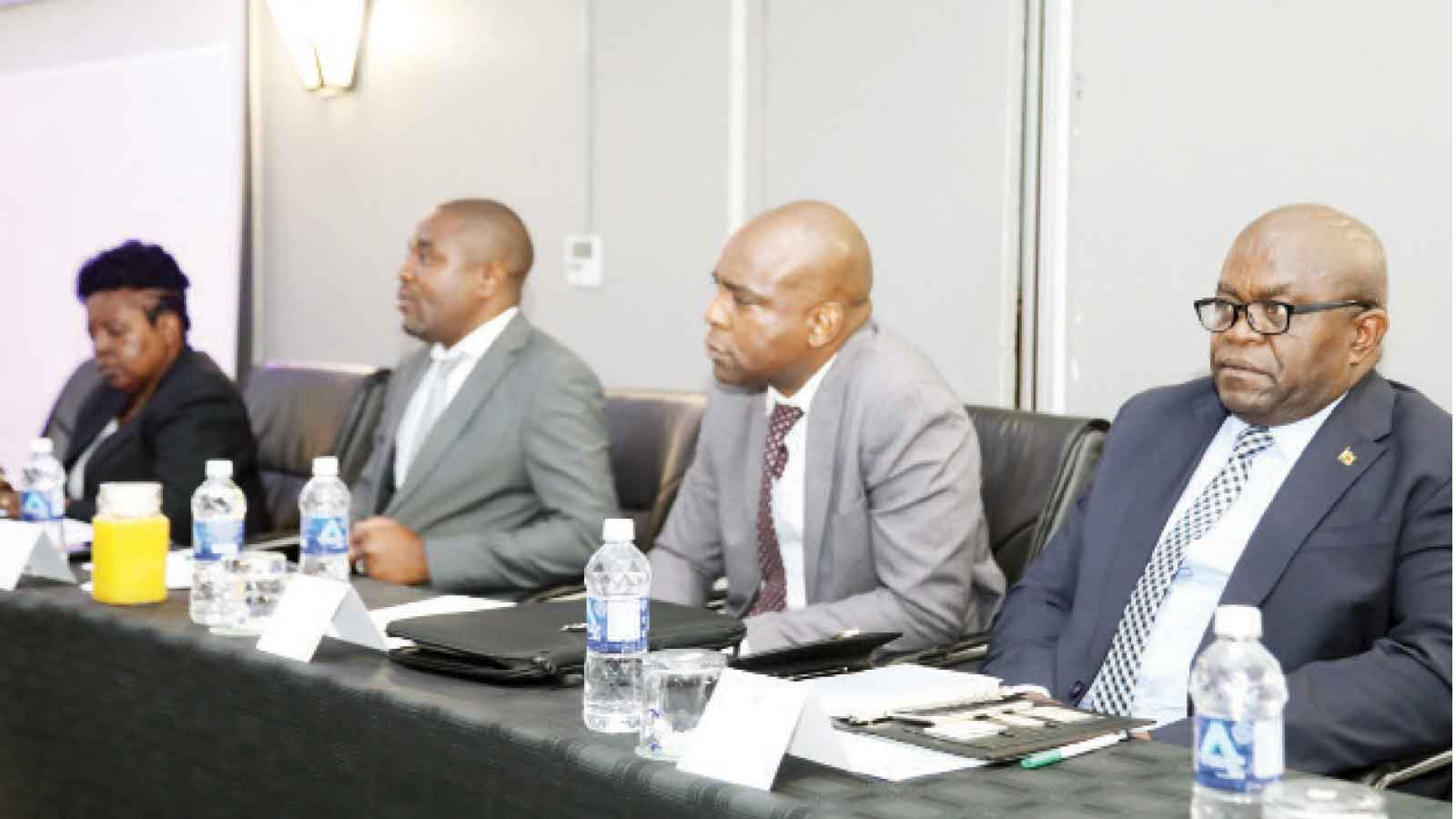
Speaking during the Traffic Safety Council of Zimbabwe’s National Road Safety Indaba on Monday, Transport and Infrastructure Development Minister Felix Mhona said the operation had demonstrated that through collaborative efforts between stakeholders, they could find new and creative ways to make decisive interventions to improve safety and compliance to road rules.
“We are also grateful of the multi-stakeholder road traffic management initiatives in our urban centres in form of the traffic operation dubbed “Lets Tame the Traffic Jungle Together- Phase 2” which commenced in September 2023.
“The operation brought together various Government departments and it is encouraging to note that most urban centres are now trafficable. Cases of driving along unauthorised additional lanes, driving past red traffic lights, driving unregistered and uninsured vehicles, driving without driver’s licences and many other vices associated with mushikashika were reduced.
“The operation has demonstrated that through collaborative efforts between stakeholders, we can find new and creative ways to make decisive interventions to improve safety and compliance to road rules. We simply cannot continue using the same tactics that have had limited success in the past, hoping to achieve different results. I challenge all the stakeholders here present to embrace the opportunity presented by this Indaba to deliberate on issues to tame road carnage that is destroying our youths, families and the future,” he said.
Minister Mhona said on infrastructure, significant progress was made during this year in the Emergency Roads Rehabilitation Programme, thus addressing one of the key pillars of Road Safety: Safer Roads.
“The same applies to the area of safer vehicles, where the VID continues to do its work, even in difficult circumstances to ensure that our vehicles are safe for the roads by causing periodic inspections of the same,” he said.
He said Government has also made a decision as pronounced in the 2023 Budget Statement to transform the Traffic Safety Council of Zimbabwe into a Traffic Safety Agency which would give it the power, in addition to awareness and persuasion, to enforce road safety regulations.
The minister said he was concerned that little progress was being registered on the policy formulation front for them to easily come up with legislative initiatives for road safety management.
“Much energy has been channelled towards brainstorming of proposals for legislative review with less resolve and finality on the clear policy positions which will guide our government lawyers to take up the task of finalising the drafting of our laws,” he said.
Minister Mhona added that there was no meaningful safety that could can be addressed without dealing decisively with matters such as vehicle inspections for fit, appropriate, secure and safer vehicles and a decentralised vehicle registrations to create a robust vehicle data base for tracking, monitoring, enforcement and other security considerations.
Others are a standard monitoring regime of our road transport infrastructure, route corridors, trans-border management for harmonised, integrated safe and fit for purpose roads, bridges and corridors with modern road signalling regimes, a decentralised route planning, deployment, management and monitoring regime and a robust road safety awareness regime for education and management of attitudes of road users.
A Road Accident Fund to minimise suffering by victims and survivors of accidents, road Transport Management data, statistics, accidents and incidences investigation for development of solutions to mitigate future occurrences and a robust, cross cutting, no-fault and deterrent enforcement regime are other matters.
The Minister of State for Provincial Affairs and Devolution for Harare Metropolitan Province Charles Tavengwa also said that negligent drivers especially in Harare, unroadworthy vehicles and the deplorable state of the roads were a contributing factor to road carnage.
“Thanks to the Second Republic, as ably led by Cde Dr ED Mnangagwa for declaring our roads a national disaster hence the Emergency Road Rehabilitation Programme which is bearing fruits. It is saddening to imagine that Harare at some point had almost become difficult to traverse because of traffic congestion and lawlessness from mushikashika.
“For that reason, I would like to acknowledge the efforts of the Zimbabwe Republic Police and the Traffic Safety Council of Zimbabwe among other stakeholders who participated in the “Operation Tame the Traffic Jungle Phase 2” which started in September of this year. Through this operation, we have seen great improvement and sanity on our roads. Now, let us sustain the change so that we have some normalcy in all our urban centres,” he said.
Minister Tavengwa urged long distance drivers to use designated pick-up points for when picking up people as the use of undesignated pick-up points endangers the travelling passengers and other road users.
“It is also important for combi drivers to avoid overloading their vehicles with goods and passengers. It is every driver’s responsibility to preserve life by exercising caution whenever on the road,” he said.
He challenged all relevant stakeholders, to examine approaches that can be adopted to reduce road crashes in Zimbabwe.



 Online Reporter