

 admin
admin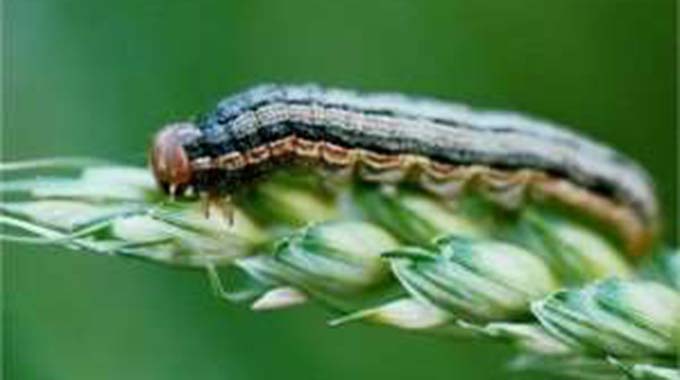
Elita Chikwati
HARARE – Government has urged farmers not to panic over the fall armyworm as the pest can be controlled if farmers scout their crops and spray correctly.
The fall armyworm, a foreign pest, has wreaked havoc in farming areas, attacking the maize crop at different stages of growth countrywide.
The pest has become a nightmare for most farmers as they do not have adequate knowledge of it while some end up destroying their crops through using wrong chemicals.
Ministry of Lands, Agriculture, Water, Climate and Rural Resettlement (Division of Specialist Services) deputy director Dr Godfrey Chikwenhere yesterday said although the fall armyworm was not going to disappear soon, it should not present major challenges to farmers.
“The fall armyworm is a foreign pest and we do not know much about it but the pest can be controlled and damage reduced if farmers scout their crops and spray early. The pest is widespread but not a major problem.
“Farmers should scout for the eggs and use target spraying to control the pest. Farmers can use Carbaryl 85 Wettable Powder to control the pest. Farmers should not use any Chemical they come across as the pest may become resistant,” he said.
He urged farmers with irrigated crops to always scout for the pest so they can control the pest before it causes much damage. The fall armyworm, a transboundary pest that is difficult to manage and first reported in Southern Africa in late 2016, continues to cause damage to maize and other crops in the region.
The fall armyworm has presented challenges to SADC countries.
Key concerns about the fall armyworm infestation are the impact on food security and livelihoods of especially smallholder farming households.
The outbreak of fall armyworms – an invasive Latin American species which is harder to detect and eradicate than African armyworm – has erupted in Zambia, Malawi, Botswana, Zimbabwe and Namibia.
According to experts, fall armyworm detection and subsequent reports in the SADC region is not known or not properly documented. The pest is likely to have been in the region for some five or more years back but due to drought and other factors was not known to be present.



 Online Reporter