malvernmugadzikwa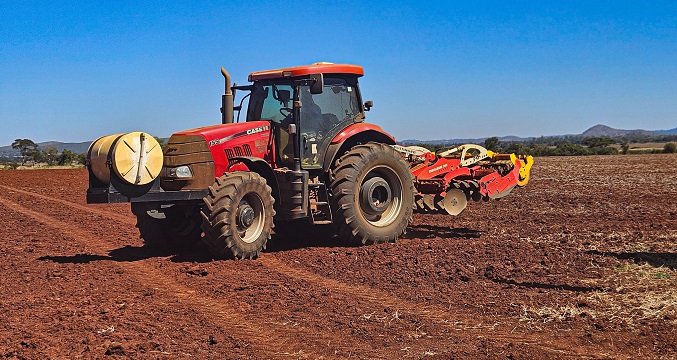
Oliver Kazunga
Senior Business Reporter
THE Government is confident the target of putting 120 000 hectares (ha) under the winter wheat crop this year will be met despite only 4 000ha having been planted by Wednesday, with roughly two weeks of the planting window remaining.
During the corresponding period last year, a total of 17 344ha had been put under the winter crop.
In Zimbabwe, winter wheat is traditionally planted in May before temperatures drop in June because cold conditions hurt germination.
About 600 000 tonnes of the cereal are expected to be harvested from the 120 000ha, against a national consumption rate of 360 000 tonnes per annum.
Last year, the country managed a record winter wheat yield of 467 905 tonnes after 90 000ha were put under the crop, compared to 375 000 tonnes harvested in 2022.
According to the latest report compiled by the Ministry of Lands, Agriculture, Fisheries, Water and Rural Development, as of Wednesday, a total of 4 211ha had been put under wheat, while 21 579ha was ready for the crop.
Mashonaland Central province has the largest area already planted (1 673ha), followed by Mashonaland West with 645ha, Mashonaland East (539ha), Midlands (533ha) and Manicaland (437ha); while Matabeleland South, Matabeleland North and Masvingo have 200ha, 120ha and 64ha, respectively.
Acting director of communications in the ministry Mrs Barbara Machekano was optimistic that the targeted hectarage would be achieved since the winter wheat planting window extended to the end of the month.
This, she said, was also supported by the fact that farmers have not stopped planting.
“The targeted 120 000ha are achievable because we are still in the planting window period that ends at the end of May and farmers are continuing with planting . . . so, people are planting day by day and within these two weeks, we will be giving an update of the area planted,” she said.
Mrs Machekano added that the huge difference between the area planted so far against the corresponding period last year was due to the effects of climate change.
“The huge difference between the area planted so far and that of the same period last year is as a result of the effects of climate change, where the summer cropping season started late and up to now people are still harvesting their summer crops and maybe because of climate change, this may last into June. So, we will be guided by advice from weather experts as to how the winter season will progress and perhaps because of the realities of climate change, our winter wheat planting window could be extended,” she said.
The planting window is critical as it helps to avoid the coincidence of frost with flowering and the grain-filling stage, as well as curtailing the coincidence of crop maturity with rain.
The report further reveals that, of the targeted 120 000ha, a total of 74 129ha would be under contract arrangements.
Among other initiatives, this year’s winter wheat crop is being supported by CBZ Agro Yield, which is targeting 11 500ha, NMBZ 2 500ha, AFC Land Bank 16 000ha and 43 000ha under a joint venture scheme involving the Agricultural and Rural Development Authority (ARDA) and its partners; while on its estates, ARDA is targeting 2 000ha.
In an interview, Zimbabwe Commercial Farmers Union president Dr Shadreck Makombe said at the moment, farmers were actively working on their fields.
“Some farmers who are supposed to be doing the winter wheat are busy with planting, which started from the 1st of April, so we are chasing the traditional planting deadline of May 15. As we speak, the wheat is at different stages of growth . . . the targeted 120 000ha is achievable or may even be surpassed,” he said.
In the past, Zimbabwe has been a net importer of wheat, prompting the Government to come up with a programme to encourage production of the crop on farms with reliable water sources.
The country imported wheat from countries such as South Africa, Argentina and Russia.



 Online Reporter