

 admin
admin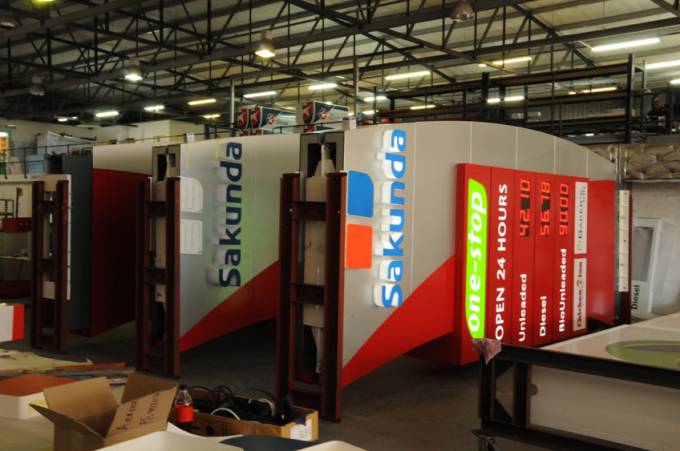
Martin Kadzere
GOVERNMENT has granted Sakunda Holdings, a company with diverse interests in energy and minerals – a coalbed mathane (CBM) concession in Mbungu in the Matebeleland North province where the firm intends to set up a power plant.
The special grant (5755) and measuring about 333 000 hectares, was previously owned by the state-owned Zimbabwe Mining Development Corporation (ZMDC), which now becomes a minority partner in the new venture.
On Thursday, Finance and Economic Development Minister Professor Mthuli Ncube, indicated that Sakunda had been granted a special grant for coal bed mathane as he provided an update on the partial restructuring of state owned entities.
Sakunda chief executive Mr Chitambo confirmed to The Sunday Mail Business in an interview on Friday that his company was working with ZMDC on a special grant for coalbed methane in Matabeleland North province.
He, however, could not disclose more detail.
“I can confirm that we are indeed working with ZMDC on a coalbed mathane special grant in Lupane area and this is all I can at the moment,” said Mr Chitambo.
Zimbabwe has a huge resource of untapped CBM gas in the Hwange, Lupane and Gwayi areas. Over the years drilling and desorption tests have been conducted and resources that run into trillions of cubic feet have been discovered, according to Government’s geological department.
Chinese firm, Sinosteel, has already completed preliminary exploration works on some of its CBM claims at Lupane.
Sinosteel is the majority shareholder in Zimasco, Zimbabwe’s largest ferrochrome producer, which in turn owns 90 percent of Shangani Energy Exploration (SEE), the company that intends to exploit methane gas and build a power plant.
According to Sinosteel, an investment of about US$780 million is needed for the project to be implemented in three phases from exploration to full-scale power generation of 400 megawatts over a 10-year period.
The investment is part of the US$1 billion deal signed by President’s Mnangagwa’s administration and Sinosteel in May 2018, which will also see building of additional chrome smelters at Zimasco’s Kwekwe smelting complex and in Mberengwa.
The project is among those expected to stabilise the country’s power supply.
SEE has carried out preliminary exploration work on two of its three special grants, where six core holes were drilled and three production wells sunk.
This was followed by pumping water from production wells, which demonstrated gas and water can be produced.
There is evidence of the existence of a considerable methane gas resource whose viability now needs to be proved.
SEE also concluded a consulting contract with the petroleum geologist with extensive experience to produce a work programme with accompanying expenditures.
The programme will build on the preliminary works already done and will include more in depth exploration work to confirm the commercial quantities of methane gas hosted by the three special grants as part of the feasibility work.
The next phase of work would be the intense exploration work, which will start with the installation of bigger pumps on the three wells to drain water so that the gas can be released as part of work to establish commercial viability.
In addition to power generation, an integrated petrochemical industry will be established with the creation of new jobs and new revenue streams for the nation. The whole CBM industry has the potential to create an economic boom for Zimbabwe.
Matabelaland North is endowed with natural resources that can change the economic complexion of the province if exploited under a win win arrangement.
President Mnangagwa who was on a tour of coal mining companies in Hwange last week, called on mining companies operating in the country to partake in infrastructure development as they utilise rich deposits for the benefit of communities they operate in.
President Mnangagwa made the call while officially opening South Mining (Pvt) Limited’s coal coking plant in Hwange.
He visited Western Coal and Energy Company’s Western Areas coal project, South Mining’s coking plant, Jin An’s Tutu coking plant as well as Hwange Colliery’s Chaba Mine.
Local communities expect to benefit from infrastructure and employment created by firms exploiting natural resources in their areas.



 Online Reporter