Online Reporter
Rumbidzayi Zinyuke
Senior Health Reporter
THE Government has approved the recruitment of more than 19 000 health workers over the next two years, marking the first major step in Zimbabwe’s plan to double its health workforce by 2030.
This will go a long way in reversing chronic staffing shortages that have long weakened service delivery.
Treasury has authorised the recruitment of 5 284 nurses for 2025, with a further 14 000 posts set aside for 2026, signalling renewed investment in rebuilding the country’s human resources for health.
But the authorities say the recruitment numbers, while substantial, will only be effective if backed by a transformed training and deployment system.
For years, Zimbabwe has battled severe staffing deficits, worsened by outward migration.
The 2022 Health Labour Market Analysis shows the country has just over 22 health workers per 10 000 people, far below the global benchmark of 44 per 10 000.
Nearly one in five doctors and more than a third of the nation’s nurses are now working abroad, leaving health facilities struggling to meet rising demand.
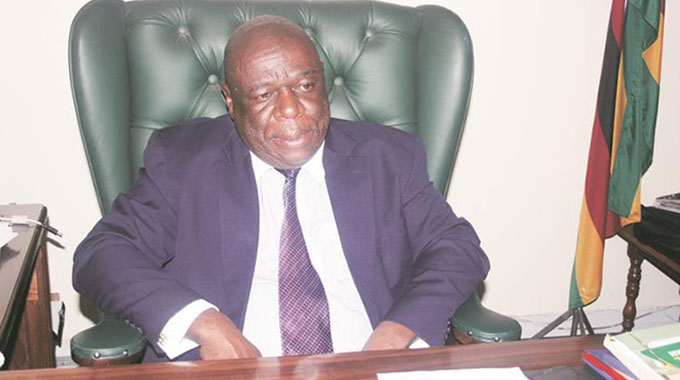
Health and Child Care Minister Dr Douglas Mombeshora said closing that gap within the next five years required not only filling new posts, but fundamentally reshaping how health workers were trained and deployed.
“We have got a tall order in terms of fulfilling that gap which is there, but I’m sure by 2030 we’ll have done something. I am glad already the Ministry of Finance (Economic Development and Investment Promotion) has given us the go-ahead to recruit,” he said.
Dr Mombeshora said recruitment must be matched by large-scale expansion in training capacity to ensure a sustainable pipeline of professionals across all disciplines.
“We are also going to be increasing our training output for the nurses and for the doctors,” he said. “We have also increased the number of environmental health technicians, and we want to look at the pharmacy technicians so that we cover all the professionals.
“We are also looking at introducing the training for radiographers.”
The Government is working with training institutions to widen intakes and invest in specialised programmes that have historically suffered the worst shortages.
This forms part of a broader national shift under the Health Workforce Strategy (2023-2030), which identifies major financing and capacity gaps that must be addressed to build a resilient, fit-for-purpose workforce.
The strategy estimates that Zimbabwe requires at least US$1,6 billion to close critical workforce gaps by the end of the decade.
The Government is expected to raise 75 percent of that amount, supported by development partners through an investment compact designed to accelerate progress towards universal health coverage.
The compact outlines measures to strengthen planning, financing, retention, migration management and monitoring of the workforce.
Dr Mombeshora said another area in need of strengthening was the long-standing reliance on community health volunteers, a model now being restructured.
“Our community health workers have to be trained. We have been taking a cadre who was just coming from the village and some of them are now very old. So, we are really looking at the recruitment and training so that we also include them in the workforce strategy that we have,” he said.
With the National Health Strategy for 2026-2030 now being finalised, the Government is banking on stronger financing, expanded training, improved deployment strategies and a revitalised community-level workforce to rebuild a system weakened by years of shortages and external migration.