malvernmugadzikwa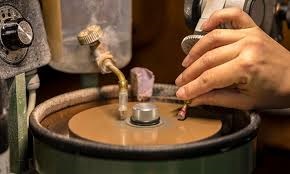
Michael Tome
Business Reporter
THE Government is committed to enhancing gemstone value addition and beneficiation by establishing cutting and polishing centres across the country.
As testimony to the endeavour, the Minerals Marketing Corporation of Zimbabwe (MMCZ) donated US$1,1 million in lapidary equipment and unveiled a gemstone cutting and polishing training centre at the Zimbabwe School of Mines (ZSM).
This comes as the MMCZ is on course to establishing gemstone buying centres across Zimbabwe to enhance the sector’s growth into a US$1 billion industry by 2030.
Zimbabwe is endowed with semi-precious and coloured stones like aventurine, beryl, talc, antimony, aquamarine and amethyst, which are largely used for jewellery manufacturing and aesthetic gratification.
However, the country is not harnessing optimal benefits from these endowments as the gemstones are inadequately beneficiated while some are not being marketed through normal channels for fiscal benefit.
In that regard, MMCZ has hinted at appointing sub-agents to buy gemstones to curb leakages, a development that will also assist miners with cash flows.
Through various initiatives, MMCZ is looking to grow Zimbabwe’s revenue from gemstones, excluding diamonds, to US$1 billion by 2030.
The corporation recently indicated that it raked in US$215 560 from 1 386 million kilogrammes of gemstone sales through the formal system in 2022.
Lapidary equipment is used for cutting, shaping and polishing gemstones.
It allows for the precise shaping of gemstones to create custom designs and also enhances the beauty of the stones. The first phase of the donation encompasses procurement and installation of cutting, grinding and polishing equipment, which includes trim saws; faceting units; dual grinders; and wet belt sanders; as well as calibrating, cabochon and bead drilling machines.
According to MMCZ, the drive is aimed at encouraging formalisation of the gemstone sector by equipping miners and educating them on the industry’s regulatory framework, as well as encouraging the sale of gemstones through official channels to reduce mineral leakages.MMCZ acting general manager Dr Nomsa Moyo said the drive was necessitated by the need to boost gemstone production and maximise recovery rates through training in techniques that ensure minimal gemstone loss during extraction and processing.
“In line with the National Development Strategy 1 (NDS1) for 2021-2025 to promote value addition and beneficiation, MMCZ partnered with ZSM to set up a gemology centre that offers a training programme designed to empower miners in the gemstone sector.
“We identified a gap in the local gemstone mining value chain, wherein our local artisanal gemstone miners were losing out as a result of lack of capacity to efficiently mine and value-add their products,” said Dr Moyo.
According to MMCZ, gemstone mining in Zimbabwe is mainly dominated by small-scale artisanal miners, resulting in inconsistent supplies. As such, it has been hard for MMCZ to consign small parcels or make product guarantees. There was, therefore, need to come up with mechanisms to boost output.
“It is hoped that, before the end of the year, the second phase of the project will have been completed, which will enable ZSM to enrol and capacitate more miner students.
“The ultimate goal is to capacitate the trained miners to be able to set up their own gemstone cutting and polishing factories, thus striving towards achieving the Government’s focus on gemstone value addition and beneficiation,” she said.
Mines and Mining Development Deputy Minister Polite Kambamura said the drive seeks to close the technical skills gap in gemstone cutting and polishing through training and, at the same time, empower ZSM graduates to set up value addition centres for their own businesses.
“This drive is aimed at promoting value addition and beneficiation of gemstones through cutting and polishing, in line with NDS1. The world has moved into the Fourth Industrial Revolution and Zimbabwe is no exception as the country has adopted Education 5.0, which is inclined towards modern technological trends.
“ZSM is encouraged to benchmark itself with international universities in mining to tap the expertise and knowledge required in the Fifth Industrial Revolution for the mining industry,” said Deputy Minister Kambamura.
He said the Government attaches great importance to the human capital development agenda, which is one of the critical pillars for mining sector development, as the country moves towards the envisioned upper middle-income economy by 2030.



 Online Reporter