


 malvernmugadzikwa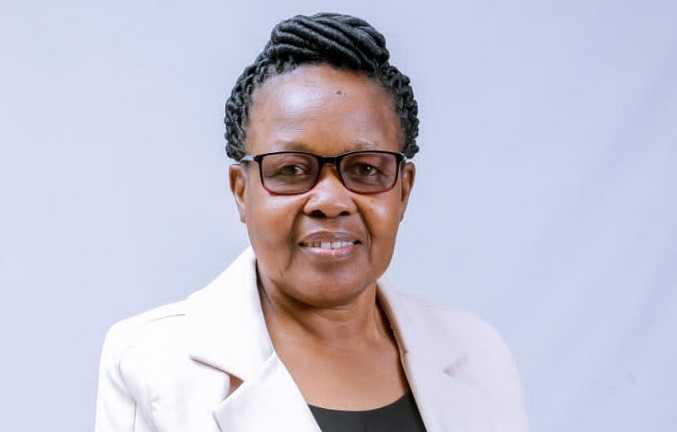
The Auditor-General (AG) recently released reports on Government ministries, State enterprises and local authorities. The Sunday Mail’s DEBRA MATABVU interviewed the acting AG, MS RHEAH KUJINGA, on key findings and recommendations from her reports.
******************
Q: Your office recently released audit reports for various Government ministries, departments and local authorities. May you please highlight the importance of these audit reports.
A: The Office of the Auditor-General (OAG) is a Chapter 17 institution of the Constitution of Zimbabwe.
It is a requirement, in terms of Section 309 of the Constitution, for the Auditor-General to audit the use of public funds and resources and to report to Parliament through the tabling of the reports, in line with Section 10 (1) of the Audit Office Act.
The Auditor-General’s reports assist the auditees and Parliament in strengthening accountability, transparency and good corporate governance in public sector entities.
The reports enable Parliament and those charged with public sector governance to discharge their responsibilities, respond to audit findings and recommendations, and take appropriate corrective action, and thus complete the cycle of accountability.
Therefore, the reports help in building public trust in Government institutions, thus contributing to a stable economic environment and the achievement of national development goals.
Q: Have the Auditor-General’s findings had a measurable impact on improving public financial transparency, accountability and management in Zimbabwe?
A: The Auditor-General’s findings have had a measurable impact on improving transparency and accountability.
The number of entities that are up to date on financial reporting increased from the previous year, post-Covid-19. This is a clear indication of public entities’ willingness to be transparent and accountable in financial management.
In response to audit findings, among other factors, a number of laws and regulations were enacted and they included stringent controls to close some of the gaps or weaknesses highlighted in my reports.
The laws and regulations enacted in recent years include the Public Entities Corporate Governance Act; the Public Procurement and Disposal of Public Assets Act; and the Public Finance Management Act.
In addition, efforts made by the Government in the form of various public sector reforms, inter alia, are: the Presidency has pronounced and acted on a very powerful vision and National Development Strategy 1 (NDS1) for the country; implementation of the public sector-wide Integrated Results-Based Management system; strengthening of Government oversight and enforcement institutions including signing of integrity pledges; and establishment of integrity committees.
Q: In your view, have these reforms led to a drop in financial mismanagement in Government and public entities?
A: It is pleasing to note that the auditees, without exception, are seized with matters that require remedial action and improvement, as reported in the Auditor-General’s reports.
However, corporate governance issues remain prevalent.
Q: How does your office balance the need for transparency with the sensitivity of certain Government information?
A: The Auditor-General’s work is governed by laws, regulations and audit standards.
As such, the Auditor-General-auditee relationship is highly confidential, and the Auditor-General’s reports become public only after they have been tabled in Parliament.
This way, all stakeholders are able to maintain a balance involving the need for transparency, accountability and any sensitive information that may arise during the audit
process.
Q: Following your latest audits, what are some of the biggest challenges that have been identified in the use of public funds?
A: Some of the challenges noted are to do with corporate governance issues; weak internal controls; delayed follow-ups on non-delivery of goods; and continued use of manual systems, which affect internal controls when the volume of transactions is high.
The other challenge is that of limited funding, thereby affecting implementation of programmes.
Q: How does your office follow up on audit recommendations to ensure corrective action is taken?
A: During the annual audits, the office makes follow-ups on the progress towards addressing prior-year audit findings and implementation of recommendations.
At the beginning of each year of audit, the auditee management provides the status on the progress made on prior-year issues and I evaluate the progress and the supporting information during the audit.
The progress status is then reported in the current annual audit report.
In addition, there are other follow-up mechanisms in place, which include the board (auditee committee) of public entities; Ministry of Finance, Economic Development and Investment Promotion; and Parliament, through the Public Accounts Committee (PAC), which play an important oversight role in following up with Government entities on the implementation of the audit recommendations.
The PAC summons entities to appear before it to respond to issues raised in the Auditor-General’s report.
The PAC produces a report with recommendations on rectifying issues appearing in the Auditor-General’s report.
The PAC report is tabled in Parliament.
Q: How accessible are your audit reports to the public and what efforts are being made to increase their visibility?
A: The reports are available on the Office of the Auditor-General’s website, where they are uploaded upon tabling in Parliament.
It is appreciated that not everyone has access to the internet.
The office also reaches out to the public during annual exhibitions such as the Zimbabwe International Trade Fair and the Zimbabwe Agricultural Show.
There are plans in the medium- to long-term period to increase accessibility of the reports through their translation into vernacular languages and holding countrywide road shows whenever the reports are tabled.
Currently, financial resources are the limiting factor.
Q: What are some of the emerging risks or trends that you anticipate may impact your office’s work in the coming years?
A: Technological advancements are moving at a very fast pace and public entities are embracing the developments; for example, the adoption of e-government to achieve a digital economy and access to information and communication technology (ICT) infrastructure, in line with NDS1.
The office should respond to the developments in order to be able to audit technologically advanced entities.
There is an increase in natural disasters and pandemics such as Covid-19, and the office has a responsibility to move in swiftly to look at how the resources are allocated and utilised.
This calls upon the office to be prepared to do real-time audits and remote audits to be able to contribute to the efficient allocation and utilisation of resources, and promote transparency and accountability.
In addition, global warming and climate change are another area that is resulting in floods and prolonged droughts affecting the nation’s wellbeing.
The Government has the responsibility to develop and implement public policies and allocate resources to ensure that adaptation and mitigatory measures are in place.
Therefore, the office should be prepared to conduct special audits on prudent
use of resources expended on global warming and climate change-induced emergencies.
Q: What additional resources does the Office of the Auditor-General require to operate more effectively?
A: There are rapid changes in the ICT arena.
To respond effectively to the increasing scope of information technology in the Government and the broader economy, the office needs significant financial resources to build the requisite ICT infrastructure, and upskill in order to deal with issues such as cybercrime, use of artificial intelligence and robotics, et cetera.
The office also needs to employ staff with skills diversity, hence conditions of service need to be improved to be able to attract, motivate and retain such skilled staff.
Q: Can you share a success story where your office’s intervention led to improved financial practices within a public entity?
A: Highlighting those public entities not up to date with the preparation and audit of financial statements in my reports, and the summoning of the entities to appear before the Public Accounts Committee of Parliament have resulted in more entities striving to be up to date on preparation and audit of financial statements.
In the previous reports, there were many issues of key management vacant posts, absence of boards and an inadequate skills mix in the boards and their respective committees.
In recent years, there has been considerable improvement in those areas in terms of timely appointment and the appropriate skills mix in the boards and committees.
Who is Rheah Kujinga?
Ms Rheah Kujinga is currently the acting Auditor-General of Zimbabwe.
She began her career in the Office of the Auditor-General as an audit assistant.
She is an accountant registered with the Public Accountants and Auditors Board (PAAB).
Her professional qualifications include the following: ACCA (Association of Chartered Certified Accountants), CA-ICAEW (Institute of Chartered Accountants in England and Wales), ICAZ-Public Sector Professional Accountant (PSPA).
Additionally, she attended various executive development programmes.
She holds an MBA from Nottingham Trent University (UK).
Ms Kujinga has more than 30 years’ experience of auditing public and private sector entities, including State-owned enterprises and parastatals, local authorities, regional organisations such as the Southern African Development Community Organisation of Public Accounts Committees (SADCOPAC) and donor-funded projects under United Nations organisations.
She was a member of the Common Market for Eastern and Southern Africa (COMESA) audit committee between 2018 and 2020.
In addition, she was a member of the SADC audit committee (2021 to 2024).
She has also represented the Auditor-General at the International Organisation of Supreme Audit Institutions.
Ms Kujinga is also the member of the Audit Office board.


 Bongani Ndlovu
 Online Reporter