Online Reporter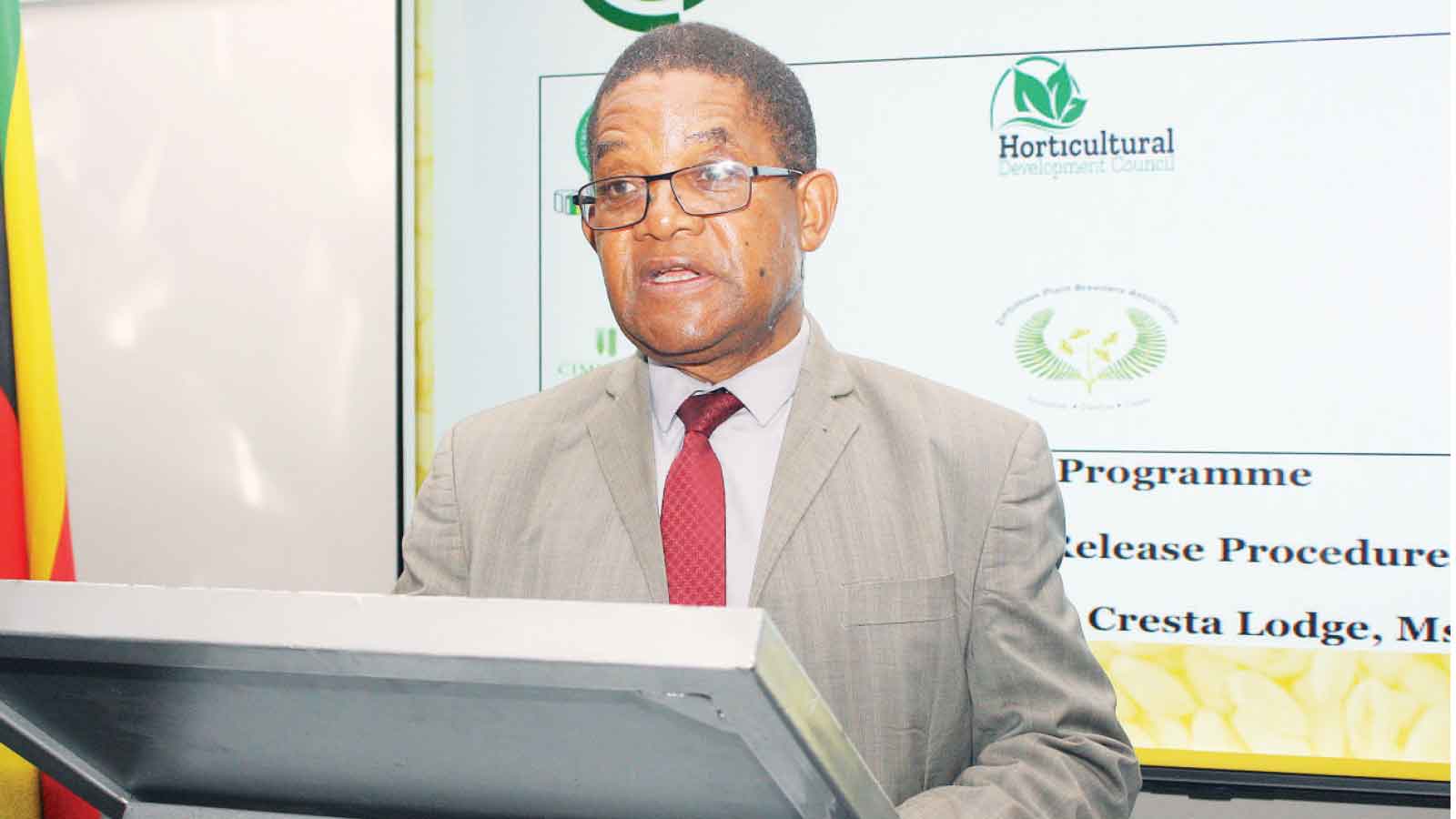
Sekai Manyere
Herald Reporter
ZIMBABWE is accelerating the development and release of climate-smart crop varieties as part of efforts to safeguard food, nutrition and economic security against the growing threat of climate change.
Speaking at a two-day training workshop in Harare yesterday, Permanent Secretary for Agriculture, Mechanisation and Water Resources Development Professor Obert Jiri, whose speech was read on his behalf by Chief Director Dr Dumisani Kutywayo, underscored the urgency of aligning breeders and regulators to speed up the development and release of resilient crop varieties.
“We convene under the shadow of an unmistakable global and regional reality: climate change is no longer a distant theoretical threat; it is our lived reality,” Prof Jiri said.
He noted that Zimbabwe’s agricultural sector is increasingly confronting mid-season droughts, erratic rainfall, and heatwaves during critical crop growth stages and the emergence of new pests and diseases.
The workshop, themed, “Accelerating research and development for climate-smart crop varieties to guarantee national food, nutrition and economic security”, has brought together plant breeders, members of the National Variety Release Committee (NVRC), senior Government officials and stakeholders from the seed and research sectors.
Prof Jiri said irrigation infrastructure and fertilisers alone could not guarantee agricultural productivity without climate-resilient seed varieties.
“Irrigation infrastructure and fertilisers are useless if the seed placed in the soil cannot withstand thermal stress, optimise water-use efficiency, or resist emerging pathogens,” he said.
Government’s strategic response is anchored on three pillars; water harvesting, soil conservation and the development of genetically adapted climate-smart crop varieties, adding that research and development remains the bedrock of agricultural transformation.
Prof Jiri outlined the traits required in climate-smart crop varieties, including tolerance to abiotic stresses such as heat and moisture deficits through deep rooting systems and efficient water use.
“When we speak of Climate-Smart Agriculture (CSA), we are talking about a targeted, multi-trait breeding paradigm,” he said.
Prof Jiri also highlighted the need for resistance to biotic stresses, including emerging pests and diseases such as fall armyworm and maize lethal necrosis.
“Climate resilience must not come at the expense of nutritional quality or marketability,” he said.
Conventional breeding methods, said Prof Jiri, were too slow to keep pace with climate change and called for the accelerated deployment of modern technologies such as marker-assisted selection, genomic selection, high-throughput phenotyping and speed-breeding protocols.
“By integrating these tools, we can shorten breeding cycles from 10–12 years down to 4–6 years. Time is a luxury we do not have; speed and precision must define our breeding pipelines,” he said.
Prof Jiri said the workshop was designed to bridge the gap between innovators and regulators by creating a platform for breeders and members of the NVRC to align on standards, testing procedures and approval processes.
Addressing plant breeders, Prof Jiri said: “Your duty is to generate robust, statistically sound Data on Distinctness, Uniformity, and Stability (DUS), alongside Value for Cultivation and Use (VCU).”
He described NVRC members as guardians of agricultural quality and food security, adding that while scientific standards must be upheld, administrative delays should not hinder the release of improved varieties.
“If a high-yielding, drought-tolerant variety meets all scientific standards, the release process must be swift, transparent, and streamlined,” Prof Jiri said.
Participants are expected to focus on four key outcomes: standardising and modernising evaluation metrics for climate-smart traits; accelerating variety release timelines by addressing procedural bottlenecks; strengthening public-private partnerships; and building the capacity of the next generation of plant breeders and scientists.
The programme will also address regional harmonisation of variety release frameworks, including SADC protocols, climate-smart trait scoring systems and improved digital data management for transparency and efficiency.
Prof Jiri acknowledged the support of key partners, including the International Maize and Wheat Improvement Centre (CIMMYT), the Agricultural Research Council (ARC), the Horticulture Development Council (HDC), the Zimbabwe Plant Breeders Association (ZPBA) and the Zimbabwe Seed Association (ZSA).
“Research on an experimental station means nothing if high-quality seed does not reach the farmer’s field,” he said.
Prof Jiri said Zimbabwean farmers were waiting for seed varieties capable of withstanding drought, heat, pests and diseases while delivering improved yields and market value.
“Our farmers are waiting. They need seed that withstands drought, yields well under heat, resists devastating pests, and commands a fair price in the market,” he said.