admin
admin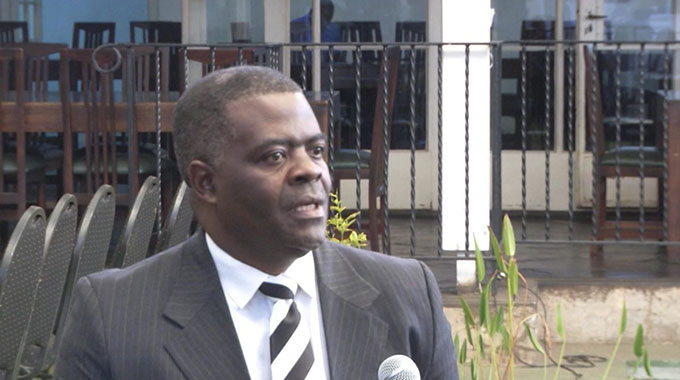
Golden Sibanda
PRIVATE firms and individuals that produce power beyond their needs from their own solar systems may start earning significant revenue in hard currency by selling it to Zesa Holdings and feeding into the national grid once the Government finishes reviewing relevant regulations.
Current regulations say producers of excess power can “park” the electricity they may not need by feeding it into the grid for which they will then get credit, which they can then redeem as and when they require the energy.
But beyond this, the Government is now exploring a new framework of regulations that will incentivise investment in solar power production by putting in place legal provisions that allow suppliers to be paid in foreign currency for their power.
Energy and Power Development Minister Fortune Chasi said in an interview that the government was exploring “on an urgent basis” the possibility of net-metering, which will enable private producers with excess energy to sell it to ZESA and feed into the national power grid.
Put simply, net metering is a utility billing mechanism that offers a credit to residential and business customers who are making excess electricity with their solar panel systems and sending it back to the national grid.
When a producer has a rooftop solar system, it can often generate more electricity than they need for own consumption during daylight hours.
With net metering, owner is only billed for the “net” energy used each month, that is, the difference between the energy produced by the solar power system and the energy consumed by the house over the monthly billing period.
“We want to explore the possibility that if I have power, can we not have an application, which allows people to trade in power; some form of stock exchange, so to speak, of power.
“Once we do that we now have a local market for energy so that a producer can go on to an application and sell the power, not only to Zesa but any person who is interested in the power,” Minister Chasi said.
He said Government had noted that current regulations were a stumbling block in that they penalise producers by forfeiting 20 percent of the power fed onto the grid if the supplier wanted to tap back electricity for own consumption.
The energy and power development Minister said the planned net-metering programme would help improve the security of domestic power supply while at the same time saving the country significant forex resources being lost to imports.
Zimbabwe faces acute power deficit because of its inability to generate adequate electricity to meet demand due to very old equipment at its thermal power stations and, lately effect of drought that has reduced hydro power output at Kariba South.
The demand for electricity in Zimbabwe can exceed 1 800MW at peak periods, especially in the Winter Season, while local production can only average anything below 800MW, when operating at optimum levels.
Cognisant of the shortage of power Government embarked on and completed the 300 megawatt extension of Kariba South in April 2018, which was successfully undertaken by Sinohydro of China.
Sinohydro was also awarded the contract for the ongoing 600MW capacity extension of Hwange Thermal Power Station, as the Government bids to end chronic power crisis and achieve self-sufficiency.
Further, Government has awarded nearly 50 licences to independent power producers, including three 100MW solar initiatives planned for Gwanda, Insukamini in Bulawayo and Munyati in Kwekwe.
Minister Chasi said there were existing regulations, which the Government is reviewing because it believes that they do not help to promote solar installations in the country. Connecting individuals with excess power, the minister said, would be akin to setting up a virtual power plant.
“Rather than let the fragmented excess power go to waste, we can deploy it into the system,” Minister Chasi said, adding a framework will be put in place to make power tradable at rates lower than those for imports from the region.
“Since we are importing power in US dollars, why can we not pay a local person who is selling us power at a lower rate than Eskom or whoever and we give the person a payment in hard currency because that is what we are doing with foreign suppliers,” the minister said.
“”We are working on this on a very urgent basis. I am hoping to meet my colleagues from Zesa hopefully this week so that we can conclude and then issue out the regulations that enable us to do that.
“We will have to repeal the current regulations because the current ones say that if an individual you have excess power, if you feed into the grid and want the power back you lose 20 percent of the original supply.
“We are trying to look at the implications of that but our preliminary view is that it is a stumbling block to investment in solar, we want to open up. If many people get on to the scheme, it will save us foreign purchases of power,” Minister Chasi said.
He stressed that the net-metering scheme was being pursued as a form of import substitution at a time Zimbabwe is facing challenges of availability of and access to forex.
The Zimbabwe Energy Regulatory Authority (ZERA) says net-metering in Zimbabwe was a solar incentive programme that allows domestic and industrial users of solar power to be part of the energy generation mix for the country.
“When one’s photovoltaic system produces more electricity than is needed, that excess energy is fed to the grid in exchange for credits. These credits can be used to offset the electricity bill for the homeowner or industrial customer. The consumer is however credit 80 percent of the units supplied,” says ZERA.
And so Minister Chasi said Government was studying the possibility that producers with excess power can be paid in hard currency, in view of the fact some large private entities like Schweppes had invested millions of US dollars in solar and producer more than they need.
The beverages make can generate as much as 1 megawatt, much of which might be going to waste as it is excess to the firm’s requirements.
“People may be losing as much as 40 percent of the electricity they produce and that is lot, so we need to give the opportunity to recoup their investment,” Minister Chasi said.


 Online Reporter