

 admin
admin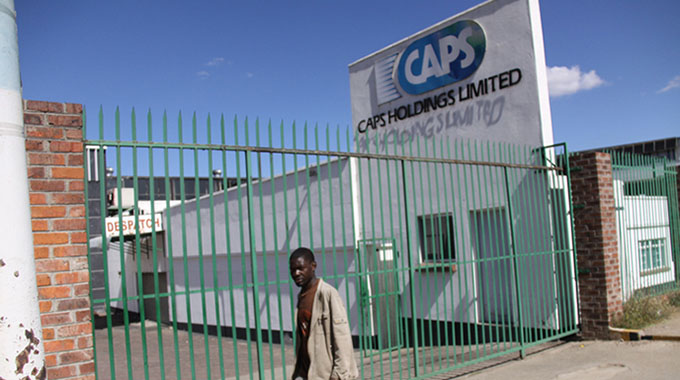
Business Writer
THE Reserve Bank of Zimbabwe (RBZ) has sought clarification from Frederick Mutanda on the status of the shareholding of his family trust in St Anne’s Hospital as the dispute over ownership of the iconic Harare health facility rages.
In a letter to Mutanda dated June 5, 2020, RBZ governor Dr John Mangudya requested clarity on why the businessman still claims ownership of shares in the hospital when the Government bought 68 percent shareholding of CAPS Healthcare, the principal shareholder of St Anne’s from Mutanda Family Trust and associated investment vehicles.
While the Government later sold the 68 percent of St Anne’s to Sisters of the Little Company of Mary (LCM), Mutanda is challenging the acquisition by the Catholic nuns, claiming there were several outstanding issues including failure by the Government to pay for the shares in terms of the agreement.
CAPS Healthcare became a separate entity after the de-merger of CAPS Holdings in 2011.
Of the de-merged entities, the Government, through the central bank offered to buy—apiece — 68 percent shareholding in CAPS Manufacturing, a medical drugs producer and in CAPS Healthcare.
While the 68 percent transaction remains controversial, Mutanda still claims ownership of 20 percent of the 32 percent minority shareholders in CAPS Healthcare.
He is arguing no statutory meetings were held to approve the sale of the hospital to the nuns, thus making the purported sale of the hospital null and void.
“You raised issues which would require further clarity,” Dr Mangudya wrote to Mutanda after a meeting of June 1, which sought to resolve the dispute.
“(The meeting resolved that) Mutanda had 20 percent interest out of 32 percent shareholding in CAPS Healthcare. It would be necessary to clarify how this arose as our understanding is that by the agreement between Government and Mutanda Family Trust and related entities, the later had disposed of their entire shareholding in CAPS Healthcare.
“For the benefit of all interested parties. . . kindly provide necessary proof of the title to the shares you state are held by your family vehicles and the mandates for you to represent the rest of the minority shareholders.”
The other minority shareholders are Doctors Trust.
Mutanda blasted the actions by the Reserve Bank, saying they were tantamount to” asset seizure to violate his property rights”.
He said while he agreed to sale part of his shares in CAPS Manufacturing and CAPS Healthcare during a meeting with the Joint Operation Command in 2007, such agreement was never fulfilled in terms of payment as per agreement.
“At a meeting with the service chiefs’ Joint Operation Command in 2007, I agreed to sell part of my CAPS Holdings shareholding to the Government of Zimbabwe,” said Mutanda in response to Mangudya’s letter.
“That was not authorising the Reserve Bank to expropriate St Anne’s from CAPS.
“It is offensive that you and your incompetent team continue to argue about fundamentals of human rights that you don’t fully understand or practice. There is only one true justice and I can’t give up on seeking my justice.”
St Anne’s is currently undergoing renovations after LCM, in partnership with Trustees of Solidarity Trust Zimbabwe (SOTZIM) agreed to temporarily set up a Covid-19 response centre to complement Government’s response efforts to the pandemic, which has killed about 380 000 people worldwide and infected nearly 6,3 million.
The facility will have 100 beds including those catering for intensive care and high dependence patience.
Efforts to get a comment from LCM proved fruitless by the time of going to print.
Mutanda is already challenging CAPS Manufacturing’s debt take over by ZAMCO, arguing it is the RBZ that has obligation to settle the debt it since it owes CAPS US$7million.
The debt arose after RBZ in 2008 ordered CAPS to release all its drugs to state-owned National Pharmaceuticals.
Mutanda is resisting the move by ZAMCO to convert the debt into equity. The central bank set up ZAMCO in 2015 as a special purpose vehicle established to hive off non performing loans from banks that were groaning under the burden of toxic obligations.


 Online Reporter