Online Reporter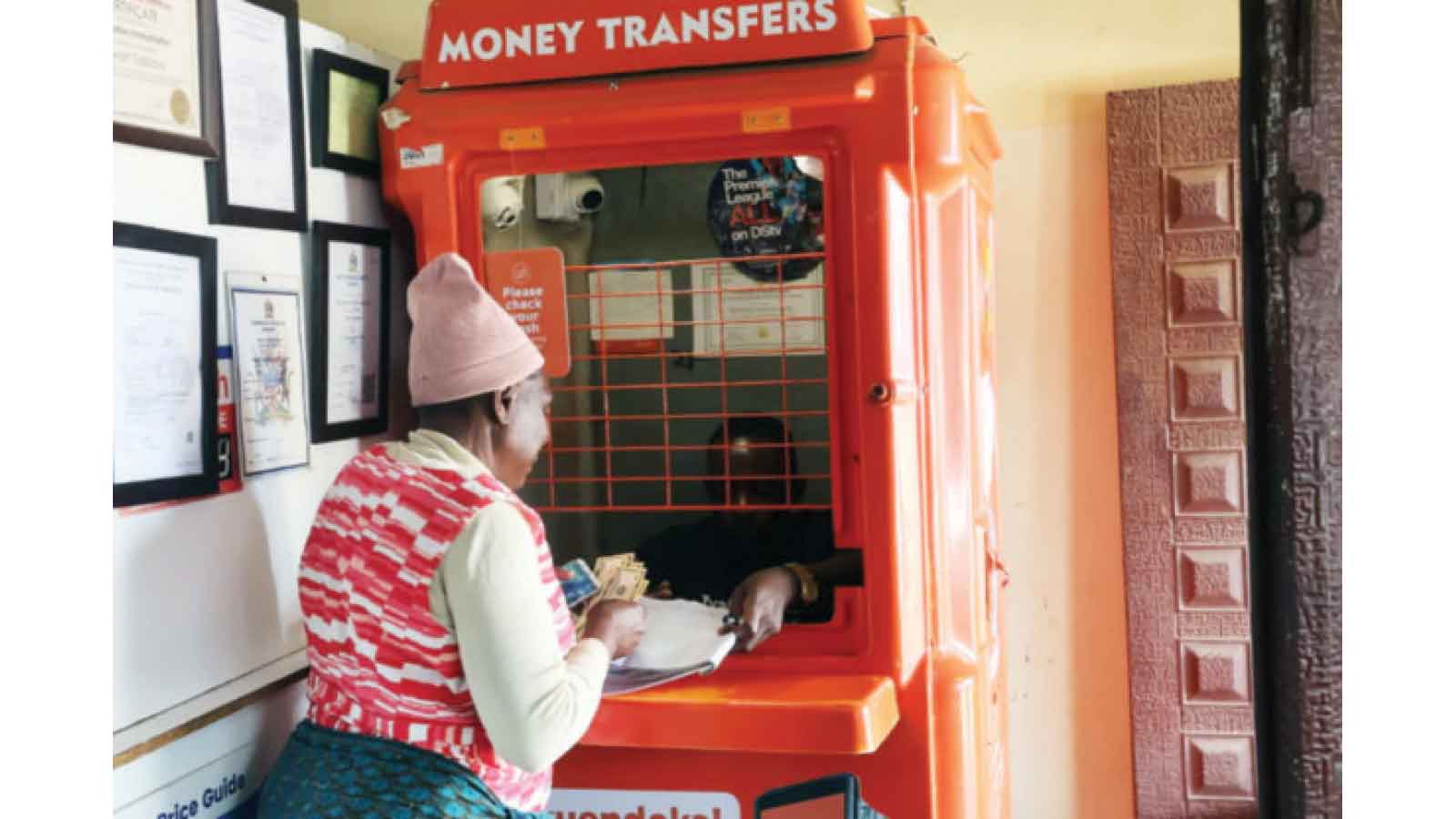
Theseus Shambare
THE sky over Epworth was heavy and unsettled last Thursday, as thick grey clouds gathered again after a heavy downpour the day before.
The ground was soft underfoot, patched with puddles and the air carried that metallic scent that comes before another storm.
But at Solani Shops, just beside a row of newly built tuck shops and fresh-produce stalls, the queue outside the a money transfer outlet kept growing.
Some clutched umbrellas. Some leaned on walking sticks. Some held babies wrapped in blankets.
But all waited calmly for one thing: a message that would change their day and in some cases, their month.
The people were queuing for their Urban Cash Assistance Programme disbursements from Solani Shops and at another outlet at Corner Store in Overspill Ward 7.
At the front of the queue stood 66-year-old widow Judith Pingani of Ward 6. She squinted slightly against the light — her eyesight fading but her determination, sharp as ever. She receives US$13 for each of her 10 family members. Her voice trembled when she spoke.
“My husband died in 2004. Since then, I have been looking after my two divorced daughters and seven grandchildren,” she said.
“I see, but not clearly… so sometimes they guide me. But I must be strong for these children.”
Her oldest grandson helps her with the groceries once she receives the cash. Most months, she buys maize meal, dried kapenta and cooking oil.
Sometimes she can afford vegetables. In bad months, they rely on porridge alone.
Before the programme, she said, “We ate whatever came. Sometimes nothing.
Epworth today is not the Epworth of old. It is no longer only the place associated with chaos, unregulated settlements and whispered stories of crime.
Change has arrived. Where Solani once pulsed with confusion — a clutter of illegal vending and whispered deals — fresh-produce stalls and modern shops now rise, signalling a quiet, but profound transformation.
The township has improved roads, new commercial spaces, organised markets and improved refuse collection.
Epworth Local Board Town Secretary Wilton Mhanda said the community is standing at the edge of a new era
“We have handed over our masterplan for approval. Epworth is developing — from basic amenities to sporting facilities. We are the fifth-largest urban settlement in Zimbabwe. We must be competitive. Our children must grow in a place that gives them opportunity,” he said.
Still, as he admits, development is never evenly spread.
In communities with mixed backgrounds, rapid population growth and pockets of deep marginalisation, poverty clings stubbornly.
That is where cash assistance steps in.
“After my husband died, I learnt to survive alone.
This is what a 40-year-old widow, Kudzai Murabowa, who stood behind Judith in the line said.
She clutched a worn-out handbag and shielded her youngest child with her arm.
“My husband died in 2014,” she said.
“I survive by selling secondhand clothes in town. Some days are good, buy some days I get nothing. With four children and a grandchild, life is not forgiving.
She receives US$13 per household member, the same amount every beneficiary gets — enough to cover basics, not enough to escape poverty, but enough to restore dignity.
“With this money,” she said softly, “I can at least buy food. My children will eat tonight.
Outside another shop, leaning carefully against the wall, was 69-year-old Mr Council Moyo, balancing his weight on a pair of worn crutches.
“I have lived with disability most of my life. But I have children to raise,” he said.
He lives with his five children. His wife roasts fresh maize at Solani Shops to make a living.
But maize is unpredictable; sometimes it sells fast, sometimes it gets stale before it’s sold out.
“There are days when the firewood burns and the maize is roasted… but no one comes to buy,” he said.
“And that night, the children ask: ‘Baba, what will we eat?’”
When he received his cash transfer, he smiled the first full smile we had seen from him.
“I will buy mealie meal and cooking oil today. We will eat something warm.
At Corner Store, Ward 7, the atmosphere shifted.
People who seconds earlier wore tired expressions suddenly broke into laughter as phones buzzed with the alert: You have received US$130 — depending on the number of beneficiaries.
One of them was 52-year-old Modesta Nyamayaro.
The moment her money reflected, she rushed into a nearby shop like someone who had remembered how to breathe again.
She came out with rice, macaroni, cooking oil and other essentials. Today, she would cook something she liked — not just what was available.
Her joy was contagious. Others around her began laughing, comparing shopping lists, teasing each other, promising to “spoil themselves with something nice.
Even the shopkeeper chuckled: “Today the shop is lively. You can feel hope in the air.”
Along the same queue stood 60-year-old Winnie Sakonda, a grandmother raising six grandchildren alone.
She did not speak much. Her eyes carried tiredness that words cannot fully express.
But she finally said: “These children depend on me. This money means life.”
Why Epworth needed the programme
According to ZimLAC, urban hunger almost doubled between 2021 and 2024.
ZIMSTAT reports that food inflation rose by more than 230 percent over the same period.
Informal jobs — the lifeline of Epworth — collapsed due to drought, shrinking demand and rising prices.
Globally, the World Food Programme estimates that 349 million people across 79 countries face acute food insecurity — the highest in modern history.
Epworth is one small dot on this global map — but its struggle is real.
WFP and the Government: Dignity through cash
In an interview during the tour, WFP Harare Head of Field Office Ms Bianca Dzwairo explained why the partnership with the Ministry of Public Service, Labour and Social Welfare matters.
“From August to December 2025, WFP and the Government of Zimbabwe are implementing the Urban Cash Assistance Programme in Epworth. It targets over 8 400 vulnerable people, giving $13 per person per month.
This is the first time WFP and the Government, through the Department of Social Development, are jointly running an urban cash programme.
Cash-based transfers, she said, restore dignity and reduce logistical costs while empowering families to choose their priorities.
They strengthen local markets, enhance accountability and allow rapid scaling in emergencies.
“This is modern, people-centred humanitarian support,” she said.
“It is dignity in action.”
As the tour concluded in Epworth that afternoon, the sky finally opened up — not with rain, but with a soft, warm light pushing through the clouds.
People walked home with groceries, clutching plastic bags. But in the middle of it all, something else is fighting for space: hope, dignity.
Hope does not always come in big moments. Sometimes, it arrives in small amounts — US$13 at a time.
And in Epworth, that small amount is changing everything.