


 tawandamusarurwa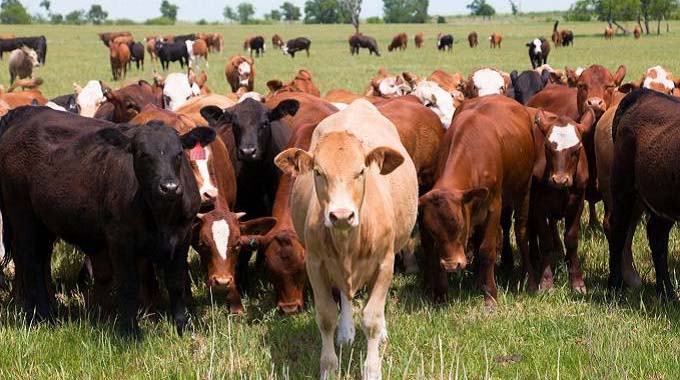
Business Reporter
The Government has pledged to grow the national cattle herd to ensure self-sufficiency and to improve diets in the country.
This was said by Lands, Agriculture, Fisheries, Water and Rural Development Deputy Minister Davis Marapira at a stakeholders’ meeting, where he led a delegation that included the chief director of Veterinary Services Dr Josphat Nyika to assess the country’s ability to increase its herd.
“As the Ministry of Lands, Agriculture, Fisheries, Water and Rural Development, we are more serious about developing our cattle population.
“In the last 10 years, we have been told that our cattle population is 5 million.
“There has been no growth, the reason is that people are slaughtering females and heifers. Because of that, the policy we have as Government is to make sure we safeguard the slaughtering of breeding heifers,” said Deputy Minister Marapira.
The national herd currently stands at 5,4 million. While tick-borne diseases killed at least 500 000 cattle in the past five years, deaths from these sicknesses are now falling fast after several strategies launched by Government and farmers are following the advice of veterinary experts.
Besides the protection of breeding heifers and cows from slaughter, the Government is also employing the use of artificial insemination to grow the national herd.
“As Government, we import semen from all over the world and we also generate semen again from our local bulls and make sure that our rural areas can access good quality semen to improve their breeds,” he added.
Government’s artificial insemination programme is proving to be affordable compared to buying bulls for cross-breeding.
Agriculture analyst Anderson Magura said: “If we win the war against the January disease, we are guaranteed as a nation of meeting Vision 2030 before the targeted year.
“As we target to achieve this, we have to put in place plans to rehabilitate dip tanks and build new dip tanks by June this year.
“Currently, we have 4 000 dip tanks countrywide and 80 percent of these are functional.”
Staff at Coopers and Shumba Group of Companies have been burning the midnight oil to produce animal dipping chemicals, saying the move will help reduce livestock deaths.
The group is producing dipping chemicals and tick grease to control the January disease that has ravaged cattle
herds.
The company’s project executive, Professor Joseph Kamuzhanje, said they are working with communal farmers to mobilise local resources that are key in strengthening Government efforts to boost the national herd.
“We are working with communal farmers to mobilise resources and do bulk procurement of acaricide, which is the key chemical needed for dipping purposes and this has seen a marked reduction of cases of the disease, a process that has seen farmers growing their herd in line with Government’s vision of empowering people through sustainable animal husbandry projects,” noted Prof Kamuzhanje.
Control of the January disease is set to expand the livestock value chain and support livelihoods, especially in major cattle-rearing areas such as Matabeleland North and South, parts of Midlands and Masvingo provinces.



 Bongani Ndlovu
 Online Reporter