Sundaymail Editor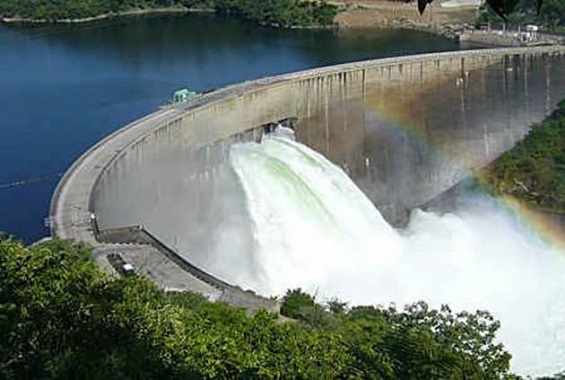
Nelson Gahadza
THE Government says key economic enablers such as mining, industry, commerce, water pumping, hospitals and critical institutions are being prioritised, alongside winter wheat farming, in terms of electricity supply to minimise loss of productive time.
The Government says, despite the challenges, it has managed to minimise load-shedding for several months now.
It further says it does not expect to exceed Stage 1 load-shedding despite the power crisis in the region.
“We have several existing import arrangements with our counterparts and the Zimbabwe Electricity Transmission and Distribution Company will also be actively involved in the Southern African Power Pool day-ahead market to access any excess power from the region.
“These short-term import initiatives will help address the power requirements this winter,” said Energy and Power Development Minister Mr Edgar Moyo.
He said independent power producers (IPPs) were generating an average of 50 megawatts (MW), while solar net metering capacity was at 24MW. An additional 16MW from net metering is expected this winter.
According to Minister Moyo, the country would have managed to meet the current electricity demand had it not been for hydrology issues affecting generation at Kariba Dam.
“For example, today (Wednesday), we are producing 1 500MW, against demand of 1 795MW, resulting in a shortfall of 295MW. This shortfall could have been met by Kariba, which has been restricted to 214MW, against its installed capacity of 1 050MW.
“Current load-shedding is mainly affecting domestic consumers, even though a few industries are being affected.
“Winter wheat farmers are having uninterrupted supply, and they are happy, but soon after the winter wheat farming period, supply is going to return to normalcy,” said Minister Moyo.
Supplementing local production with electricity imports requires an average of US$11 million to US$12 million per month, but most of them are direct purchases by private players, mainly in the mining sector.
Several other companies are investing in their energy generation to ensure uninterrupted production.
According to the Zimbabwe National Statistics Agency’s index of electricity generation for the first quarter of 2024, at 89,2, this reflects a quarter-on-quarter percentage increase of 1,2 from 88,1 in the fourth quarter of 2023.
An index of electricity generation is an economic indicator that shows relative changes in the volume of power generated in a country over time in a given reference period.
According to the report, the first quarter 2024 index of 89,2 reflects a year-on-year increase of 53,2 percent when compared to 58,2 recorded in the first quarter 2023.
The report shows that Hwange generated 1 696,4 gigawatt hours (GWh), representing 75,4 percent of the total electricity generated during the first quarter of 2024, followed by the Kariba Power Station, which produced a total of 440,5GWh of electricity, constituting 19,6 percent of the total power generated during the quarter.
IPPs produced 5,1 percent of the total electricity generated.
The ZimStat report shows that a total of 505,4GWh of electricity was imported in the first quarter of 2024, reflecting a 33,3 percent increase on a quarter-on-quarter basis from 379,1GWh imported in the fourth quarter of 2023.
About 35 percent of the imported electricity was obtained from Eskom (South Africa), HCB (Mozambique) at 23 percent, ZESCO (Zambia) at 28 percent, EDM (Mozambique) at 11 percent, and DAM (South African Power Pool) at 3 percent.
The volume of electricity exported in the first quarter of 2024 was 89,4GWh, a 14,4 percent decrease from 104,5GWh exported in the fourth quarter of 2023.
“Of the 89,4GWh of electricity exported during the 1st quarter of 2024, NamPower of Namibia received 74,5GWh, which represents 83,3 percent,” reads the index report.
The report says the total volume of electricity distributed during the first quarter of 2024 was 2 026,4GWh, and this reflected a percentage decrease of 7,6 when compared to 2 192,2GWh distributed in the fourth quarter of 2023.
According to the report, of the distributed electricity, users in the manufacturing, transport and construction sectors consumed 616,5GWh, which was 30,4 percent; mining and quarrying used 286,0GWh, which was 14,1 percent; and domestic consumers used 500,1GWh, which was 23 percent.
Others used 474,5GWh, which was 24,7 percent, and the agriculture and forestry sectors used 159,6GWh, which was 7,9 percent.
According to Minister Moyo, other Government measures in place to improve electricity generation include renewable energy efforts, where the Government, through the Zimbabwe Energy Regulatory Authority, has given licences to several IPPs that are developing their projects.
“Some of them are mines; others are factories and agricultural undertakings, where they are producing their own power.
“On the mining front, we have asked ferrochrome miners; those are subsidised; they have a lower rate in terms of their tariffs.
“So, we have asked them and given them a period that lapses at the end of next year to develop their own generation plants for their own consumption so that we have more power, which is free for social use,” Minister Moyo said.



 Online Reporter