


 malvernmugadzikwa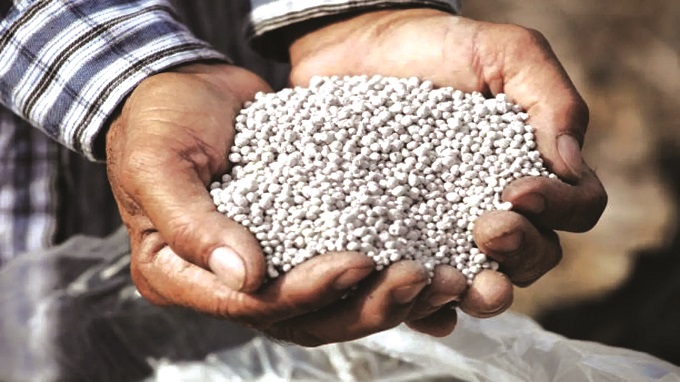
Business Reporter
THE Government has announced a 12-month suspension of import duty on fertiliser to alleviate costs for farmers, a move expected to stimulate agricultural production for the 2024/2025 season.
The suspension is contained in Statutory Instrument 178 of 2024, published in the Government Gazette on Friday.
During the period, Government will allow the importation of 250 000 tonnes of fertiliser including 100 000 tonnes of urea and 150 000 tonnes of Ammonium Nitrate.
“With effect from the date of publication of this notice, and up to a period of 12 months, duty is wholly suspended on fertilisers imported by approved and regulated importers,” reads part of the regulations.
Approved importers shall be licensed by the Ministry of Lands, Agriculture, Fisheries, Water and Rural Development, in consultation with the Ministry of Industry and Commerce and the fertiliser manufacturing industry.
The Zimbabwe Revenue Authority (Zimra) Commissioner shall grant suspension of duty to an approved importer subject to compliance with Section 34C of the Revenue Authority Act [Chapter 23:11].
“The Commissioner shall not grant suspension of duty to an approved fertiliser importer where the importer does not have a licence issued by the ministry responsible for agriculture,” says the regulations.
The Government shall ensure that approved fertiliser importers adhere to responsible pricing of fertilisers for which the Zimra Commissioner would have wholly suspended duty payable.
Any approved fertiliser importer who sells the commodity for which duty would have been suspended at prices equal to or higher than those of fertilisers on which duty is ordinarily payable shall be liable to pay the duty suspended and applicable penalties.
The suspension comes at a time when the country is bracing for the summer cropping season, which is expected to be characterised by good rains due to La Niña conditions.
This is a major boost, particularly given that the country has experienced serious drought caused by El Niño, which led to crop failures.
The 2023/2024 season has been marked by a long dry spell, regarded as the worst El Niño-induced drought in 43 years. This has had a significant negative impact on agricultural production and productivity.
The drought affected the entire Southern African region, but Zimbabwe seemed to be the epicentre.
Zimbabwe Commercial Farmers Union president Dr Shadreck Makombe said farmers should take advantage of the suspension of duty on fertilisers to collectively mobilise resources to import crop nutrients.
“Fertilisers constitute a major component of expenses, so this new move is great. It should also lead to fair prices from local producers,” said Dr Makombe.
By end of July this year, the country was estimated to have approximately 271 000 tonnes in stock, with major purchases and contractual arrangements in progress.
Zimbabwe’s annual requirement for basal fertiliser is 400 000 tonnes, while top dressing requires 380 000 tonnes.
Fertiliser constitutes 30-40 percent of the production cost for most cereal crops.
Therefore, sustained increases in production, both for local consumption and exports, depend on a consistent supply of affordable, locally produced fertilisers.
This year’s target is to increase cereal production by 340 percent from 744 271 tonnes to 3,3 million tonnes, and the Government has put in place plans to ensure this is achieved.
Overall production volumes of major crops are expected to increase by 347 percent from 914 848 tonnes to 4 million tonnes in the 2024/2025 season.
Although Zimbabwe has an installed fertiliser production capacity of over 1,68 million tonnes annually, capacity utilisation is less than 15 percent due to cash flow issues, foreign currency shortages, outdated equipment and high raw material costs.
The new Government policy document, the Zimbabwe Industrial Reconstruction and Growth Plan, proposes several interventions to boost fertiliser production and reduce imports.
These include timely payment to local fertiliser manufacturers and suppliers; reliable access to foreign currency; support for the Ministry of Higher and Tertiary Education, Innovation, Science and Technology Development to establish a fertiliser plant; and accelerating support for investment into Dorowa and fertiliser production by an identified investor.
It is envisaged that implementing these proposed interventions will increase the fertiliser industry’s capacity, reducing reliance on imports by 50 percent.



 Online Reporter