admin
admin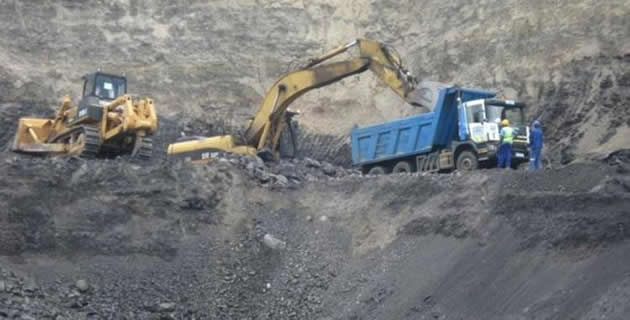
Martin Kadzere Senior Business Reporter
GOVERNMENT intends to issue more coal prospecting licenses while measures are being put in place to monitor progress made by investors who were granted special grants a few years ago, Mines and Mining Development Minister Walter Chidhakwa said.
Twenty-six companies, including the Zimbabwe Mining and Smelting Company and several local companies applied for special grants for exploration of coal around the country.
The investors are seeking to explore coal in Hwange, Binga, Gokwe, Gwayi and Dete areas.
“We are now looking at these applications in view of recommending those who can be issued with the prospecting licenses,” said Minister Chidhakwa in an interview.
Special grants are granted by the President. The license holders are then expected to start exploration works within six months from the date of issuance of the license.
If license holders fail to begin exploration within the period, they are expected to advise the Government and give reasons why their licenses should be extended. The Government, if not satisfied may proceed to withdraw the prospecting license.
The Government granted 28 special grants in the past few years, but only five were being utilised while the rest were lying idle.
Government once indicated that it will repossess unproductive mining claims to pave way for new players and investments.
There is also anecdote evidence that holders of the special grants were keeping the land for speculative purposes. Minister Chidhakwa said lack of financial resources was hampering monitoring of progress by geologists on the approved mining claims.
“Due to lack of resources, our geologists have not been visiting the sites,” he said. We are in the process of empowering our geologists to monitor progress on these sites.”
Coal has been the dominant energy mineral for Zimbabwe. The country boasts of vast reserves of coal particularly in the north-west and southern parts of the country.
Makomo Resources and Hwange Colliery, the major coal producers have adequate capacity to meet the country’s needs in terms of energy requirements for domestic heating, agricultural heating, industrial energy as well as power stations.
While there is growing demand for coal in Asia, particularly China, the quality of coal in Hwange in terms of sulphur and phosphorous content is not suitable for such markets.
As such, local coal mining firms are looking at value addition to produce suitable products for the markets metallurgical coke which is used as fuel and reducing agent in blast furnaces, as part of the process of making steel and iron alloys.



 Online Reporter