Bongani Ndlovu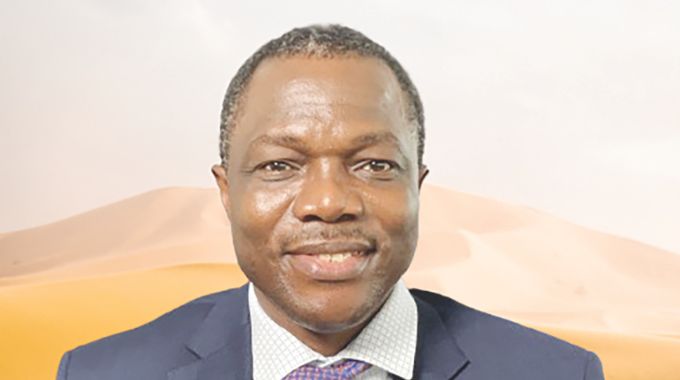
Nkosilathi Sibanda, [email protected]
THE country’s journey to attain Vision 2030 remains firmly on course, with significant progress and transformation becoming increasingly visible and appreciated over the years.
Much of the credit goes to the smart partnerships and interventions that the Government has built, in the quest to empower, develop and uplift lives especially in communities previously sidelined as the country moves to reach an upper-middle-class economy.
In the ongoing interventions, Government has worked hand in glove with the United Nations Development Programme (UNDP), in what has been a partnership of positive results across sectors.
The Second Republic’s open-door policy to development partners has carved a path that will, in the coming years, lead to prosperity long yearned by many citizens.
Now, developmental gains are increasingly rural communities that were previously underserved. In rural clinics that were crippled by power cuts, nurses can now safely store medicines, deliver babies at night and run vital equipment without interruption after the facility was connected to solar energy under a United Nations Development Programme (UNDP) supported initiative.
At the Gororo Irrigation Scheme a 50-hectare, solar-powered climate-smart agricultural project in Chivi South (Ward 28), Masvingo Province, farmers are harvesting crops three times a year despite recurring droughts, while vulnerable women in remote communities are accessing legal and protection services through Mobile One-Stop Centres brought closer to their doorsteps.
These are among the human development stories emerging from UNDP Zimbabwe’s 2025 development interventions, which the organisation says are transforming livelihoods, strengthening resilience and restoring dignity to communities across the country.
Speaking on the organisation’s 2025 results, UNDP Zimbabwe Resident Representative Dr Ayodele Odusola said the agency’s support was focused on practical interventions designed to improve the everyday lives of ordinary Zimbabweans.
“In 2025, UNDP Zimbabwe supported practical results that reached people directly across health, climate resilience, livelihoods, access to justice, renewable energy and economic empowerment,” said Dr Odusola.
One of the most significant achievements in 2025, as Dr Odusola outlines, was strengthening Zimbabwe’s health systems, particularly through expanding access to medicines and renewable energy in health facilities.
“Some of the headline results include 3,7 million people gaining access to essential medicines, 838 hectares placed under climate-proofed irrigation, 1 368 households connected to reliable piped water, 13 Mobile One-Stop Centres deployed to underserved communities, 51 priority justice cases resolved, and 72 farming families generating more than US$64 000 through irrigated agriculture.
“For us, the most important point is that these are not just statistics. They represent people accessing medicines, farmers earning income, women building enterprises, communities receiving weather information, and vulnerable people accessing justice and protection services.”
Dr Odusola said more than 1 200 health facilities were powered through solar energy systems.
“Solar energy is not just an environmental intervention. It is a health service delivery intervention. When a clinic or hospital has reliable energy, it can maintain cold chains, support maternity care, operate equipment, improve laboratory services and provide more consistent care to patients,” he said.
UNDP also supported improvements in the storage and distribution of medicines through the construction of a new medical warehouse, which reportedly increased storage capacity by 448 percent.
The intervention, according to Dr Odusola, UNDP helped improve delivery times for essential medicines by 60 percent while reducing emergency stockout orders by 75 percent. Antiretroviral therapy coverage also remained above 93 percent across all provinces.
Climate resilience remained another major pillar as communities continue to grapple with droughts, changing rainfall patterns and water shortages linked to climate change.
The agency said it supported 838 hectares under climate-proofed irrigation and reached more than 2,6 million people with weather advisory information aimed at helping farmers make informed decisions.
Communities also protected 12 330 hectares from wildfire damage while 19 irrigation schemes were supported with climate-smart infrastructure.
Dr Odusola said weather information had become a critical development tool for rural communities.
“Weather advisories help farmers make better decisions. They guide when to plant, when to harvest, how to manage water, and how to prepare for climate risks,” he said.
“This is especially important in a country where climate variability affects food security, household income and rural livelihoods.”
The Gororo Irrigation Scheme was described as a successful example of climate-smart agriculture that has improved food security and household incomes.
Through the irrigation scheme, 72 farming families completed three harvests, produced more than 68 tonnes of crops and generated more than US$64 000 in income during the year.
Farmers involved in the project also managed to access three export markets through surplus production.
“The Gororo Irrigation Scheme is a strong example of climate-smart development in action. It shows how irrigation can help communities overcome rainfall uncertainty and generate income,” said Dr Odusola.
“That is not only a food security result. It is also an income, resilience and dignity result.”
UNDP also expanded interventions aimed at improving access to safe and reliable water supplies, with 1 368 households connected to piped water systems in 2025.
The organisation additionally supported five community gardens with productive water systems to improve nutrition and strengthen local livelihoods.
In rural economic development, UNDP established eight Village Business Units across communities as integrated livelihood hubs combining water access, energy, food production and enterprise support.
Dr Odusola said the initiative was designed to help communities create sustainable local economies.
“Village Business Units are community livelihood hubs that bring together water, energy, food production, enterprise and social services,” he said.
“The idea is to create integrated platforms where communities can produce, earn, access services and build resilience in one place.”
Women’s economic empowerment also featured prominently in UNDP-supported programmes during the year.
Nearly 600 savings groups supported women-led enterprises across Zimbabwe, while 440 women miners in Mberengwa were mobilised to strengthen livelihoods and improve participation in mining value chains.
UNDP said shared processing equipment and a solar-powered processing facility were expected to increase productivity and save up to US$30 000 annually in energy costs.
In enterprise financing, 59 businesses benefited from loans disbursed under a de-risking facility, with US$18 806 channelled towards supporting small enterprises.
On governance and social protection, UNDP said access to justice remained a key area of intervention through the deployment of Mobile One-Stop Centres targeting underserved communities.
The centres, deployed across four provinces, reached 8 500 people through integrated services including legal aid, protection services, health referrals and civil registration.
According to UNDP, 51 priority cases were resolved while 78 others were managed through multi-agency follow-up mechanisms.
Notably, 69 percent of beneficiaries reached through the initiative were women while 112 persons with disabilities accessed services.
“Access to justice is often limited by distance, cost, lack of information and fragmented services,” said Dr Odusola.
“When services are brought closer to communities, people are more likely to seek help and receive timely support.”
The organisation also reported progress in renewable energy generation and environmental protection.
UNDP-supported interventions contributed to 18 megawatts of renewable energy generation, installation of 370 kilowatt-peak rooftop solar systems and avoidance of 204 tonnes of carbon dioxide emissions.
Communities additionally produced 12 000 hay bales through resilience activities linked to wildfire prevention programmes.
Dr Odusola said all interventions were aligned to Zimbabwe’s national development priorities and the Sustainable Development Goals, with partnerships playing a central role in delivering results.
“Development impact is strongest when it is jointly owned and locally anchored,” he said.
“My key message is that development must be measured by how it improves people’s lives.”



 Online Reporter