Online Reporter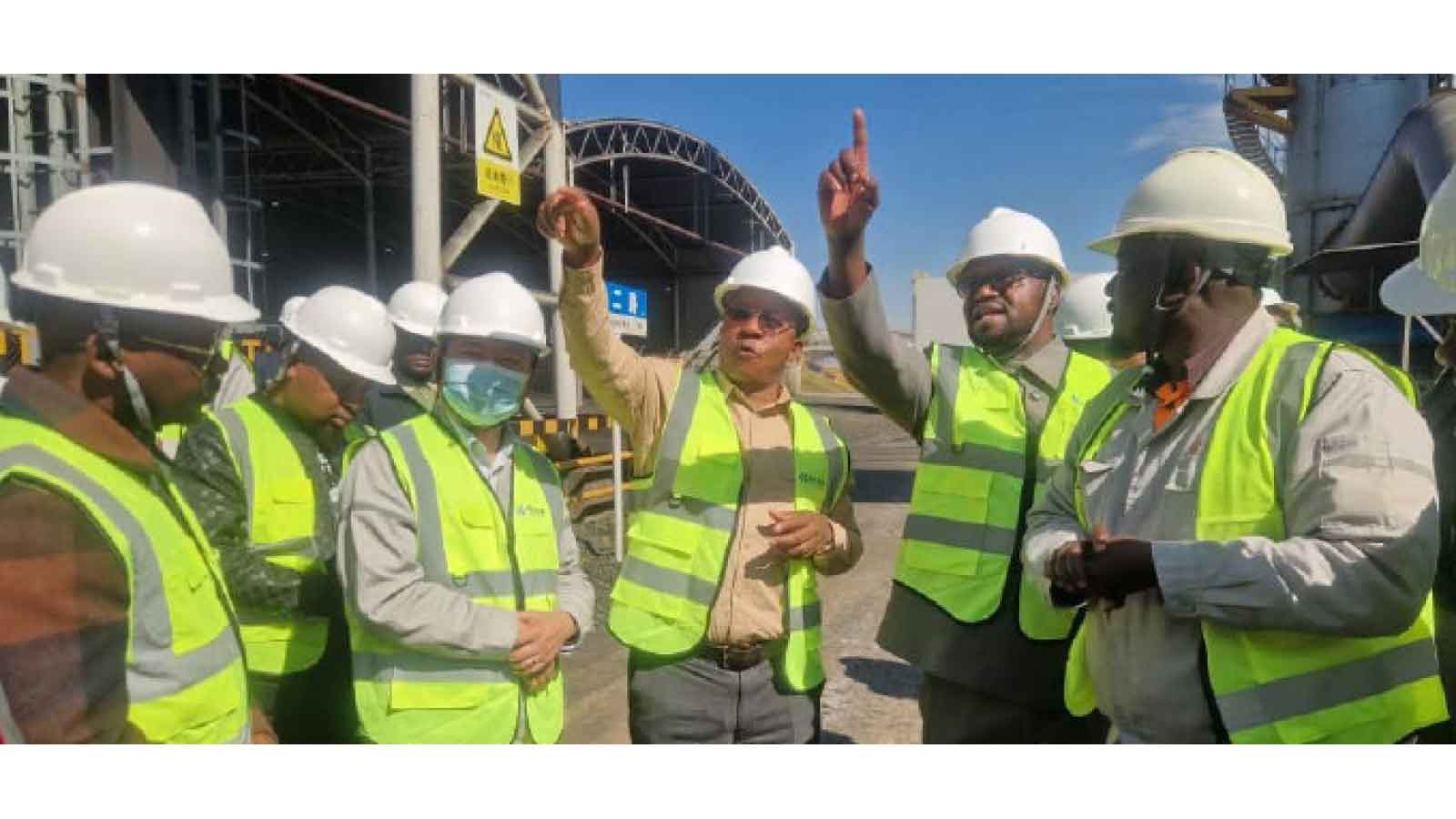
Latwell Nyangu
THE Government’s ban on the export of lithium concentrates, which seeks to promote value addition and beneficiation of minerals, has begun bearing fruit as producers invest in local processing facilities, Mines and Mining Development Minister Dr Polite Kambamura has said.
Speaking after visiting Prospect Lithium Zimbabwe, as part of a two-day tour of major development and investment projects in Mashonaland East province on Friday organised by the Ministry of Information, Publicity and Broadcasting Services, Dr Kambamura said the Government remained committed to ensuring that the country’s lithium resources generate maximum value through local beneficiation.
“We are here today (Friday) to witness a milestone that the company has achieved through the construction of the first lithium sulphate plant in Africa, right here in Zimbabwe,” he said.
“We are very happy as Government to witness this milestone under the Second Republic, especially after Government called for value addition and beneficiation.
“The plant has a storage capacity of 50 000 tonnes of lithium sulphate per annum, and currently they are operating at 60 percent capacity. We are looking forward to seeing them ramp up production efficiency in the first quarter of 2027.”
Prospect Lithium Zimbabwe is presently building a lithium carbonate plant, which is now 90 percent complete.
“So, this is the largest three-line, single-phase lithium sulphate plant in Africa. The company is also going further to build a lithium carbonate plant, which is now 90 percent complete. We are looking forward to seeing the completion of these plants in August this year.
“So, they will be producing lithium sulphate and then lithium carbonate,” he said.
Prospect Lithium Zimbabwe is owned by China’s Zhejiang Huayou Cobalt.
The ultimate goal, Minister Kambamura said, was to move beyond intermediate products and produce lithium batteries and solar panels locally.
“This is a good achievement, especially considering that Government is not going to rest until we produce lithium batteries in Zimbabwe. That’s where we are going. We started with lithium sulphate and now we are moving to lithium carbonate. The next step will be producing lithium batteries in Zimbabwe.
“We will only rest when we are able to produce lithium batteries and solar panels. So, that is the thrust of Government: to produce finished lithium products.”
The visit to Prospect Lithium was meant to assess the company’s compliance with commitments made following the Government’s decision to tighten restrictions on lithium concentrate exports.
“We are here again to follow up on the commitments that the company made, especially after the February ban.
“The commitments that they agreed to implement after the ban. We have seen that they have managed to achieve some of them, while others are still work in progress.
“So, we will be looking at the sector with an eagle eye to ensure that all the commitments made regarding laboratories, skills and knowledge transfer, training for our people, placing our people in top management positions so that they understand what is happening, tax compliance issues and audited financial statements are fulfilled,” he said.
Minister Kambamura said the Government was determined to ensure local mineral wealth benefits the people.
Other lithium producers have been directed to accelerate investment in beneficiation plants and comply with Government policy. He ruled out the possibility of waivers for companies that fail to meet the prescribed conditions.
“For now, we are not talking about waivers, and we are sticking to the January deadline. The producers were given notice in June 2025, an 18-month period up to January 2027.
“So, the February ban and the December 2026 deadline were simply reminders to say that we are still holding firm, and we are not going to change our position.
“They have to move with speed, and they need to have a plan. Huayou Cobalt has finished, so the other big four have to finish,” he said.
Permanent Secretary in the Ministry of Information, Publicity and Broadcasting Services Mr Nick Mangwana, who was part of the delegation, said the tour highlighted the impact of Government policies in promoting value addition, beneficiation and rural industrialisation.
“Today’s (Friday) focus was on value addition and beneficiation,” he said.
“Following the ban on raw mineral exports, Zimbabwe has accelerated mineral processing. Lithium sulphate is already being produced, while the lithium carbonate plant is nearing completion, bringing us closer to manufacturing lithium batteries locally,” he said.
“Granite is also now being processed locally, creating employment and supporting the devolution agenda championed by President Mnangagwa.”
Prospect Lithium’s mine manager Mr Mthokozisi Goliath said they had invested in a 70-megawatt thermal power station to meet the growing energy demands of their expanding operations.
“We have two major plants, a concentrator plant and a lithium sulphate plant, both of which require significant energy,” he said.
“This prompted us to construct a 70-megawatt thermal power station, completed in a record nine months. We are also constructing a lithium carbonate plant, which will require additional power, and generation capacity will be increased accordingly.”
Mr Goliath said the investment would ensure a reliable power supply for the company’s beneficiation operations as it scales up production.
Mashonaland East Minister of State for Provincial Affairs and Devolution Advocate Itayi Ndudzo said Prospect Lithium’s investments were transforming nearby communities through infrastructure development, employment creation and social programmes.
“The company has developed 8km of the 22-kilometre road linking the mine to the highway, invested over US$3 million in corporate social responsibility programmes, created 4 000 jobs — half of them directly — and continues to contribute millions of dollars in taxes,” he said.
From Prospect Lithium, the delegation later toured Natural Stones Export Company in Uzumba-Maramba-Pfungwe, where officials observed progress in local granite processing.
The company’s director of production, Mr David Van Breda, said they had invested US$5 million in the project, with total investment expected to reach nearly US$9 million upon completion.
He said the expansion would significantly boost output and strengthen the company’s position in export markets while advancing Zimbabwe’s beneficiation agenda. Zimbabwe has intensified efforts to beneficiate its mineral resources as part of broader plans to increase export earnings, create jobs and drive industrialisation under Vision 2030.