Online Reporter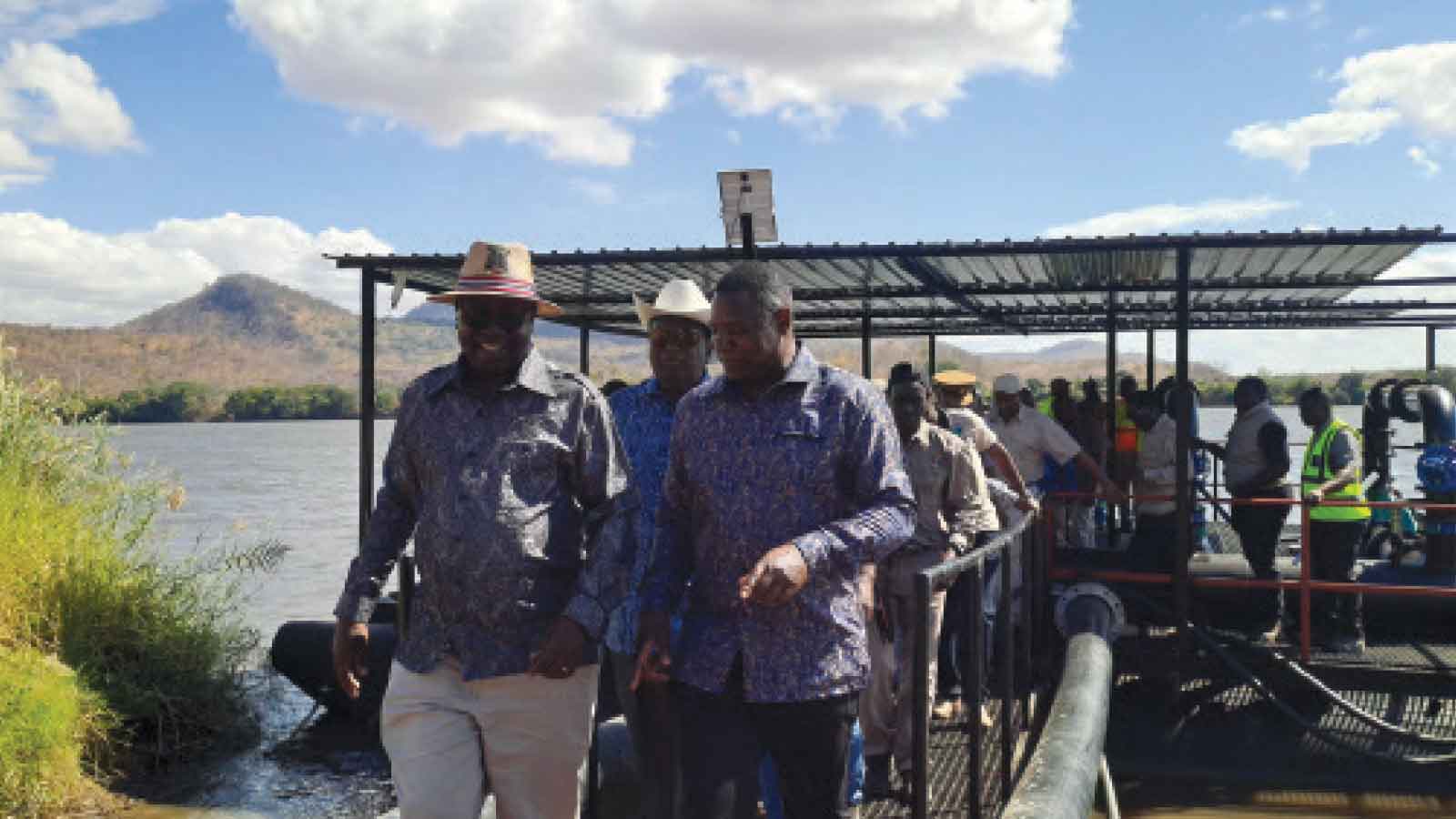
Fungai Lupande
Mashonaland Central Bureau
FOR decades, Kanyemba has remained a remote frontier district, endowed with abundant natural resources yet constrained by recurring droughts, limited infrastructure and dependence on rain-fed agriculture.
Situated at the confluence of the Zambezi and Mwanzamutanda rivers, the area possesses immense agricultural potential, but much of it has remained untapped.
That narrative is now beginning to change.
The Government is breathing new life into the Kanyemba Irrigation Scheme, a strategic project that is expected to transform not only agricultural production but the entire socio-economic landscape of Mbire district by creating sustainable livelihoods, strengthening food security, generating employment and laying the foundation for broader rural industrialisation.
Once fully operational, the scheme will directly benefit 352 households while demonstrating how irrigation can become the catalyst for economic transformation in one of Zimbabwe’s most climate-vulnerable regions.
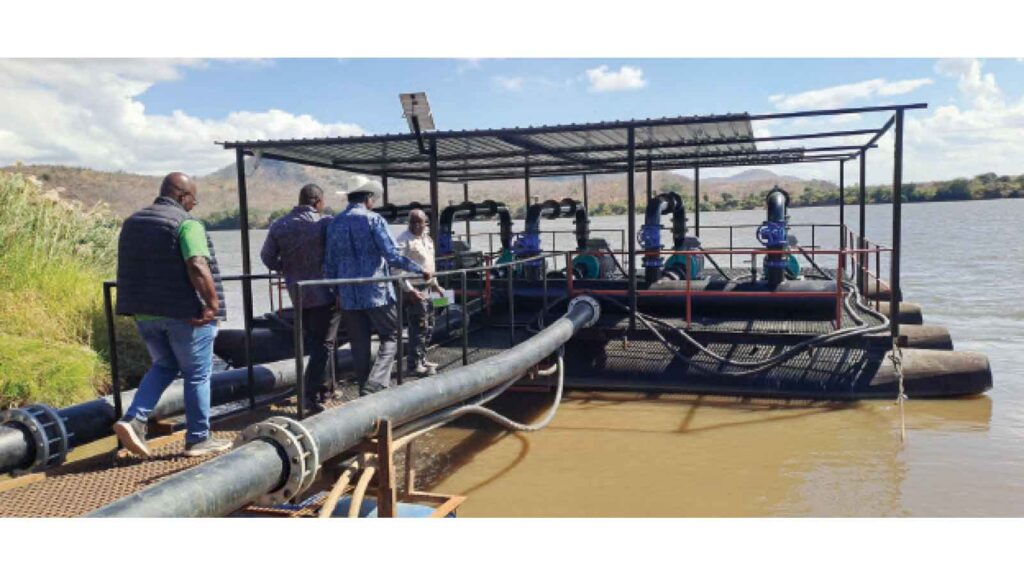
The project, which draws water from the mighty Zambezi River, had remained largely dormant since construction began in 2019 due to technical challenges, particularly the absence of reliable power supply needed to operate irrigation infrastructure.
Its delayed completion meant communities continued to rely on unpredictable rainfall despite living alongside one of Africa’s largest rivers.
Turning point
However, the appointment of a new project management team in 2024 marked a turning point.
Working with relevant Government agencies and contractors, the Zimbabwe National Water Authority (ZINWA) moved to resolve the outstanding technical challenges, restoring momentum to a project that has become central to the Government’s rural development agenda.
ZINWA director responsible for rural development and irrigation Engineer Albert Mare said the irrigation scheme was now more than 90 percent complete, with the first 106 hectares (ha) ready for production.
“We moved in to put sanity into the project because, although it started in 2019, there was no traction. We have now restored progress, and the first phase is almost complete,” he said.
The first contract covers 176ha supplied by a four-kilometre, 500-millimetre pipeline drawing water directly from the Zambezi River.
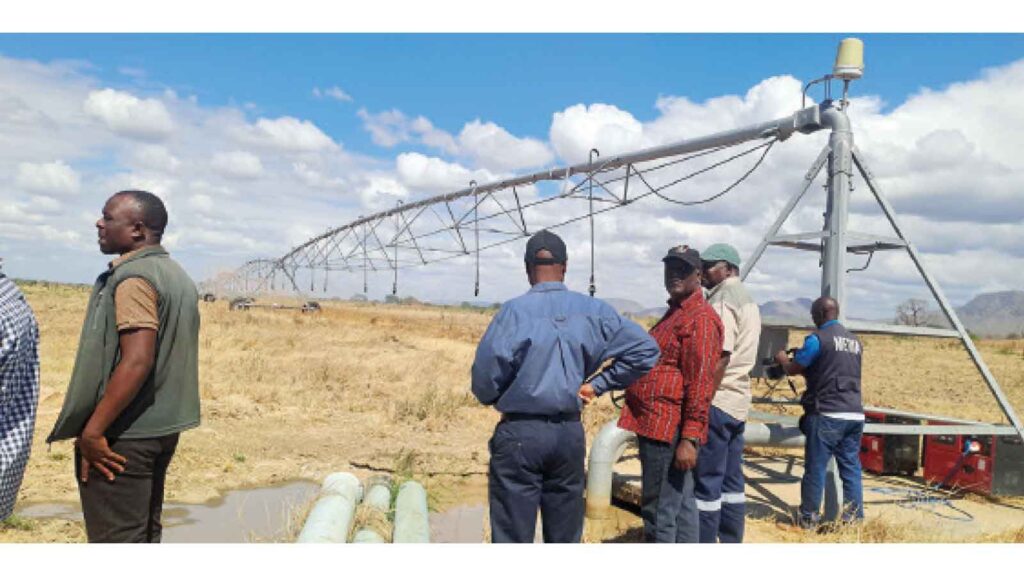
The first phase comprises seven centre pivots irrigating 106ha, while a further 70ha will be developed under the second phase.
Eng Mare said all the major civil and mechanical works had now been completed.
“We have 11 centre pivots, and 10 are already operational. Only one requires minor repairs. The irrigation system has been tested and is working,” he said.
To safeguard the investment from wildlife and vandalism, the Government has installed an electric perimeter fence around the developed sections of the irrigation scheme.
“The 106 hectares that are ready for planting have been fenced and the electric fence is active. No animals or unauthorised people can enter the fields,” he said.
Unlocking year-round agriculture
For Kanyemba, where recurrent droughts have often undermined harvests and food security, reliable irrigation represents a transition from subsistence farming to commercial agriculture.
Year-round production will enable farmers to cultivate multiple crops each season, improve household incomes and supply produce to both domestic and export markets.
The project also aligns with the Government’s rural industrialisation strategy by creating opportunities for agro-processing, agricultural mechanisation, transport services, input supply businesses and commodity trading.
One of the major obstacles delaying the project had been electricity challenges. The irrigation scheme was originally designed as an on-grid solar system that required connection to the national electricity grid before becoming operational.
Delays in completing the external grid connection meant the sophisticated solar installation could not function as intended.
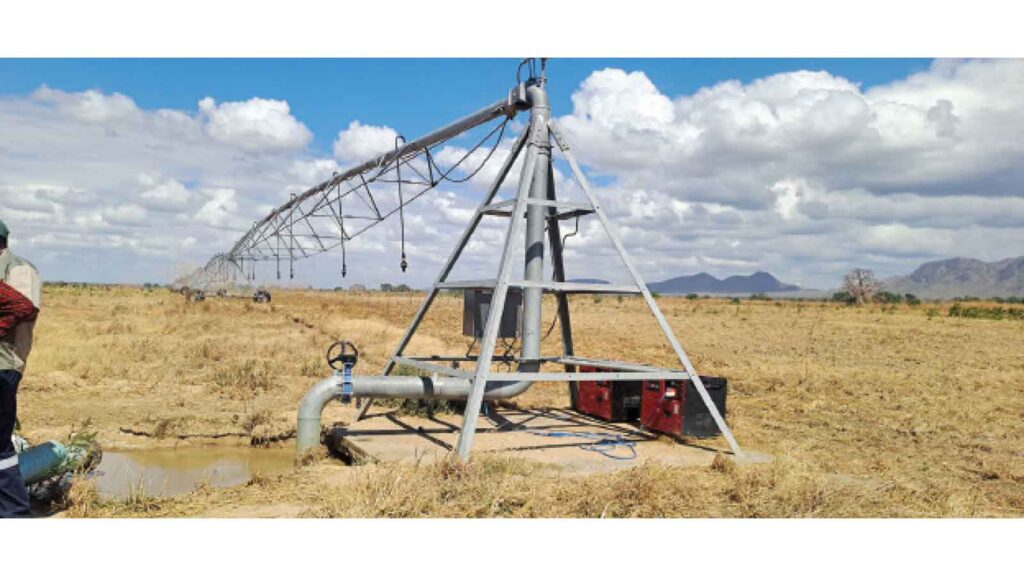
Rather than allowing the project to remain idle, the Government adopted an interim solution by deploying generators to power the irrigation infrastructure while permanent energy solutions are finalised.
“We are now using generators, which were supposed to be a backup, as the main power source. This has allowed us to start testing and operating the system while long-term power solutions are being finalised,” said Eng Mare.
A 650kVA generator currently powers the irrigation system, while smaller generators support ancillary operations.
Meanwhile, engineers are upgrading the existing solar installation into a hybrid system incorporating battery energy storage, allowing the irrigation scheme to operate independently while remaining compatible with future grid electricity.
ZINWA electrical engineer Clemence Sibanda said the existing solar infrastructure had considerable untapped potential.
“The current system has the capacity to generate about 1,1 megawatts. It is enough to power the irrigation scheme and also supply surrounding communities and Government institutions,” he said.
Preparing for production
The Agricultural and Rural Development Authority (ARDA) has already developed cropping plans for the revived irrigation scheme.
The first winter season will see 60ha put under sugar beans, while 116ha have been earmarked for maize during the forthcoming summer season.
Earlier production trials had demonstrated the importance of reliable irrigation.
Sorghum and sesame crops struggled due to inconsistent water supply, while maize averaged about 2,5 tonnes per hectare under limited irrigation conditions.
With dependable water now available, significantly higher and more consistent yields are expected.
As one of Zimbabwe’s northernmost frontier districts, Kanyemba has long been viewed through the lens of remoteness and underdevelopment.
The successful completion of this irrigation scheme is set to rewrite that narrative, positioning the district as an emerging agricultural production hub.