Fungai Lupande
Mashonaland Central Bureau
CHIMANDA Irrigation Scheme in Rushinga has expanded from 40 hectares to 72 hectares following a Government-funded rehabilitation project, boosting farmers’ hopes of increased production.
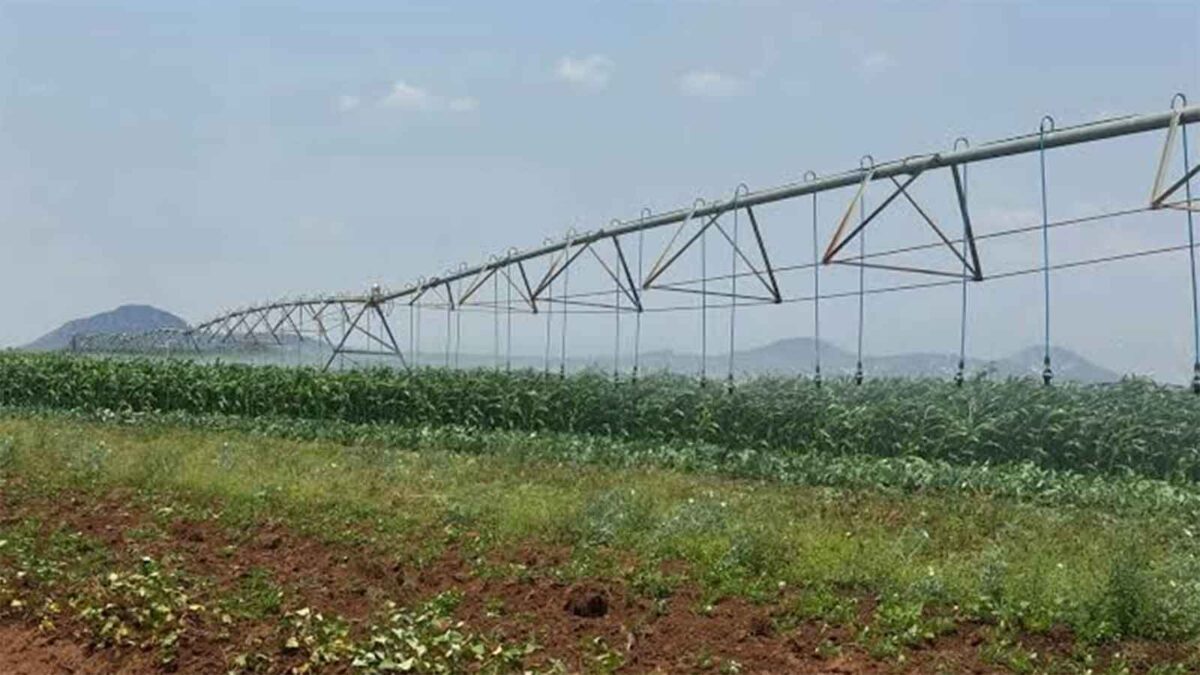
The expansion, funded through the Agricultural Marketing Authority’s Grain Levy Fund under Statutory Instrument 87 of 2025, has seen the installation of a new centre pivot irrigation system, the procurement of three 45-kilowatt pumps and the upgrading of the pump house.
The improvements are expected to enhance water delivery, reduce irrigation disruptions and strengthen the scheme’s capacity to sustain agricultural production amid growing concerns over the effects of El Niño-induced drought.
For farmers who have depended on the scheme since it began operating in 1992, the rehabilitation marks a significant step towards overcoming years of challenges associated with ageing equipment, unreliable water delivery and high operational costs.
In the past, farmers endured exhausting nights in their fields, huddled under blankets and raincoats as they waited for their turn to irrigate their crops.
The new infrastructure has raised hopes of a more reliable irrigation system, allowing farmers to devote more time to production and less to managing water shortages.
“Previously, we would sleep in the fields in raincoats and under blankets, waiting for water. But now we are seeing these improvements, and we are overwhelmed with joy,” one farmer said.
Agricultural Marketing Authority provincial officer Mrs Emelda Hwara said Chimanda was now 100 percent complete, while implementation of the first phase of the irrigation development programme across Mashonaland Central was approximately 60 per cent complete.
The first phase targets six irrigation schemes in the province, with a combined area of 594 hectares.
Mrs Hwara said the Grain Levy Fund, mobilised under SI 87 of 2025, was supporting the Government’s efforts to expand irrigation infrastructure and strengthen agricultural production.
“SI 87 of 2025 is mobilising funds for irrigation development. Here at Chimanda, we have witnessed the injection that has come in terms of the centre pivot, the upgrade of the pump house, as well as the procurement of a new centre pivot,” she said.
The additional 32 hectares bring the scheme’s total irrigable area to 72 hectares, creating opportunities for farmers to increase production of tomatoes, vegetables, wheat and beans.
Ward 15 councillor Bright Manyika said the scheme had transformed livelihoods since its establishment, enabling families to build houses, educate their children, acquire vehicles and create employment within the community.
“From the time the scheme started in 1992 up to now, people’s lives have improved. Through this scheme, we earn money from growing tomatoes, vegetables, wheat and beans,” he said.
Clr Manyika said farmers also shared produce with elderly and vulnerable residents and donated vegetables to local clinics, demonstrating the scheme’s contribution to community welfare.
However, he called for timely provision of agricultural inputs to enable farmers to fully utilise the expanded irrigation infrastructure.
The scheme planted wheat on 20 hectares during the current season, partly because delayed seed deliveries left farmers with insufficient time to prepare and plant all their allocated land.
Despite the late planting, the crop performed well, raising hopes of expanding production in subsequent seasons.
“We want the Government to recognise us as an irrigation scheme and provide us with an input package so that we can go into the fields and farm,” Clr Manyika said.
He said timely access to seed, fertiliser and other essential inputs would enable farmers to maximise the benefits of the rehabilitation and increase production.
Engineer Lazarus Dume said the project had addressed critical infrastructure challenges through the installation of new pumps, replacement of mainlines and renovation of the pump house.
The pumps are fitted with variable speed drives, which allow operators to adjust motor speeds according to water demand, potentially reducing electricity consumption when less water is required.
The pump house was also renovated, its roof repaired and a perimeter fence installed to improve security.
Despite the improvements, electricity costs remain a major concern for farmers.
Chimanda Irrigation Scheme chairperson Ms Suzan Gwatidzo said the cost of powering the irrigation system continued to limit the time farmers could operate the centre pivot.
She said a payment of about ZiG20 000 could sustain irrigation for only three days, forcing farmers to carefully manage available funds.
Affordable and reliable electricity will therefore be critical to ensuring that the upgraded infrastructure delivers its full benefits.
Farmers have also been urged to maintain the equipment, attend to breakdowns promptly and coordinate their cropping programmes to ensure that the scheme operates efficiently throughout the agricultural season.
The expansion of Chimanda is part of broader efforts to reduce reliance on rain-fed agriculture and strengthen rural communities’ resilience to climate change.
Other irrigation schemes benefiting from the programme include Chitoro, which has been completed, while work is continuing at Negomo and other sites.
With the 2026/2027 season approaching, farmers at Chimanda are hoping that the expanded irrigable area, improved pumping capacity and reliable access to inputs will translate into higher yields, better household incomes and increased food supplies.
For a community that has relied on irrigation for more than three decades, the investment offers renewed opportunities to turn water into wealth and protect livelihoods against increasingly unpredictable rainfall.