admin
admin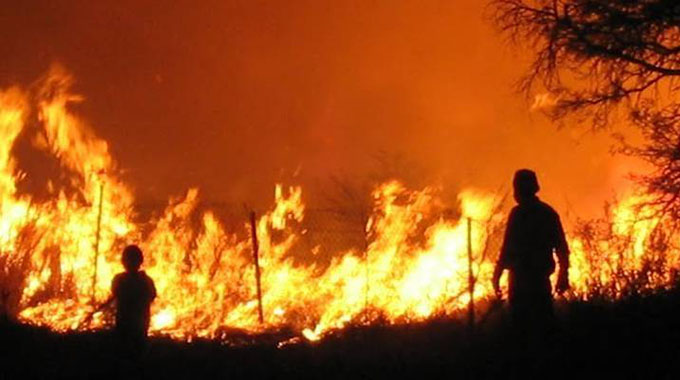
Fungai Lupande
Mashonaland Central Bureau
With at least 23 veld fire incidents having been recorded since the beginning of the fire season on July 31, thatch grass traders in Mashonaland Central are playing a major role in prevention of outbreaks by cutting down grass, especially along highways.
Thatch grass harvesting and sales have become lucrative, with Muzarabani being the major market where traders exchange the grass with farming inputs, livestock and groceries.
The villagers have picked up a sickle to fight against veld fires together with the provincial Environmental Management Agency (EMA).
In Mazowe, more than 40 villagers at Rivers Farm are plying their business along the Mazowe-Mvurwi Road.
One bundle consisting of 50 strands of grass and a box with 50 bundles costs US$5.
The thatching grass known as “zhengeni” is neatly cleaned and it is for modern thatching, while in Muzarabani they collect and stock it in its crude state for traditional thatching.
The thatching grass business at Rivers Farm started with 63-year-old Ms Maud Gurende in 2008, after she learnt the trade in Centenary while working at a farm.
At Dolphin Park Farm, Ms Gurende and six other women harvested thatching grass for barley tobacco bans.
“My husband passed away in 2008 leaving me with five children to take care of,” she said.
“I decided to use the knowledge I gathered at the farm to start a grass cutting company in 2009. I was contracted by the Komani Farm owner and we received grain and groceries in exchange.
“I started with 10 employees and I taught them how to harvest grass. I managed to send my children to school. Now all my employees are doing their own businesses. I encourage all women to get up and start income generating projects to empower themselves.”
The community works together to prevent and put out veld fires because it affects their business.
“At one point the whole village woke up during the night to put out a fire that started along the highway,” said Ms Gurende. “We wonder why people start unnecessary fires because we are irking out a livelihood out of harvesting and selling grass.”
Ms Ketina Nyadzai (76) is among grass traders along Mazowe-Mvurwi Road and she said she ventured into the business years ago.
“I am fending for myself despite my age,” she said. “I have three children who only extend a helping hand to me whenever they can. The proceeds for selling grass doesn’t come immediately, but eventually everyone gets a buyer.”
Ms Nyadzai, who stays with her grandson, said this year she had one buyer and was optimistic although buyers were fewer due to Covid-19.
The business requires a lot of patience and it takes weeks for grass traders to gather their grass and prune it so that the grass is clean.
Afterwards they use a scotchcart to carry the grass to the roadside where they then neatly bundle the strands together before laying them on a stack.
Skills of the business are slightly different in Mavuradonha village ward 21, Muzarabani, where the grass is harvested and sold in its crude state.
Mrs Muchaneta Chiuya said, “Our grass is used to thatch traditional huts and its crude nature ensures that the roof does not leak. This grass is found along the highway and this has become a project for us whereby we are clearing roadside grass at the same time earning a living out of it.
“Our market is at Muzarabani Business Centre where we exchange farming inputs, livestock and cash. One bundle known as ‘chimwanda’ cost a dollar. We don’t start fires here because we are turning the grass into money.”
During the farming season, the grass harvesters are busy in their fields and after harvesting their crop, they turn to cutting down thatching grass for resale.
Environmental Education and Publicity Officer Mr Maxwell Mupotsa said they were supporting the thatch grass cutting and selling projects in the two districts with sickles and sometimes transport to sell the bundles.
“The project members have been trained on fire fighting and also fuel reduction initiatives,” he said. “This project is helpful to the environment as part of biomass or fuel load reduction projects in the communities, thereby reducing the risks of destruction by veld fires.
“In cutting down grass, the project has also helped in erection of fireguards and raising awareness on the dangers of veld fires since they are having a livelihood option on thatch grass sale.”
The agency has procured a hay bailing machinery and tractor for Mbire and Muzarabani through the GEF 6 fund.
“Mbire and Muzarabani are the major districts where the agency has procured hay bailing machinery and tractor for fuel reduction purposes through the GEF 6 fund,” said Mr Mupotsa.
“We have engaged farmers in Mazowe and Bindura district to venture into hay bailing for their livestock and for resale after realising that it is very viable after the dry season.”



 Online Reporter