Online Reporter
Raymond Jaravaza, [email protected]
THE shortest route connecting schoolchildren from two primary schools in Bulawayo’s Old Magwegwe suburb to their homes in nearby Pelandaba West suburb is a dusty trail that cuts through a local cemetery.
The sight of young children, some as young as four in Early Childhood Development (ECD) classes, walking through the heart of Pelandaba Cemetery in its current state deeply unsettles Elma Sibanda, an elderly resident of Old Magwegwe.
Overgrown grass — potentially harbouring snakes and other reptiles — unkempt graves, and stolen fencing now tell the silent story of how one of the city’s oldest burial grounds, Pelandaba Cemetery, has been neglected by the Bulawayo City Council (BCC) over the years.
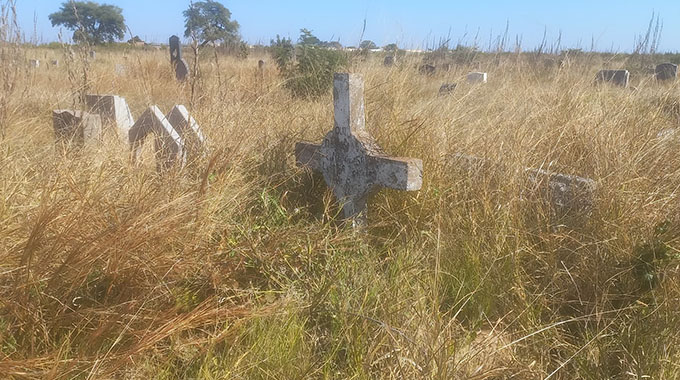
To Sibanda, a deeply held cultural taboo is being broken daily. She watches in disbelief as young children, some barely more than toddlers, innocently use the cemetery’s pathways — passing strangers’ graves — as their regular shortcut home from school.
“I’ve lived in Old Magwegwe for over 60 years, and I remember when the cemetery was a sacred place. The only time we saw people there was during burials or tombstone unveilings.
“Now, we see little ones walking right through the cemetery on their way home from Magwegwe Primary School and Ntshamathe Primary School. These are the closest schools to the new suburb, and the cemetery route is the shortest way home.”
Even more than the cultural unease, Sibanda is deeply troubled by the cemetery’s deteriorating condition.
“I can’t recall the last time I saw council workers cutting the grass or clearing the shrubs. Even as an adult, I feel uneasy walking through the cemetery with its tall grass and neglected graves. Yet, I see children doing it every school day,” she lamented.
A visit by the Saturday Chronicle to Pelandaba Cemetery revealed an overwhelming sense of abandonment. Waist-high grass choked the pathways, the perimeter fence had long been stripped away, and graves stood in silent testament to years of neglect. An anonymous council employee, however, shifted responsibility, stating it is solely up to the deceased’s relatives to maintain individual graves.
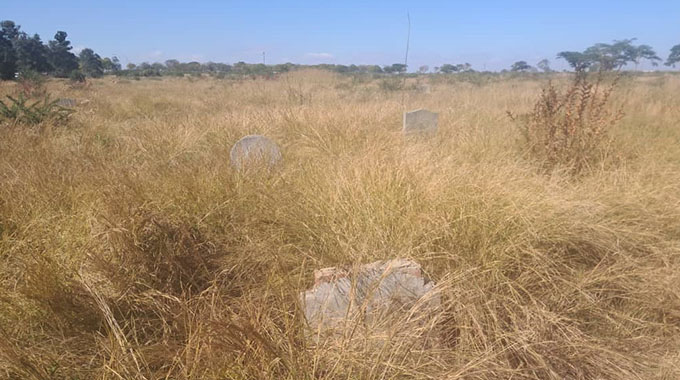
“The council is meant to keep the general area tidy by cutting the grass after the rainy season, but we haven’t been provided with the tools needed to begin clearing Pelandaba Cemetery,” the employee said.
Bulawayo’s Deputy Mayor, Councillor Edwin Ndlovu, expressed significant concern regarding the deteriorating condition of the city’s cemeteries, squarely blaming widespread vandalism perpetrated by residents.
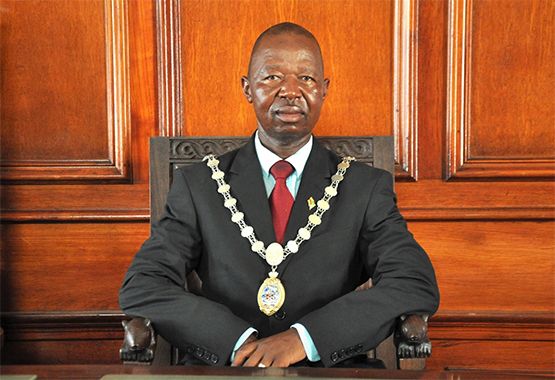
“We’re facing a serious issue where residents steal cemetery fences and vandalise infrastructure, including water taps. Residents, through ward councillors and associations, must be reminded that cemetery infrastructure belongs to the city and should be protected by all,” said Ndlovu.
Maintaining the cemeteries, he acknowledged, remains a formidable challenge for the council, hindered by persistently limited resources.
“It’s no secret that resources are scarce. Ideally, the council would allocate funds for cemetery upkeep after the rainy season to manage overgrown vegetation,” he said.
Just recently, councillors sounded the alarm over the deteriorating state of graves at Luveve Cemetery, with heavy rains having washed away some, exposing coffins. Ward 15 Councillor Ashton Mhlanga was quick to voice his deep concern.
“Some graves have been eroded by recent rains, leaving coffins exposed. The Council must urgently raise awareness — through flyers and social media — urging residents to cease illegal vending at cemeteries. The flyers should also stress the importance of timekeeping during burials to maintain dignity and order,” said Mhlanga.
BCC’s Chamber Secretary, Sikhangele Zhou, urged residents to uphold the dignity and respect due to cemeteries. She highlighted that vending, eating, and fouling at burial sites are deeply antithetical to cultural values, calling on the community to embody the spirit of Ubuntu in these sacred spaces.

“The Assistant Director of Health Services (Environmental) explained during a council meeting that the issue of washed-away graves is being addressed. Gravel has been delivered to Luveve Cemetery, and restoration of the affected graves is underway. This problem is common at Luveve, especially after heavy rains.”
The absence of a perimeter fence at Luveve Cemetery has allowed livestock — donkeys and goats — to roam freely among the graves.
“Some of the animals belong to villagers from St Peters, just beyond Pumula Old, who let them graze freely and only retrieve them when they stray into nearby suburbs like Luveve, Gwabalanda, and Cowdray Park,” said a Luveve resident.
In its latest council minutes, BCC announced a shift from installing fences around cemeteries to planting a hedge known in IsiNdebele as ingotsha, which is well-suited to the local climate and thrives even during the dry season.