

 Online Reporter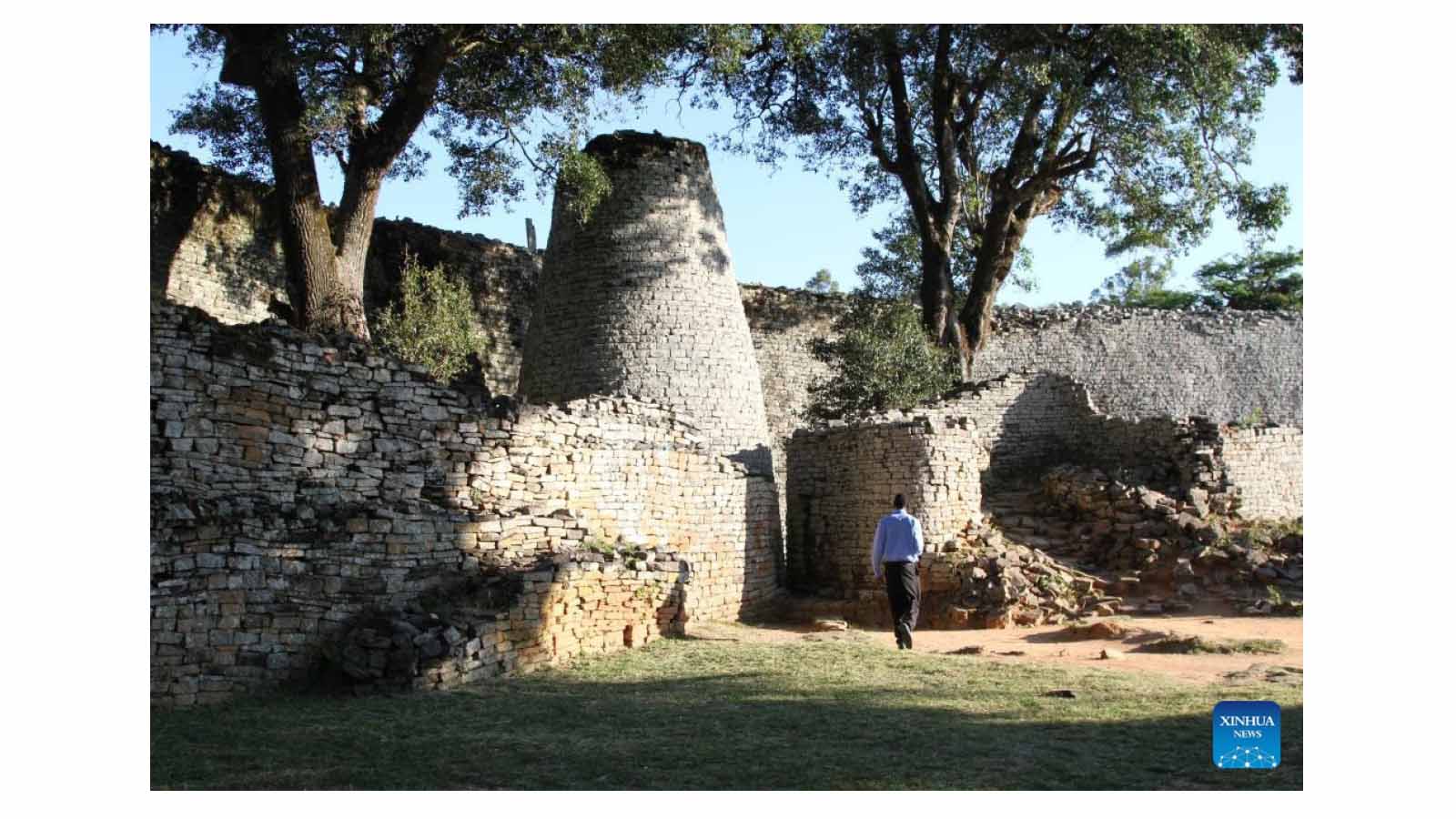
Nyore Madzianike
Senior Reporter
The €4 million Great Zimbabwe Development Project has been completed and technically handed over to Government, paving the way for its commissioning by President Mnangagwa.
The state-of-the-art project, designed to transform the visitor experience and strengthen the conservation and promotion of the Great Zimbabwe World Heritage Site, was funded by the French government through the French Development Agency (AFD).
President Mnangagwa officially launched the project in June 2022, with the United Nations Office for Project Services (UNOPS) responsible for implementing the physical infrastructure, while UNESCO provided support for the interpretive and digital components.
UNOPS acting country director Mr Clement Mhlanga confirmed that the completed facility had been technically handed over to Government through the National Museums and Monuments of Zimbabwe (NMMZ).
“The project has been technically handed over to the Government through the Department of National Museums and Monuments of Zimbabwe. It is now already in use. We are now waiting for dates for the commissioning of the project, but all is done.
“The Department of National Museums and Monuments of Zimbabwe will then inform us when the project will be commissioned,” he said in a recent interview.
The project includes a new visitor and information facility, an upgraded interpretive system, and other infrastructure aimed at improving how tourists experience and understand the ancient monument.
A digital system has also been installed to guide tourists and other visitors around the monument, while a sign language interpreter and a revised guide to the site have been developed to improve accessibility and ensure consistency in the presentation of Great Zimbabwe’s history.
“With the new developments and the technology installed at the project, it will help market the monument as a tourism destination. Obviously, with that positive publicity, Great Zimbabwe is poised to receive an increased flow of tourists,” Mr Mhlanga said.
The initiative forms part of a broader programme to rehabilitate and develop the Great Zimbabwe World Heritage Site, enhance its cultural and educational offerings, diversify tourism products, and strengthen Zimbabwe’s capacity to preserve and manage its heritage.
According to project documents, the initiative also aims to create stronger links between the heritage site and the local economy, including opportunities for tourism-related businesses and activities.
Mr Mhlanga said a land-use plan had already been submitted to the Ministry of Local Government and Public Works for approval to guide future developments around the site. Once approved, the plan will allow for the development of additional tourism-related businesses and facilities in the surrounding area.
The Shona Village at Great Zimbabwe has also been refurbished under the project, further enhancing the cultural and educational experience for visitors.
“We are grateful to our development partners for funding the project,” Mr Mhlanga said.
Great Zimbabwe, located in Masvingo Province, is one of Africa’s most significant archaeological and cultural heritage sites and is recognised by UNESCO as a World Heritage Site. The stone-built city was the centre of a powerful state that flourished between the 11th and 15th centuries and is renowned for its massive dry-stone walls, including the Great Enclosure.
The site remains an important symbol of Zimbabwe’s history and cultural heritage and is a major tourism attraction.
The Great Zimbabwe Development Project was conceived to address the need for improved conservation, visitor facilities, interpretation, and tourism development at the site. AFD says the project is intended to promote sustainable and inclusive tourism while strengthening national capacity to manage the heritage site and stimulate related economic activity.
UNOPS has previously said the project included the rehabilitation and upgrading of infrastructure, a new interpretive system and visitor facilities, as well as the provision of conservation equipment and digital tools to support the preservation of the site.
The project was implemented in partnership with NMMZ and other Government and tourism agencies, with UNESCO and other international partners providing technical support.


What is the traditional name of Great Zimbabwe? Other important places like Vic Falls have known local names like Mosi uya tunya (the smoke that rises). I’m sure Great Zimbabwe has one too. That might give us a clue as to who actually built it, which according to oral tradition is the Bakalanga people who populated Dzimbagwe and traded with the Arabs from the North East in the 800 to 1100AD, long before the Rozvi group arrived under Changamure Dombo in the 1500, incorporated the Bakalanga and formed the Karanga language and culture on the basis of the Kalanga language by mainly substituting “L” with “R”. I say so because the long indigenous Bakalanga also built Khami near Bulawayo, Danangombe, Dhlodhlo and Mapumbugwe monuments with the knowledge gained from the Arabs as similar monuments are also found in East, Central and North Africa. It is therefore not fair to showcase the Shona village only at Great Zimbabwe. The Bakalanga village and culture must be showcased alongside the Shona village. It is the original village that was found by the Va Rozvi (Ba Lozwi) people. That’s the name given to them by the indigenous people of Dzimbagwe(Great Zimbabwe) when they arrived from Mozambique in 1500AD. It is important to properly reflect history.