Online Reporter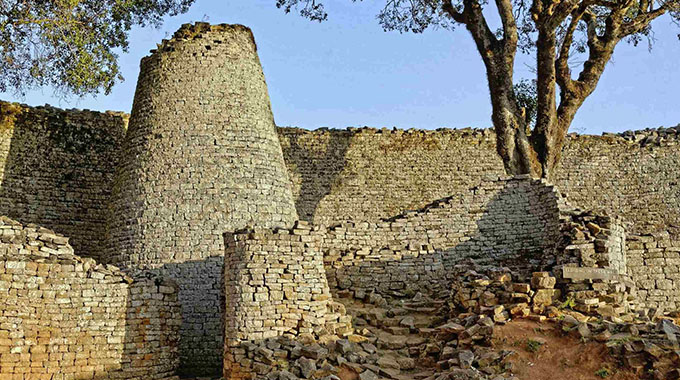
Dr Tendai Zihove
As we celebrated World Heritage Day on May 5, all eyes turned on the granite spires of the Great Zimbabwe National Monument.
The nation’s heart beats in the city of Masvingo, the home of these majestic structures. Proclaimed by UNESCO to honor Africa’s vast cultural wealth, this day is the perfect moment to reflect on why these “Houses of Stone” remain the ultimate symbol of African achievement.
Great Zimbabwe National Monument is not just an archaeological site; it is the very foundation of our Republic.
From the name of our country to the emblem on our currency, Coat of Arms and national flag, these stones define what it means to be Zimbabwean.
Birthplace of a nation’s name
It is a rare and powerful thing for a modern state to be named after its ancient monuments. While most nations find their names in rivers, mountains or legendary leaders, Zimbabwe found its name in the silent, towering walls of an ancient city.
Derived from the Shona Dzimba dza mabwe (Houses of Stone), the name Zimbabwe serves as a daily reminder of our historical depth.
To speak the word “Zimbabwe” is to evoke the granite legacy of Masvingo.
In celebrating this site, we celebrate the birth of our national consciousness, a symbolic pillar of resistance adopted by nationalist movements to dismantle British colonial rule.
A monument of continental pride
Across Africa, Great Zimbabwe stands as a masterclass in decolonisation through heritage.
For decades, colonial narratives suppressed the true history of this UNESCO World Heritage site, refusing to acknowledge that Africans could conceive such sophisticated structures.
Today, the “Zimbabwe controversy” (a long-standing racialised controversy) is settled history. Celebrating the site honours the scientific truth of its African origins, dismantling the propaganda that once claimed it was built by foreigners.
For the African continent, Great Zimbabwe is the ultimate proof that advanced urban planning, complex social hierarchies and monumental architecture thrived here long before foreign contact.
The mortarless dry-stone walls, some rising over ten metres, showcase a level of masonry skill that remains a “unique artistic achievement” under UNESCO Criterion (i).
A masterclass in Zimbabwean craftsmanship
The sprawling complexes, the Hill Complex, the Valley Ruins and the iconic Great Enclosure, represent the pinnacle of local ingenuity. Our ancestors mastered the art of “knapping” granite into regular blocks, stacking them with such precision that they required no mortar.
The Conical Tower, standing 10 metres high, remains one of the most photographed and revered structures in the country, symbolising the spiritual and political authority of the medieval Zimbabwean state.
The Zimbabwe Bird: Our living symbol
No other site holds as much symbolic weight in our daily lives. The soapstone birds found at Great Zimbabwe are the most significant cultural finds in our history.
Today, the Zimbabwe Bird flies on our national flag and is embossed on every official document, signifying a link between the prosperity of the Great Zimbabwe Empire and the aspirations of our modern nation.
May 5 serves as more than a simple remembrance; it is a declaration of the “Africa We Want’, a continent where our roots are our greatest strength. We must recognise Great Zimbabwe not as a collection of stone structures, but as a living sacred shrine that pulses with the spirit of our ancestors. Our indigenous spirituality is not an artifact of the past labeled “backward”; it is the very soul of our nation’s identity. By empowering our youth as active custodians of heritage management and sustainable tourism, we ensure that they do not just inherit a legacy, but breathe new life into it for every generation to come.
A call to action: Guarding the legacy
As we celebrate World Heritage Day, we must also recognise the “at-risk” status of many African World Heritage sites.
Threats from invasive plants like lantana camara and the need for sustainable funding remind us that our heritage requires active protection.
The National Museums and Monuments of Zimbabwe (NMMZ) works tirelessly to protect these walls, but preservation is a national duty.
It requires a blend of spirit respect, modern science and community action.
As we look at the towering walls of the Great Enclosure, let us remember: these stones are the silent witnesses to our greatness.
They remind us that we are a people of builders, traders and visionaries.
On World Heritage Day, let us not just admire the stones of Great Zimbabwe, but commit to the resilience and strength they represent for the entire continent.
* Dr Tendai Zihove is a curator of archaeology at Great Zimbabwe Monuments (National Museums and Monuments of Zimbabwe)