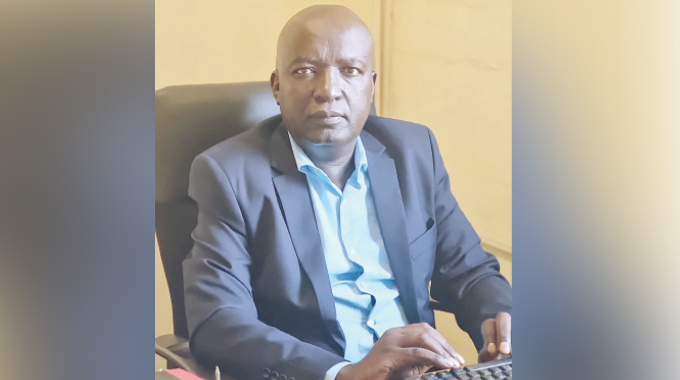
Methuseli Moyo
JUST on Thursday, I used Mkhululi Sibanda’s Lest We Forget column as a classic example of how to dig information from an interviewee while teaching my Foundation Skills in Journalism students at the National University of Science and Technology (Nust).
Barely 36 hours later, my body went numb when fellow lecturer and journalist Bhekizulu Tshuma broke the devastating news: “Methu, uMkhays kasekho.”
Painful as Mkhays’ death is, I have had to wipe away my tears, gather strength and pen this obituary to bid farewell to the great person, the great leader and the great journalist that he was. Inkatha idla mina.
I have known Mkhays since 1997 when we were both cub reporters — he at the then Zimbabwe Inter-Africa News Agency (Ziana) and I at The Chronicle.
The outpouring of grief from the national journalism fraternity and the wider community is confirmation of who Mkhululi Sibanda was — a journalist whose pen and personality left an indelible mark.
Mkhululi belonged to that rare breed of journalists who chose journalism and remained faithful and consistent in the conduct and execution of their trade.
Together with many others, we belonged to a generation that witnessed and covered landmark moments in Zimbabwe’s history: the farm occupations, the Land Reform Programme, the resettlement exercise and the indigenisation of the economy — a period marked by intense political polarisation and diplomatic acrimony between Zimbabwe on one side and Britain, the United States and their allies on the other.
The media became a crucial participant in the ensuing contestation. Suddenly journalism became a hard-hat area. It was no longer business as usual.
Some journalists left the newsroom for opportunities abroad. Others became absorbed into political projects, while some abandoned journalism altogether for safer and less stressful careers.
Mkhays remained in the newsroom.
He simply continued doing his work — diligently.
Amid the political and economic turbulence, he kept his focus and continued to write story after story about how newly resettled farmers were defying the odds in the semi-arid regions of Matabeleland.
Because of tensions in the country, journalists often became targets of hostility and suspicion. War veterans, in particular, could be difficult sources to navigate because of their frustrations around the land issue, the rise of a pro-West opposition and sections of the private media perceived to sympathise with former white commercial farmers and their international allies.
Even though we worked for the public media, some war veterans would occasionally lump all journalists together and accuse us of being the same.
As a result, many of us became cautious and limited our exposure.
But Mkhays — perhaps because his father was a former ZPRA commander or perhaps because he genuinely appreciated their experiences — had a remarkable way with ex-combatants.
He built trust where others found walls.
He used those relationships to produce rich historical features on Zimbabwe’s liberation struggle, culminating in the celebrated Lest We Forget series.
Even after being promoted to Assistant Editor, Mkhays refused to become an armchair editor.
Week after week he left the comfort of his office to interview yet another war veteran, preserving memories that would otherwise have disappeared with time.
When we entered journalism towards the turn of the millennium, there were no cellphones and the internet had not yet fully arrived. Newsrooms still relied on typewriters.
Then came the technological revolution.
Computers arrived. The internet transformed communication. Smartphones and social media changed the news ecosystem completely.
Journalists suddenly faced fear, anxiety and uncertainty.
Exclusive access to information disappeared almost overnight.
Citizens could publish news instantly from their phones.
Some journalists failed to adapt. Others left the profession. Newspapers downsized and many felt journalism itself had been invaded.
The industry demanded adaptation or extinction.
Mkhululi belonged to that generation of journalists who absorbed the shock and reinvented themselves for the 21st century.
He refused to be outpaced by social media.
Instead, he raised the bar.
His well-researched stories and personality profiles were not merely news articles. They were historical records defined by accuracy, balance, fairness and depth.
For me, one of the highlights of his Lest We Forget series was his interview with war veteran and former dissident Tennyson “Thambo Lenyokahlabomzondayo” Ndlovu and another former dissident whose name sadly escapes me.
Mkhays managed to get them to speak candidly about the psychology of dissidents, the reasons behind some of their actions, the difficult amnesty period following the Unity Accord and their reintegration into civilian and political life.
Not every journalist can persuade a former dissident to sit down and openly discuss such experiences.
Only legends do that.
Mkhululi did it repeatedly.
At our age, many of us are fatigued, drained and retreating into comfort zones such as academia, corporate communications and consultancy work.
Not Mkhays.
His passion and energy kept him firmly rooted in the newsroom, leading, sharing experiences and imparting skills to younger generations.
Modern journalism demands stamina and resilience.
Mkhays had both in abundance.
He was a gift to the Fourth Estate.
Mkhululi was two years my senior in the profession.
We became particularly close when we were appointed News Editors of sister publications — he at The Chronicle and I at the Sunday News.
Although we belonged to the same stable, competition between our papers was fierce.
We competed for exclusives, reporters, readership and circulation.
Sometimes the rivalry became messy.
There were mornings when I would wake up on a Saturday only to discover that Mkhays and his team at The Chronicle had already published what we had hoped would be our lead story for Sunday.
That meant going back to the drawing board.
He would simply laugh and say:
“Kkkkk. Sorry Methu. We scooped you. Look for another story.”
He was a born journalist.
He could smell news from a distance.
His extensive network of sources and deep understanding of the people and places of Matabeleland made him a formidable competitor and an outstanding editor.
Despite the rivalry, Mkhays always understood when cooperation was necessary.
After all, both newspapers belonged to the same family.
“Mzawami, we will cover the event and speeches, sizalitshiyela i-analysis lani lithole okokubhala,” he would say before erupting into his trademark laughter.
Together with colleagues such as Lovemore Dube, Tumeliso Makhurane, Innocent Madonko, Bhekinkosi Jacobe Ncube, Thabani Mpofu and others, we would gather for lunch at legendary junior football coach Ali “Baba” Dube’s backyard restaurant — first at Raylton Sports Club and later at Archers Sports Club.
Mkhays was always at the centre of discussions.
He was bubbly, knowledgeable and endlessly entertaining.
He simply did not have the energy for workplace hostility.
Another quality that sustained Mkhululi through three decades in journalism was his character.
He was humble.
He was willing to teach and equally willing to learn.
He was not an arrogant know-it-all journalist.
He interacted with veterans and cub reporters, informal and official sources, young and old, with equal respect.
He accepted criticism with grace.
Criticism comes with journalism territory.
Mkhays listened first.
He would then respectfully agree, disagree or clarify.
That humility enhanced his reputation among colleagues, readers and the community.
It takes a journalist with extraordinary attributes to transcend generations and technological shifts the way Mkhays did.
He was diligent, energetic, adaptive, innovative and above all humble.
His service to the profession was exemplary.
His service to the nation speaks for itself.
He deserves recognition beyond the newsroom.
What his late father helped recover through the barrel of a gun — land and freedom — Mkhululi defended with his pen.
He remained loyal to both his profession and his country.
Mkhays became a hero in the preservation of Zimbabwe’s heritage and history.
He contributed immensely to the national archive of knowledge on the liberation struggle.
He did not chase what was trending.
He pursued what was enduring.
Rest in peace, Commander Mkhays.
Till we meet again.
About the writer: Methuseli Moyo is a lecturer in the Department of Journalism and Media Studies at the National University of Science and Technology. He is a former reporter at The Chronicle, former News Editor of Sunday News and former Editor-in-Chief of the then SFM Radio, now Classic 263. He writes in his personal capacity.