Online Reporter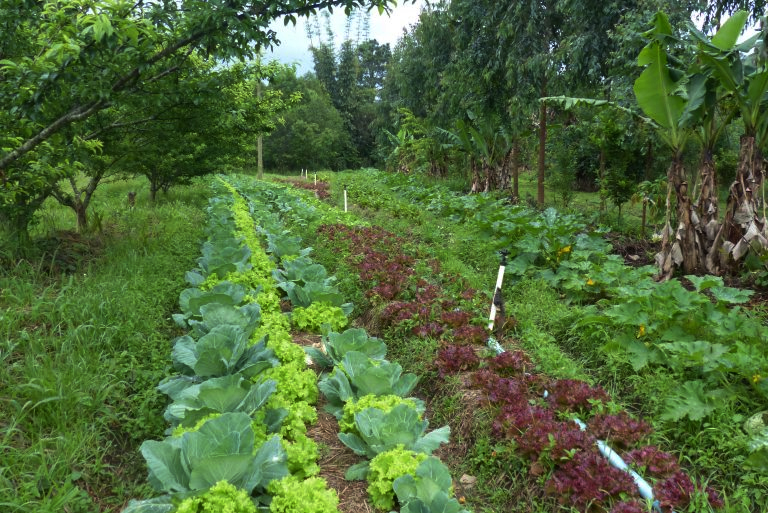
Takudzwa Manzero
Post Correspondent
IN the picturesque Chimanimani District, a beacon of hope is emerging for local communities that were over the years struggling with food insecurity.
Agro-ecology, a sustainable farming approach that prioritises soil health, biodiversity, and efficient water use, is transforming the lives of small-scale farmers.
By adopting practices like bio-fertiliser making, holistic grazing, and terracing, farmers in Chimanimani are rejuvenating their land, improving crop yields, and enhancing their resilience to climate change.
In Ward Four, the barren land now serves as a source of ecological restoration and community businesses.
They have also embraced technology, a move that has resulted in them securing distant markets in Masvingo and Bulawayo.
Online platforms such as eMukambo are helping the farmers to connect with markets.
EMukambo has been a revolutionary platform as it supplies prices of products to farmers so that whenever there is demand, they can cater to these distant markets with supplies, buttressed by succession planting thatallows for niche marketing and services among the farmers.
Through seed exchanges and Chimanimbeu forums, gene banks have sprouted up. They are, not sources of seeds, but also fountains of hope for the rural community, today and in the future.
A development partner, Participatory Organic ResearchExtension and Training Trust (PORET), has partnered local stakeholders to transform deserts into living habits, complete with learning centres for agro-ecology.
These programmes have seen them roping in agricultural experts in activities that include trainings, seed production, water harvesting, soil fertility management, food processing, youth engagement in agro-ecology and holistic land and livestock management in accordance to theprinciples of agriculture.
At the just-ended Chimanimani Good, Food and Seed
Festival, Minister of State for Manicaland Provincial Affairs and Devolution,Advocate Minister Mugadza said: “I am thankful for this event as it is a platform to showcase the resilience of farmers growing African grains to
increase traditional grains, and encourage the consumption of these healthy foods in their lifestyle.
“We are all aware of the positive contribution ofPORET in the dry region of Chimanimani, which has transformed our lives for the better.
“I have it on good authority that PORET is working with 4 000 farmers and 73 clubs in 13 wards. What impressed me the most is that they have added women and young men in their programming, showing that there is a bright future ahead for this programme.
“We would like to encourage young men to take up farming and animal husbandry. Your theme: “Nurturing our future, reviving our heritage,” means we have to support our future using available local
resources sparingly, not forgetting our heritage and identity. I urge everyone to
continue growing fortified pure grains because these are the seeds that thrive
in local communities,” said Minister Mugadza.
He added: “I discovered on the nutritional chart that maize-meal is lowly rated among the healthiest food alternatives, and so looking at the fast approaching Sanganai/Hlanganani/Kumbanayi World Tourism Expo, we agreed with PORET that the top contestants will be given an opportunity to cook at the Expo later in Mutare.
“This international event which will give tourists a glimpse into the wonders of the land cannot be complete without a plate of gastronomic tourism.
“Since we are celebrating the best producers and cooks in the area, it is also befitting that the top performers get a ticket to
Sanganai/Hlanganani Kumbanayi. I would like to thank PORET for its diligence in taking care of fortified grain, youths and women. I am thankful to the stakeholders working with the Trust, as they are making this annual event a reality. I am thankful to Chief Mutambara for taking care of the area, heritage and produce that are a part of our tradition.”
Director of Research ServicesDepartment and Head of Seed Services in the Ministry of Lands, Agriculture, Fisheries, Water and Rural Development, Dr Claid Mujaji said: “As the year ends, it is important that we prepare the land for the upcoming planting season. In their preparations, farmers should check whether they have enough inputs. They should create water uptake reservoirs and
ridges which will help them in the field. Most of the time, farmers will be overwhelmed by their projects because they try to do the work in short spaces of time which makes the tasks difficult.
“In this time of climate change, it is increasingly important to consult Agritex officers, and get advice on how to sample the soil, and find out if it is compatible with the available seed, so that farmers can achieve better yields.
“Farmers should also consult to find out where they can access gene banks that host adaptive seeds suitable to their respective climate.”
Mr Forward Mumbuzana of Musweweshiri Village and Agriculture teacher at Chakohwa High School, expressed gratitude for the agro-ecology programme being rolled out in their area.
He said: “We were happy to converse on the sustenance of the biosphere in stages ranging from soil health and wellness to animalhusbandry.
“We are pleased with Government’s efforts to turn to traditional grains taught through the Heritage-Based Education curriculum, and the promotion of fortified food products among established companies, making sure that we have the absorption of key vitamins and minerals.
“In the Chimanimani region, we are pleased with Government’s inclusion of other partners in the growing of organic products, plus availing a marketplace at Nhedziwa Growth Point where these organic products are being sold.
“We are happy to be part of this agro-ecology revolution.
“Agro-ecology is sustainable due to its low cost and readily available ingredients, thereby making farming easy and accessible to all.”
Musician, Dorcas Moyo also expressed jubilation for learning a lot during the food festival as a consumer.
She said:
“I enjoyed this festival, not only as a guest artiste, but also as a consumer.
“There were a number of delicacies from free range chicken, peanut butter rice to sadza made from finger millet.
“This event taught me to adopt a healthy lifestyle even when I am on the road touring.
“I hope other districts will take up such festivals to educate youths on healthy food choices.”