admin
admin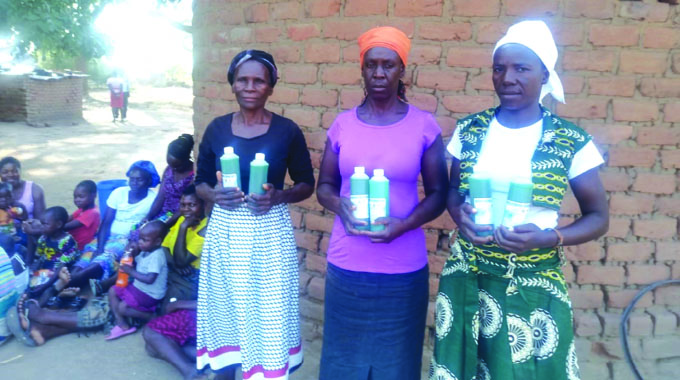
Sifelani Tsiko Agric, Environment & Innovations Editor
For Epiphania Chikwati (37) and her group at Nyabvute Farm in the Siyalima ward of Guruve district, when a liquid soap making project was launched to help them survive the Covid-19 pandemic headwinds, she thought it was one of those fly-by-night projects that would collapse.
Simply running a liquid soap making project was not enough for her and the Tafara Group. They wanted to go beyond simply using the soap project to overcome poverty.
The women are taking a leaf from First Lady Dr Auxillia Mnangagwa, who has been going around the country initiating empowerment projects mainly aimed at benefiting women.
“Many rural projects come and go. When donors leave everything collapses. But for us women here in our group called Tafara, our wish is to end up, one day, running a big business producing soaps, running a big chicken and livestock project,” she said.
“We want to use our liquid soap — making venture to shift our lives to a life of the rich from that of rags. We want to make money to run chicken projects, to buy goats and cows and improve our livelihoods.”
Through funding support from the Japanese Government working with UN Women and through a project implemented by the Lower Guruve Development Association (LGDA) titled: ‘Prevention of Covid-19 infection among vulnerable women and girls in drought-affected districts of Guruve and Mbire of Mashonaland Central,’ her group together with others got assistance to start projects to make sanitizers, masks and liquid soap.
Earlier this year, the Japanese government donated more than US$740 000 via UN Women and LGDA, the implementing partner, to mitigate the impacts of the Covid-19 pandemic among women and girls in Guruve and Mbire districts in Mashonaland Central.
The project started in July this year and women were trained in soap making, business and sales.
The Tafara Group produced a batch of 318 bottles of liquid multi-purpose soap which was bought by the project for US$1,35 each and donated to Horse Shoe Primary School in Guruve.
“We got about US$429 which was shared equally among the two groups in our area. We then sent a member to buy more materials to make more liquid soap,” she said.
“From the earnings we got from our second batch, we bought 75 chicks and stockfeed. We embraced this Covid-19 project well, but we want to do more to ensure it survives and continues to give us more, to pay fees, look after the vulnerable in our area as well as to improve the quality of our lives generally.”
LGDA trained and funded 33 women’s groups in Guruve and Mbire district in soap-making under the: “Prevention of Covid-19 infection among vulnerable women and girls in drought-affected districts of Guruve and Mbire of Mashonaland Central” project.
The women got training in everything from literacy to administration and sales.
Most women in Mbire and Guruve said the project had empowered them despite the daily challenges still faced by women in these districts.
“This project has helped me to develop skills, confidence and take part in community projects that can help better our lives,” said Benihilda Madamombe (38) of Bluegrass Farm in Siyalima.
“I want to thank LGDA, UN Women and the Japanese government for the support they gave us to start this project. We have an amazing opportunity to change our lives if we work hard and remain united as a group.”
Tavirai Marega, an LGDA programmes coordinator said the liquid soap making venture had the potential to support women to lead healthy and financially secure lives.
“Women and girls also bear the main responsibility for collecting water, a daily chore which deprives them of time for lessons or earning a decent living. Through this project they can develop themselves, empower themselves and reduce reliance on husbands or fathers for income,” he said.
“With proper training and good management, this project can give them some financial independence or power.”
Soap making is cushioning rural women in Guruve and Mbire from poverty.
“The production of the multi-purpose liquid soap is cheaper but with some good returns. The affordable cost certainly helps us to stay in business and guarantees us some income to diversify into chicken and goat rearing projects,” said Sarah Manyonga of Gondo village under Chief Chitsungo in Mbire.
“Our group started in 2020, sewing face masks under the UN Women Spotlight Initiative. We got money from selling masks and bought five goats. We now have 15 goats. The soap making venture will also boost our project.
“We are hoping to raise more money from soap sales and buy more goats. From the goats we want to go further and buy cows.”
Manyonga said her group called Tichakunda was supporting vulnerable members in their ward.
“We have included widows, people with various disabilities and the youth in our group. Poverty is humiliating and women’s empowerment builds confidence and hope for us here,” she said.
“I am humbled that we have used part of our money we have earned from our soap making projects to buy food for the elderly, orphans and other people with disabilities.
“We wash clothes for the elderly, buy them maize and some groceries. We do not want the group to collapse when donors leave. We want to keep growing and manage our business to success.”
Chidavaenzi village head hailed UN Women, LGDA and the Japanese government for empowering women in his area. He said the soap making project would help the women to look after their families and help them raise money for fees. Tichakunda Group produced 314 bottles of multi-purpose soap which they hope to sell for US$1,35 each.
“I now have my own soap to wash clothes and clean my house. I am now able to look after my children and pay school fees,” said Shorai Kukwenyerera who is disabled and lives at Kutyauripo village in Mbire.
“I am disabled and I cannot do heavy duties. I can do soap making and I am happy that I am earning something to survive.”
Tendai Machisa (56) of Mudzongachisi village in Mbire said this project had brought hope. “We are hoping to earn more than US$425 from our soap making project. We want to expand our business to make polish and green bar soap which is in demand here in Mbire,” she said.
“We want to buy 10 goats as a group and if everything goes well we want to buy a cow.”
The women were better organised through groups and were resilient making them easy to gain income – generating skills like soap-making.
“The good thing with the liquid soap business is that it is easier to start and the product sells faster here in Mbire,” said Manyonga.
“This project is helping us to rebuild our lives after Covid-19 affected a lot of our work. It is enhancing our resilience to be better prepared to face future crises.”
Soap availability in many of these villages in Guruve and Mbire will help them in long – term fights to prevent diseases and the spreading of viruses. Most villagers do not have access to the necessary, bacteria-killing, chemicals and products and having a steady supply of soap will help them improve their overall hygiene practices. This has an overall positive effect on health in their communities and in all efforts to mitigate the spread of Covid -19 pandemic.
Investment in rural women is a means of attaining food security and empowering women and girls as they move from subsistence agriculture to becoming active participants in the economy. Women in Guruve and Mbire are now using their soap making project to acquire chickens, goats and other household assets that assist with their resilience to climate shocks such as drought and health disasters.
In times of drought, they have soap and livestock assets that they can sell off to sustain their families. The women have also benefited from Income Savings and Lending Schemes (ISALs) — another form of empowerment which provides access to funding among low-income earners.



 Online Reporter