Online Reporter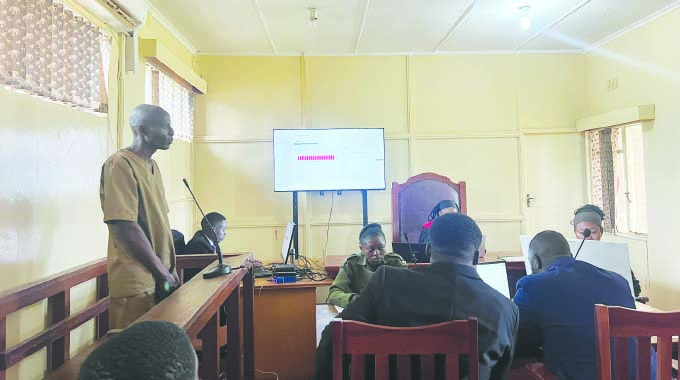
Sukulwenkosi Dube-Matutu, [email protected]
GWANDA Magistrates’ Court went digital on Tuesday, joining 16 other courts across Matabeleland South and Masvingo provinces under the fourth phase of the Integrated Electronic Case Management System (IECMS).
The digitalisation exercise saw clients creating accounts with the assistance of IT specialists and court officials. The provincial court also held its first virtual session, with accused persons appearing from Gwanda Prison for remand hearings. At the regional court, State papers and exhibits were filed electronically and displayed on a screen for public viewing.
Ahead of the launch, awareness campaigns were conducted to familiarise stakeholders with the IECMS. In Matabeleland South, the system has now been adopted at courts in Gwanda, Kezi, Plumtree, Esigodini, Filabusi, and Beitbridge.
Zimbabwe’s courts are undergoing a sweeping transformation under the IECMS, an innovation spearheaded by the Judicial Service Commission (JSC) to modernise justice delivery. The digital system enables e-filing, electronic case tracking, and virtual hearings, replacing traditional paper-based and manual processes.
To date, magistrates’ courts in Mashonaland Central and Matabeleland North went live in July, while superior courts — including the Constitutional Court and Supreme Court — have already been digitised. The IECMS programme is being rolled out in phases, with the ultimate goal of achieving a fully paperless justice system nationwide.
For many court users, the system offers convenience and reduced costs.
Trymore Mangena from Filabusi, who was remanded out of custody on bail for murder, was among the first clients to use IECMS at Gwanda Court.
“Court officials created an account for me, which I can use to follow my case and attend remand appearances virtually. This is a relief because travelling from Filabusi is expensive and time-consuming,” he said.
Ms Margaret Ndlovu from Nhanha Village in Gwanda added: “Travelling to Gwanda Town for hearings meant paying R400 for a return trip. With this new system, it is cheaper to load data on my phone and follow proceedings virtually.”
JSC deputy secretary Dr Rosalie Katsande said the IECMS would enhance transparency and accountability in court processes.
“We are now digitally filing court papers, and all courts in these two provinces have gone paperless. While hearings for criminal matters remain physical, magistrates will no longer write down proceedings manually. Instead, recording machines and transcription equipment will capture proceedings,” she said.
Dr Katsande revealed that an AI-assisted transcription application would be deployed, with personnel verifying and correcting errors where necessary. She added that back-up power systems, including solar and generators, would be installed to ensure uninterrupted service.
The system also allows for electronic payments of bail and provides facilities for virtual hearings, particularly for inmates on remand.
National Prosecuting Authority deputy prosecutor-general Mrs Rosa Takuva said digitalisation would safeguard court records.
“Physical documents easily get lost. Once we have uploaded documents such as the State outline and charge sheet, the information is securely stored in the system,” she said.
Mrs Takuva added that exhibits — including medical reports and post-mortems — will also be uploaded once formally admitted before the courts, ensuring accurate and transparent trial processes.
The IECMS is a flagship reform under the Second Republic, part of broader efforts to modernise public services, curb corruption, and enhance access to justice. Once fully rolled out, all Zimbabwean courts — from magistrates’ courts to superior courts — will operate in a paperless environment, bringing the country in line with global digital justice trends.