Online Reporter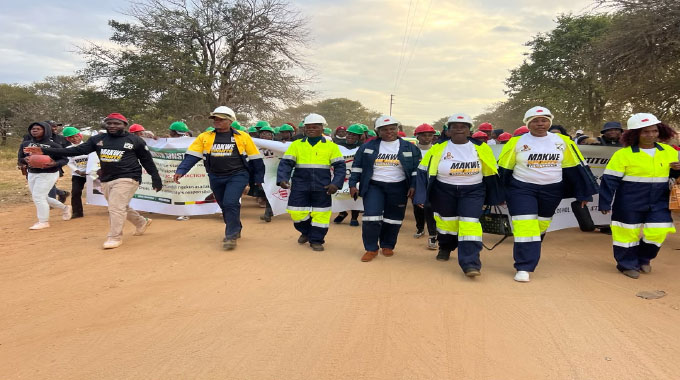
Sukulwenkosi Dube-Matutu, [email protected]
AS drug and substance abuse continues to take a heavy toll on young people across Zimbabwe, communities are increasingly being called upon to play a more active role in confronting the problem before it destroys lives and undermines development.
In Gwanda North, that call was turned into action last Saturday when community members, political leaders and local stakeholders took to the streets of Makwe Village to raise awareness and send a strong message against drug and substance abuse.
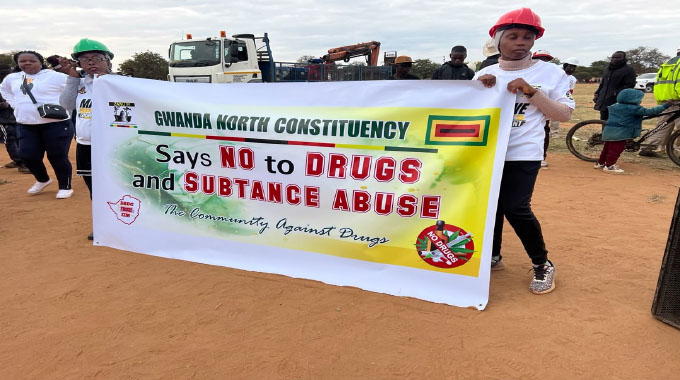
The anti-drug march brought together villagers, community leaders and Zanu-PF structures from across the constituency, all united by a common concern: the growing impact of drugs on young people and the future of their communities.
The march was led by Zanu-PF Gwanda North shadow MP, Cde Lungisani Ncube.
He was joined by Zanu-PF Matabeleland South Women’s League chairlady, Cde Sindisiwe Nleya, Zanu-PF Gwanda District Coordinating Committee chairman, Cde David Linda, party members, traditional leaders and villagers.
Walking through the village, participants carried a clear message that the fight against drugs cannot be left to law enforcement agencies alone. Instead, they said, it requires the active involvement of parents, teachers, community leaders, religious organisations and ordinary citizens.
Speaking during the event, Cde Ncube said communities must take ownership of the fight against drug and substance abuse, starting at grassroots level.
He said everyone has a responsibility to protect young people from harmful substances and create an environment where they can grow into productive members of society.
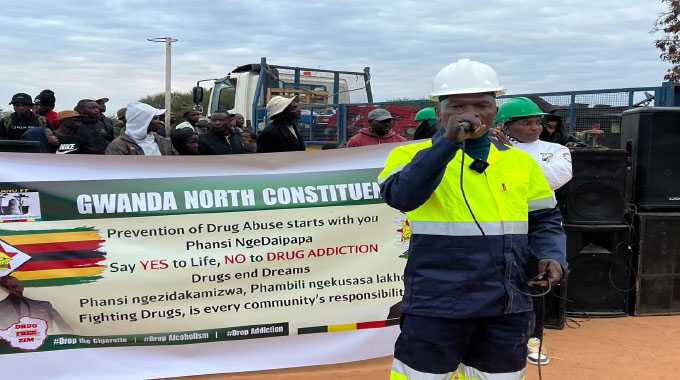
Cde Ncube challenged community members to reject activities that fuel the drug trade and instead focus on legal and productive ways of earning a living.
He said meaningful progress would only be achieved if the fight against drugs started in local communities and extended all the way to national level.
“We can’t develop as a community if we have a lot of people who are taking drugs and other harmful substances. What is alarming is that this scourge is affecting mostly the youths who are the leaders of today and tomorrow. We are looking up to the youths for productivity but they can’t deliver if they are always drunk.
“What is concerning is that it’s us who are cultivating this dagga or selling these drugs to young children. We are selling to our neighbour’s children, to our friend’s children, to our relatives and to children from our community”.
His remarks resonated with many members of the community who have witnessed first-hand how drug abuse is affecting families, disrupting education and limiting opportunities for young people.
While drug and substance abuse is often viewed as a problem affecting those who consume the substances, community leaders say it is also a problem driven by those who grow, distribute and sell drugs.
Cde Ncube said communities must confront uncomfortable truths and hold accountable those who are contributing to the spread of harmful substances. He also expressed concern about the increasing involvement of women in drug-related activities.
“It’s also concerning that it’s mostly women who are involved in trafficking, distribution and supply of drugs. Let’s work collectively to bring this problem to an end.”
Beyond enforcement, Cde Ncube said communities should focus on creating economic opportunities that discourage people from turning to illegal activities.
He encouraged residents to explore income-generating projects such as farming and mining, adding that young people should be actively involved in such initiatives.
According to Cde Ncube, productive engagement is one of the most effective ways of steering young people away from drugs and towards meaningful economic activities.
Ward 8 councillor, Zwelithini Nyathi, echoed similar sentiments, describing drug and substance abuse as one of the biggest threats facing communities today.
He said local leadership structures have made the issue a priority and are using community gatherings and public meetings to educate residents about the dangers associated with drug abuse.
Clr Nyathi said community leaders are also working closely with law enforcement agencies to identify offenders and curb illegal activities linked to drugs.
“If as a community we can stand together united and say not to drug and substance then we can eliminate this problem from our area. The challenge we have at the moment is that we are divided- some are peddling drugs, others are growing them, others are supplying, some are protecting the culprits while others are using the drugs. We have to secure our community to ensure that there is no space for drugs,” he said.
His comments highlight what many stakeholders see as one of the biggest challenges in combating drug abuse — the involvement of members of the community at different levels of the supply chain.
Community leaders believe lasting solutions will only be achieved when residents collectively reject the cultivation, sale, distribution and consumption of illegal substances.
The anti-drug campaign in Gwanda North comes at a time when Matabeleland South Province has stepped up efforts to combat drug and substance abuse.
Authorities say the problem has become increasingly worrying, particularly among young people, prompting intensified awareness campaigns and law enforcement operations.
Statistics for the period between January and April this year show that nearly 400 people were arrested in connection with drug and substance abuse-related offences as authorities moved to dismantle distribution networks operating within the province.
Another growing concern is the increasing number of women being implicated in drug-related crimes. Authorities say women are now playing a significant role in the trafficking, distribution and supply of drugs, a development that has alarmed community leaders and law enforcement agencies alike.
Government has maintained that tackling the drug menace requires a combination of enforcement, rehabilitation and community involvement.
Recently, Minister of State for Matabeleland South Provincial Affairs and Devolution, Albert Nguluvhe, said Government had intensified efforts to disrupt drug supply chains and bring offenders to justice.
He said while law enforcement remains important, rehabilitation and reintegration programmes are equally critical in addressing the root causes of the problem.
According to the minister, rehabilitation initiatives are already underway, with survivors being integrated into skills training programmes designed to help them rebuild their lives and become productive members of society.
For many residents in Gwanda North, the march was more than just a public demonstration. It was a reminder that drug and substance abuse is not someone else’s problem but a challenge affecting families, communities and the future of young people.
As the campaign gains momentum, community leaders hope the message delivered in Makwe Village will spread across the district and beyond: that protecting young people from drugs requires collective action, vigilance and a commitment to building communities where positive opportunities outweigh the temptations of substance abuse.
For those who participated in the march, the goal is clear — to create safer, healthier and more productive communities free from the devastating effects of drugs and substance abuse.