Chronicle Editor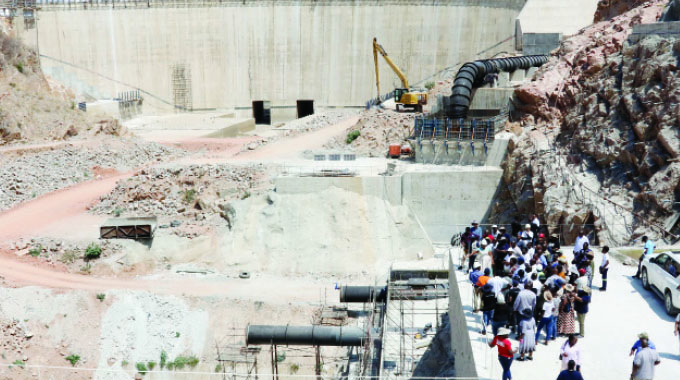
Rutendo Nyeve, Sunday News Reporter
THE completion of the 104-kilometre Lake Gwayi-Tshangani pipeline, and dam wall scheduled for next year is expected to pave the way for enhanced irrigation development whose ultimate goal is to see improved food security and water access for communities in some parts of Matabeleland North Province.
The development timelines were announced by the chief executive officer of the Zimbabwe National Water Authority (Zinwa), Engineer Taurai Maurukira in a recent interview with Sunday News in Bulawayo.
He highlighted the authority’s commitment to constructing 12 major dams across Zimbabwe which will focus on essential services such as water supply, mini hydropower generation, irrigation and fisheries.
The Lake Gwayi-Tshangani project stands out as the highest priority among these initiatives with plans afoot to ensure that communities are served with water from the dam through a pipeline where an irrigation greenbelt will also be established.
“We are currently 70.8 percent through our construction efforts. The project requires a huge financial outlay and has been affected by resource constraints as the Government has been focusing on mitigating the impacts of the ongoing drought but we are certain that we will meet our goal to complete the Gwayi-Tshangani project next year,” said Eng Maurukira.
“This will include the dam itself, the 104 kilometres of pipeline and necessary pump stations that will enable critical irrigation activities to take place.”
Other notable dam projects under construction in the country include Tuli-Manyange in Gwanda, Kunzvi, Sengwa, Dande and Bindura.
He said in addition to Gwayi-Tshangani, the Kunzvi Dam project aims to facilitate water supply to Harare and its surrounding communities, expanding irrigation opportunities for local villages.
Eng Maurukira noted that they plan to finish two more dams, Tuli-Manyange and Dande in 2026, as part of a comprehensive strategy that encompasses irrigation, water supply, renewable energy and aquaculture.
He noted that it was the completion of those infrastructure projects where the Presidential Rural Development Programme was hinged as they were instrumental in actively promoting agricultural industrialisation across Zimbabwe’s rural areas.

The rural development programme targets the drilling of 35 000 boreholes and the setting up of 35 000 nutritional gardens in the 35 000 villages in the country. It also targets 9 600 schools and over 2 000 youth business centres nationwide.
The programme includes the installation of solar-powered boreholes to create Village Business Units, ensuring sustainable water access and economic development in rural communities.
Progress has been made with the drilling of over 3 000 boreholes and the establishment of more than 500 village business units.
In light of the severe drought affecting the country, which has resulted in the loss of livestock and serious humanitarian challenges, the Government has introduced the Emergency Drought Mitigation Programme and has allocated US$2.5 million for the drilling of boreholes across 635 wards to address immediate water supply needs.
“We are working diligently to mitigate the effects of the drought and have made significant progress in these 635 wards,” Eng Maurukira stated, emphasizing the Government’s proactive approach in addressing the ongoing crisis.
He added that as Zimbabwe looks to strengthen its agricultural sector and ensure food security for its citizens, the Lake Gwayi-Tshangani pipeline and associated projects represent crucial steps forward in this effort.


 Online Reporter